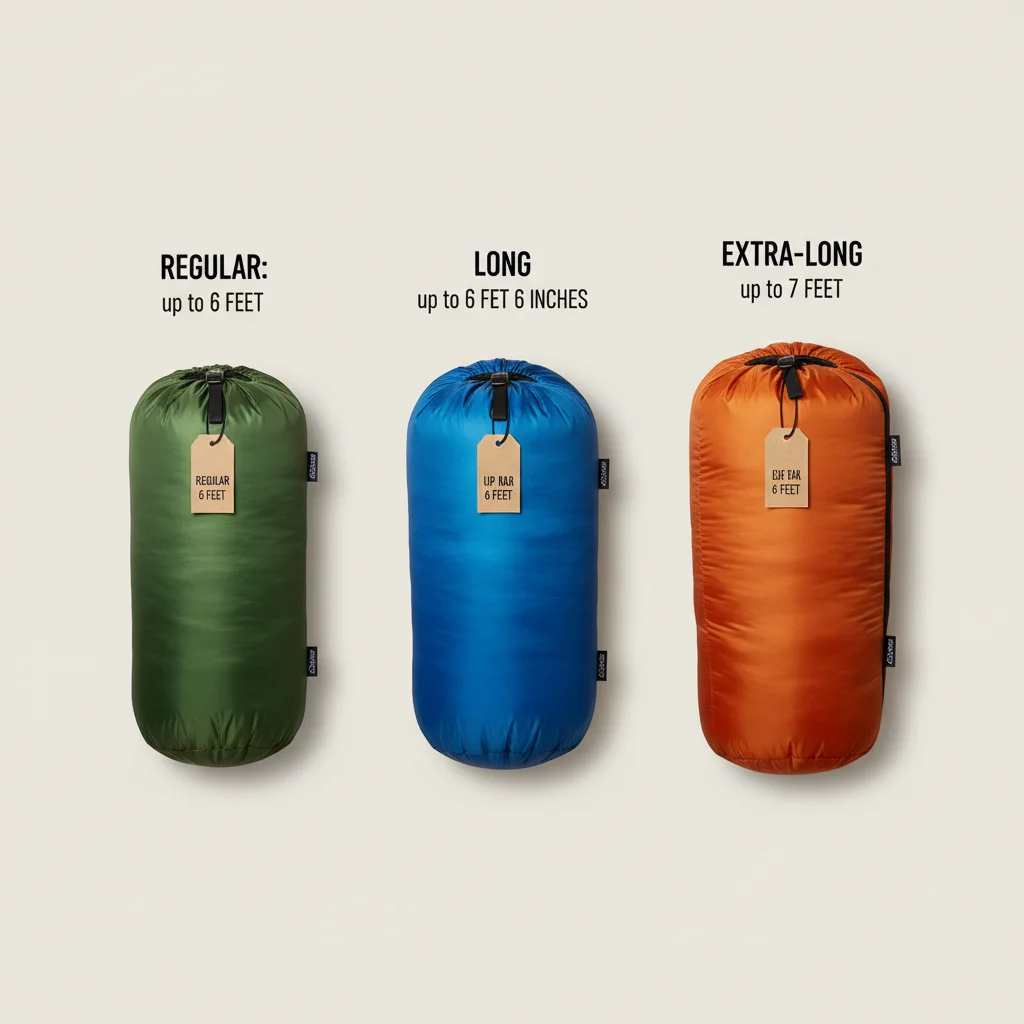
Choosing the correct sleeping bag size is crucial for both comfort and warmth during your outdoor adventures. The right length ensures there’s no excess space to heat, while also providing enough room to move without feeling constricted. Generally, sleeping bags come in three main sizes: regular, long, and women’s specific, each designed to accommodate different body types and heights.
Understanding Standard Sleeping Bag Lengths
Most sleeping bag manufacturers offer standard lengths to fit a wide range of users. A ‘regular’ size typically accommodates individuals up to 6 feet (183 cm) tall. ‘Long’ versions are designed for taller campers, usually fitting those up to 6 feet 6 inches (198 cm). It’s important to note that these are general guidelines, and specific brands may have slight variations. Always check the manufacturer’s specifications before making a purchase to ensure a precise fit. For see our sleeping bags recommendations on this site.
The Importance of Proper Fit for Warmth
A common misconception is that a larger sleeping bag is always more comfortable. However, a sleeping bag that is too long or too wide creates excess air pockets that your body must work harder to heat. This can significantly reduce the bag’s warmth efficiency, leaving you colder than you would be in a properly sized bag. Conversely, a bag that is too short can compress the insulation at your head and feet, also leading to cold spots. The ideal fit allows for a small amount of wiggle room without excessive empty space.
Considering Women’s Specific Sleeping Bags
|
Our Picks for the Best Sleeping Bag in 2026
As an Amazon Associate I earn from qualifying purchases.
|
||
| Num | Product | Action |
|---|---|---|
| 1 | BubblePanda Rayon Made from Bamboo Sleep Sack 6-12 Months 1.0 Tog Soft Toddler Sleeping Sack for Babies 2-Way Zipper Baby Wearable Blanket |

|
| 2 | Coleman Brazos 20/30°F Adult Cool-Weather Sleeping Bag with No-Snag Zipper & Stuff Sack, Machine Washable, Great for Camping, Traveling, Guests, & More |
|
| 3 | MalloMe Sleeping Bags for Adults Cold Weather & Warm - Backpacking Camping Sleeping Bag for Kids 10-12, Girls, Boys - Lightweight Compact Camping Essentials Gear Accessories Hiking Sleep Must Haves |
|
| 4 | Cold Weather Sleeping Bag 100% Cotton Flannel XXL for Adults Big and Tall,Free Compression Sack |
|
| 5 | oaskys Camping Sleeping Bag - 3 Season Warm & Cool Weather - Summer Spring Fall Lightweight Waterproof for Adults Kids - Camping Gear Equipment, Traveling, and Outdoors |
|
| 6 | 0 Degree Winter Sleeping Bags for Adults Camping (450GSM) - Temp Range (5F–32F) Portable Waterproof Compression Sack- Camping Sleeping Bags for Big and Tall in Env Hoodie: Backpacking Hiking 4 Season |
|
| 7 | MalloMe Sleeping Bags for Adults Cold Weather & Warm - Backpacking Camping Sleeping Bag for Kids 10-12, Girls, Boys - Lightweight Compact Camping Essentials Gear Accessories Hiking Sleep Must Haves |
|
| 8 | Coleman Heritage Big & Tall 10°F Flannel Sleeping Bag, XL Sleeping Bag Fits Adults up to 6ft 7in Tall, Machine Washable, Great for Camping, Hunting, Guests, & More |
|
| 9 | REDCAMP Cotton Flannel Sleeping Bag for Camping Backpacking, Adults Cold Weather Envelope Sleeping Bags with 2/3/4/6lbs Filling |
|
| 10 | Coleman Brazos 20/30°F Adult Cool-Weather Sleeping Bag with No-Snag Zipper & Stuff Sack, Machine Washable, Great for Camping, Traveling, Guests, & More |
|
Many brands now offer women’s specific sleeping bags, which are not just shorter versions of men’s bags. These bags are often designed with a different cut, typically narrower at the shoulders and wider at the hips, to better match female anatomy. They also frequently feature additional insulation in the footbox and torso areas, where women tend to feel the cold more. If you are a woman, exploring these specialized options can lead to a more comfortable and warmer night’s sleep.
How to Measure Yourself for a Sleeping Bag
To determine the best sleeping bag size, you’ll need two key measurements: your height and your shoulder circumference. Stand against a wall and mark your height, then measure from the floor to the mark. For shoulder circumference, measure around the widest part of your shoulders. Compare these measurements to the sleeping bag’s internal dimensions, not just the general size category. Remember to account for any clothing you might wear inside the bag. If you’re between sizes, it’s often better to go with the slightly larger option to avoid compression, but not so large that you have significant dead air space.
Tips for Testing Sleeping Bag Fit
- Lie down in the bag: Ensure you can fully extend your legs without pushing against the footbox.
- Zip it up: Check that you can comfortably zip the bag all the way up without feeling constricted across your chest or shoulders.
- Move around: Try turning on your side or bringing your knees up slightly to ensure adequate room for natural sleep movements.
- Consider your sleep style: If you’re a restless sleeper, you might prefer a slightly roomier bag, even if it means a minor trade-off in warmth.
Ultimately, the best sleeping bag size is one that provides a snug yet comfortable fit, optimizing warmth and allowing for natural movement. Taking the time to measure yourself and understand the different sizing options will greatly enhance your camping and backpacking experiences.
Get our weekly buyer guide
Practical specs, not advice. Unsubscribe anytime.
