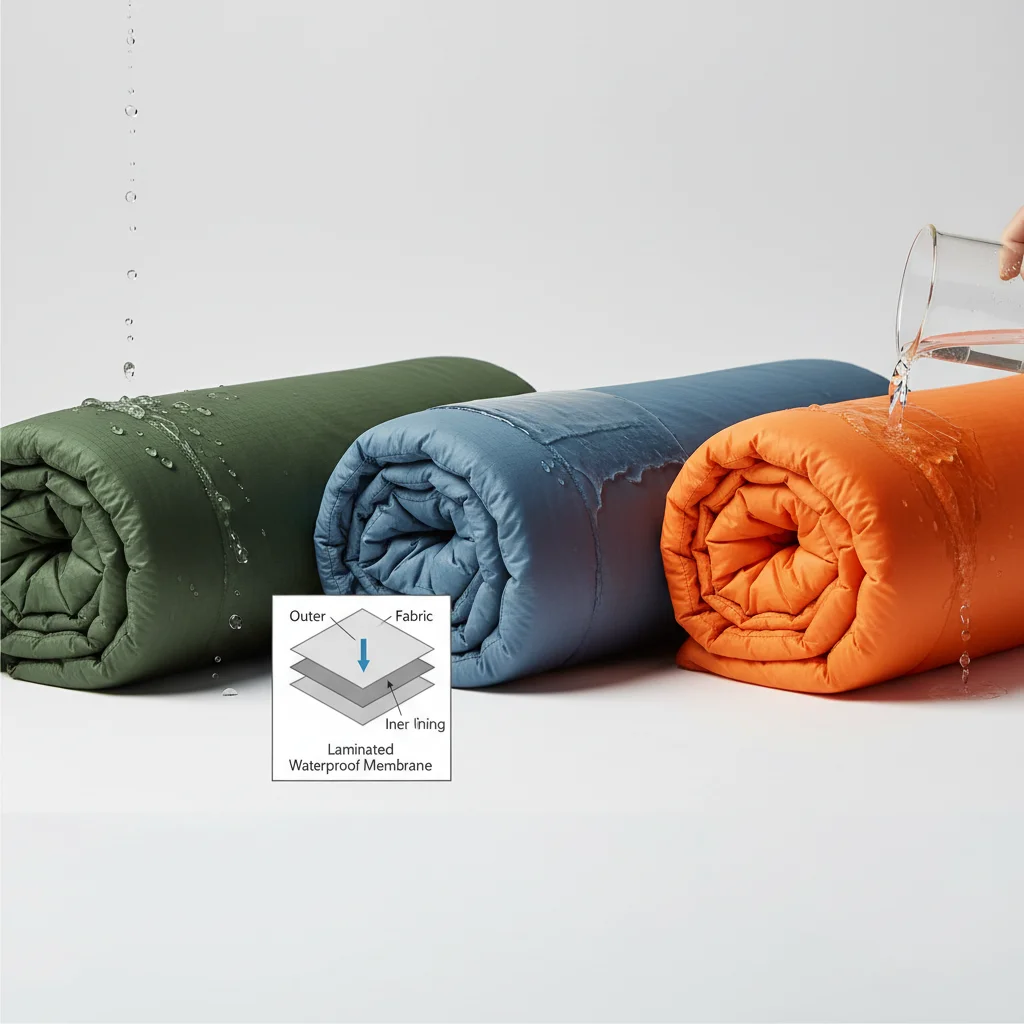
Sleeping bag water resistance is primarily achieved through three main types of treatments or materials: Durable Water Repellent (DWR) coatings, waterproof-breathable membranes, and inherently water-resistant shell fabrics. Each method offers varying degrees of protection against moisture, crucial for maintaining insulation and warmth in damp conditions.
Durable Water Repellent (DWR) Coatings
DWR coatings are the most common form of water resistance found on sleeping bag shell fabrics. These chemical treatments are applied to the outer surface of the fabric, causing water to bead up and roll off rather than soaking in. DWR doesn’t make a fabric fully waterproof, but it significantly improves its ability to shed light rain, dew, and condensation. Over time and with use, DWR coatings can wear off, reducing their effectiveness. Regular cleaning and reapplication of DWR sprays or wash-in treatments can help maintain this protective layer.
Many popular sleeping bags, especially those designed for backpacking, utilize DWR-treated nylon or polyester shells. This initial barrier is vital for protecting the insulation, whether it’s down or synthetic, from getting wet and losing its loft. Without a functional DWR, even a light mist can begin to compromise the bag’s thermal performance.
Waterproof-Breathable Membranes
For more robust water protection, some sleeping bags incorporate waterproof-breathable membranes, similar to those found in high-performance rain jackets. These membranes are typically laminated to the shell fabric, creating a barrier that prevents liquid water from penetrating while still allowing water vapor (perspiration) to escape. This breathability is key to preventing condensation buildup inside the bag, which can also dampen insulation.
Examples of these membranes include proprietary technologies from brands like Gore-Tex or Pertex Shield, or similar in-house solutions. Sleeping bags with waterproof-breathable membranes are often heavier and more expensive than those relying solely on DWR, but they offer superior protection in very wet or snowy environments. They are particularly beneficial for bivouacking or sleeping directly under the stars where exposure to precipitation is higher.
Inherently Water-Resistant Shell Fabrics
|
Our Picks for the Best Sleeping Bag in 2026
As an Amazon Associate I earn from qualifying purchases.
|
||
| Num | Product | Action |
|---|---|---|
| 1 | Coleman Heritage Big & Tall 10°F Flannel Sleeping Bag, XL Sleeping Bag Fits Adults up to 6ft 7in Tall, Machine Washable, Great for Camping, Hunting, Guests, & More |

|
| 2 | Cold Weather Sleeping Bag 100% Cotton Flannel XXL for Adults Big and Tall,Free Compression Sack |
|
| 3 | MalloMe Sleeping Bags for Adults Cold Weather & Warm - Backpacking Camping Sleeping Bag for Kids 10-12, Girls, Boys - Lightweight Compact Camping Essentials Gear Accessories Hiking Sleep Must Haves |
|
| 4 | Coleman Brazos 20/30°F Adult Cool-Weather Sleeping Bag with No-Snag Zipper & Stuff Sack, Machine Washable, Great for Camping, Traveling, Guests, & More |
|
| 5 | oaskys Camping Sleeping Bag - 3 Season Warm & Cool Weather - Summer Spring Fall Lightweight Waterproof for Adults Kids - Camping Gear Equipment, Traveling, and Outdoors |
|
| 6 | 0 Degree Winter Sleeping Bags for Adults Camping (450GSM) - Temp Range (5F–32F) Portable Waterproof Compression Sack- Camping Sleeping Bags for Big and Tall in Env Hoodie: Backpacking Hiking 4 Season |
|
| 7 | MalloMe Sleeping Bags for Adults Cold Weather & Warm - Backpacking Camping Sleeping Bag for Kids 10-12, Girls, Boys - Lightweight Compact Camping Essentials Gear Accessories Hiking Sleep Must Haves |
|
| 8 | Coleman Brazos 20/30°F Adult Cool-Weather Sleeping Bag with No-Snag Zipper & Stuff Sack, Machine Washable, Great for Camping, Traveling, Guests, & More |
|
| 9 | BubblePanda Rayon Made from Bamboo Sleep Sack 6-12 Months 1.0 Tog Soft Toddler Sleeping Sack for Babies 2-Way Zipper Baby Wearable Blanket |
|
| 10 | REDCAMP Cotton Flannel Sleeping Bag for Camping Backpacking, Adults Cold Weather Envelope Sleeping Bags with 2/3/4/6lbs Filling |
|
A third type of water resistance comes from the inherent properties of certain shell fabrics themselves, often achieved through tight weaves or specific fiber treatments. While not truly waterproof, these fabrics naturally resist water absorption to a greater degree than standard materials. For instance, some tightly woven nylons or polyesters, even without a heavy DWR, can offer a decent level of resistance to light moisture.
These fabrics are often chosen for their balance of durability, weight, and a moderate level of water resistance. They might be combined with a DWR coating to enhance their performance further. This approach is common in more budget-friendly sleeping bags or those where extreme waterproofing isn’t the primary concern, but some protection against dampness is still desired.
- DWR Coatings: Best for shedding light moisture and condensation.
- Waterproof-Breathable Membranes: Offers the highest protection against rain and snow while maintaining breathability.
- Inherently Water-Resistant Fabrics: Provides a moderate level of protection through material structure.
- Hydrophobic Down: Treated down insulation that resists moisture absorption.
- Synthetic Insulation: Retains more warmth when wet compared to untreated down.
Choosing the Right Water Resistance for Your Needs
The best type of sleeping bag water resistance depends heavily on your intended use and the conditions you expect to encounter. For casual car camping in fair weather, a basic DWR coating might suffice. For backpackers venturing into unpredictable mountain weather or those who frequently camp in humid or damp environments, a bag with a more robust DWR and potentially a waterproof-breathable membrane in critical areas (like the footbox or hood) would be a wiser investment.
Consider the overall system: a good tent or bivy sack will provide the primary shelter, but the sleeping bag’s water resistance acts as a crucial secondary defense. Always prioritize keeping your sleeping bag as dry as possible to ensure its insulating properties remain effective throughout your trip.
Get our weekly buyer guide
Practical specs, not advice. Unsubscribe anytime.
