The Western Mountaineering Alpinlite Sleeping Bag is a premium choice for adventurers, offering exceptional warmth, lightweight performance, and enhanced comfort in a mummy design. It features 850+ fill power goose down, a durable 12-denier ripstop nylon shell, and a roomy cut, making it suitable for three-season backpacking and mountaineering. This bag is handmade in the USA and retails around $700, providing a significant investment in outdoor comfort and safety.
Sleeping Bag: Overview and Evolution
A sleeping bag is a critical piece of insulation designed to protect you from cold temperatures during outdoor activities. Its primary role is to trap a layer of warm air around your body, minimizing heat loss and ensuring comfort in diverse environments. From minimalist designs for fast-and-light trekkers to luxurious options for car campers, sleeping bags are essential for anyone spending a night outdoors.
The history of sleeping bags traces back to rudimentary animal skin coverings used by early humans. Over centuries, these evolved through canvas and wool designs to the sophisticated, lightweight, and thermally efficient models we see today. Significant advancements in materials, such as synthetic fibers and high-fill-power down, coupled with innovative baffle constructions, have transformed sleeping bags into specialized pieces of equipment. Modern sleeping bags offer a remarkable balance of warmth, weight, and packability, making outdoor adventures more accessible and enjoyable.
Common Sleeping Bag Types
The world of sleeping bags offers a variety of designs, each tailored to specific needs and preferences. Understanding these types is key to selecting the perfect bag for your adventures.
Mummy Sleeping Bags
Mummy bags are characterized by their snug, contoured shape, designed to mimic the human body. This tapered form minimizes internal air space, reducing the amount of air your body needs to heat, thus maximizing thermal efficiency.
- Advantages: Excellent warmth-to-weight ratio, superior heat retention due to minimal dead air space, and compact packability. The Western Mountaineering Alpinlite exemplifies a high-performance mummy bag.
- Disadvantages: Can feel restrictive for some sleepers, limiting movement.
- Best for: Backpacking, mountaineering, and cold-weather expeditions where weight and warmth are paramount. The Alpinlite, with its slightly wider cut, addresses the common “restrictive” complaint of traditional mummy bags, offering more comfort without compromising warmth.
Rectangular Sleeping Bags
As the name suggests, rectangular sleeping bags offer a consistent width from top to bottom, providing ample room for movement.
- Advantages: Highly comfortable and spacious, allowing sleepers to stretch out or sleep in various positions. Can often be unzipped fully to serve as a blanket.
- Disadvantages: Less thermally efficient than mummy bags due to larger internal air volume, and generally heavier and bulkier.
- Best for: Car camping, casual outdoor trips, and warmer weather conditions where comfort and space are prioritized over extreme warmth and weight savings.
Double Sleeping Bags
|
Our Picks for the Best Sleeping Bag in 2026
As an Amazon Associate I earn from qualifying purchases.
|
||
| Num | Product | Action |
|---|---|---|
| 1 | REDCAMP Cotton Flannel Sleeping Bag for Camping Backpacking, Adults Cold Weather Envelope Sleeping Bags with 2/3/4/6lbs Filling |

|
| 2 | MalloMe Sleeping Bags for Adults Cold Weather & Warm - Backpacking Camping Sleeping Bag for Kids 10-12, Girls, Boys - Lightweight Compact Camping Essentials Gear Accessories Hiking Sleep Must Haves |
|
| 3 | BubblePanda Rayon Made from Bamboo Sleep Sack 6-12 Months 1.0 Tog Soft Toddler Sleeping Sack for Babies 2-Way Zipper Baby Wearable Blanket |
|
| 4 | 0 Degree Winter Sleeping Bags for Adults Camping (450GSM) - Temp Range (5F–32F) Portable Waterproof Compression Sack- Camping Sleeping Bags for Big and Tall in Env Hoodie: Backpacking Hiking 4 Season |
|
| 5 | Coleman Brazos 20/30°F Adult Cool-Weather Sleeping Bag with No-Snag Zipper & Stuff Sack, Machine Washable, Great for Camping, Traveling, Guests, & More |
|
| 6 | oaskys Camping Sleeping Bag - 3 Season Warm & Cool Weather - Summer Spring Fall Lightweight Waterproof for Adults Kids - Camping Gear Equipment, Traveling, and Outdoors |
|
| 7 | Coleman Brazos 20/30°F Adult Cool-Weather Sleeping Bag with No-Snag Zipper & Stuff Sack, Machine Washable, Great for Camping, Traveling, Guests, & More |
|
| 8 | MalloMe Sleeping Bags for Adults Cold Weather & Warm - Backpacking Camping Sleeping Bag for Kids 10-12, Girls, Boys - Lightweight Compact Camping Essentials Gear Accessories Hiking Sleep Must Haves |
|
| 9 | Coleman Heritage Big & Tall 10°F Flannel Sleeping Bag, XL Sleeping Bag Fits Adults up to 6ft 7in Tall, Machine Washable, Great for Camping, Hunting, Guests, & More |
|
| 10 | Cold Weather Sleeping Bag 100% Cotton Flannel XXL for Adults Big and Tall,Free Compression Sack |
|
Designed for two people, double sleeping bags offer a shared sleeping experience, fostering warmth and intimacy in the outdoors.
- Advantages: Shared body heat enhances warmth, can be more space-efficient than two separate bags, and ideal for couples.
- Disadvantages: Can be challenging to pack and carry due to their size and weight, and dependent on two people for optimal warmth.
- Best for: Couples camping, family trips, or situations where sharing warmth is desirable.
Quilt Sleeping Bags
Sleeping quilts are essentially sleeping bags without a back panel, designed to be used in conjunction with an insulated sleeping pad. The idea is that the insulation beneath you gets compressed anyway, so removing it saves weight.
- Advantages: Extremely lightweight and packable, offering excellent versatility and freedom of movement. Ideal for ultralight enthusiasts.
- Disadvantages: Requires a high-R-value sleeping pad for insulation from the ground, and can allow drafts if not properly sealed.
- Best for: Ultralight backpacking, thru-hiking, and experienced users who prioritize minimal weight and have mastered their sleep system.
Comparing Sleeping Bag Types
Choosing the right sleeping bag involves weighing various factors. The table below provides a concise comparison of the most common types:
| Feature | Mummy Bag (e.g., WM Alpinlite) | Rectangular Bag | Double Bag | Quilt |
|---|---|---|---|---|
| Weight | Very Lightweight | Heavy | Very Heavy | Ultra-lightweight |
| Thermal Efficiency | Excellent | Fair | Good (shared heat) | Good (with pad) |
| Packability | Excellent | Fair | Poor | Excellent |
| Comfort/Roominess | Good (Alpinlite is roomy) | Excellent | Excellent | Excellent (freedom) |
| Price | High | Low to Moderate | Moderate to High | Moderate to High |
| Ideal Use | Backpacking, Mountaineering | Car Camping, Warm Weather | Couples Camping | Ultralight Backpacking |
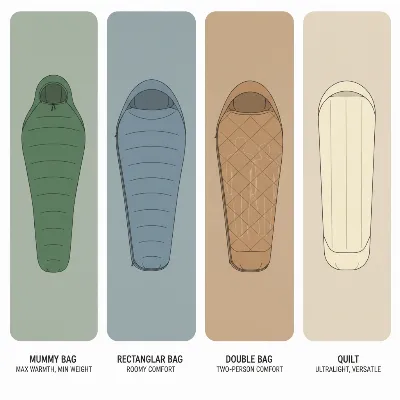 Comparison of different sleeping bag types: mummy, rectangular, double, and quilt, highlighting their unique shapes and features for outdoor adventures
Materials Commonly Used in Sleeping Bags
The performance of a sleeping bag largely hinges on its insulation material. The two primary types are down and synthetic, each with distinct properties.
Down
Down insulation, typically from geese or ducks, is renowned for its exceptional warmth-to-weight ratio and compressibility. High-quality down, like the 850+ fill power goose down found in the Western Mountaineering Alpinlite, can trap an impressive amount of air, providing superior insulation while remaining incredibly light.
- Advantages:
- Exceptional Warmth: Unparalleled warmth for its weight, making it ideal for cold conditions and lightweight pursuits.
- Compressibility: Packs down to a very small size, saving valuable space in your backpack.
- Durability: With proper care, down can maintain its loft and insulating properties for many years, offering excellent longevity.
- Disadvantages:
- Cost: Generally more expensive than synthetic alternatives.
- Vulnerability to Moisture: Loses much of its insulating power when wet. While some down is treated to be water-resistant, it’s still crucial to protect it from moisture.
- Maintenance: Requires specific cleaning and drying processes to maintain loft.
- Care Tips: Always store down bags uncompressed in a large mesh sack to allow the down to loft naturally. When washing, use a down-specific cleaner and tumble dry on low heat with dryer balls to break up clumps and restore loft.
Synthetic
Synthetic insulation is made from polyester fibers designed to mimic the structure of down, trapping air to provide warmth.
- Advantages:
- Affordability: Typically less expensive than down.
- Performance in Wet Conditions: Retains most of its insulating properties even when wet, making it a reliable choice for damp environments.
- Easy Care: Easier to clean and quicker to dry than down.
- Hypoallergenic: A good option for those with down allergies.
- Disadvantages:
- Weight and Bulk: Heavier and bulkier than down for the same level of warmth, impacting packability.
- Durability: Tends to lose loft and insulating power more quickly over time with repeated compression and use compared to high-quality down.
- Common Types: Popular synthetic fills include polyester staples like Primaloft, Climashield Apex, and Hollow Fiber, each offering varying levels of warmth and compressibility.
Guide to Choosing the Right Sleeping Bag (Buying Guide)
Selecting the perfect sleeping bag requires careful consideration of several factors to match your specific needs and expected conditions.
Determine Your Purpose
Your primary activity dictates the type of sleeping bag you need. Are you:
- Mountaineering or Alpine Climbing? Prioritize ultralight, highly compressible mummy bags with excellent warmth-to-weight ratios, like the Western Mountaineering Alpinlite.
- Backpacking or Thru-hiking? Look for a balance of weight, warmth, and packability. A versatile 20°F down bag is often a popular choice for three-season use.
- Car Camping or Glamping? Comfort and space might outweigh minimal weight, making rectangular or double bags suitable.
- What weather conditions do you anticipate? Consider the coldest temperatures you expect to encounter.
Choose the Right Temperature Rating
Sleeping bag temperature ratings are crucial for safety and comfort. They usually include:
- Comfort Temperature: The lowest temperature at which an average woman (who generally sleeps colder) can expect to sleep comfortably in a relaxed position. This is the most practical rating for most users. For the Alpinlite, the EN Comfort rating is 25°F (-4°C).
- Limit Temperature: The lowest temperature at which an average man (who generally sleeps warmer) can sleep for eight hours in a curled position without feeling cold. For the Alpinlite, the EN Limit rating is 14°F (-10°C).
- Extreme Temperature: A survival rating, indicating the minimum temperature at which a standard woman can remain for six hours without risk of death from hypothermia, though frostbite is possible. This is not a comfort rating. The Alpinlite’s EN Extreme rating is -21°F (-29°C).
Always consider your personal “sleep style” (warm or cold sleeper) and the type of sleeping pad you’ll use, as a good pad significantly contributes to overall warmth.
Size and Shape
- Length: Choose a bag that matches your height, allowing for a few inches of extra space at the footbox without being excessively long, which creates dead air space. The Alpinlite comes in various lengths (e.g., 5’6″, 6’0″, 6’6″).
- Girth: While traditional mummy bags can be restrictive, the Western Mountaineering Alpinlite is specifically designed with a wider cut at the shoulders (64″ for the 6’0″ model) and hips (55-56″) to provide more room for comfortable movement, making it suitable for side sleepers or those who prefer extra space.
Weight and Packability
If you’re carrying your sleeping bag over long distances, weight and compressed volume are critical. Down bags generally offer the best performance in this regard. The Alpinlite, for example, weighs around 1 lb 15 oz (for the 6’0″ size) and packs down efficiently, making it an excellent choice for fast-and-light endeavors. Check the packed dimensions to ensure it fits easily into your backpack.
Budget
Sleeping bags range widely in price. While it might be tempting to opt for a cheaper model, a high-quality sleeping bag, especially a down-filled one like the Alpinlite (retailing around $700), is a significant investment that can last for a decade or more with proper care. Consider it an investment in your comfort, safety, and enjoyment of the outdoors.
Reputable Sleeping Bag Brands
The market offers numerous sleeping bag brands, but some have consistently earned a reputation for quality, innovation, and reliability.
- Western Mountaineering: Widely regarded as a premium brand, known for its exceptional craftsmanship, high-fill-power down, and meticulous attention to detail. Bags like the Alpinlite are handmade in the USA and are considered top-tier for serious outdoor enthusiasts.
- Therm-a-Rest: Famous for its sleeping pads, Therm-a-Rest also produces a range of high-quality sleeping bags and quilts, often incorporating innovative designs for warmth and comfort.
- Feathered Friends: Another US-based brand specializing in high-end down gear, known for its superb warmth-to-weight ratio and durability.
- Sea to Summit: Offers a diverse range of sleeping bags, from ultralight down options to synthetic bags, with a focus on packability and innovative features.
- Mountain Hardwear: Provides robust and technical sleeping bags designed for challenging conditions, with options in both down and synthetic insulation.
Western Mountaineering, in particular, stands out for its commitment to using ethically sourced 850+ fill power goose down and durable, lightweight shell fabrics like ExtremeLite™ 12-denier ripstop nylon. Their bags are often praised for their longevity, with users reporting many years of heavy use without significant loss of loft.
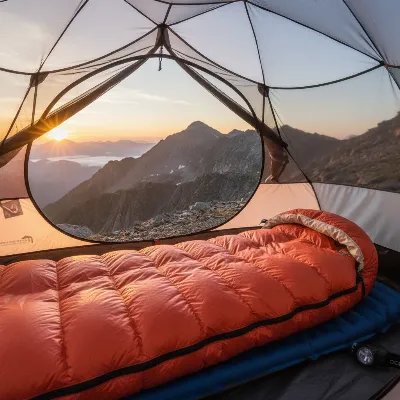 A Western Mountaineering Alpinlite sleeping bag laid out inside a lightweight tent in an alpine setting during sunrise, showing a comfortable and well-prepared campsite
Tips for Using and Caring for Your Sleeping Bag
Proper use and maintenance are essential to maximize the lifespan and performance of your sleeping bag, especially a high-quality down bag like the Alpinlite.
How to Fold and Roll Your Sleeping Bag Correctly
While it’s often taught to roll a sleeping bag, for down bags, it’s generally better to stuff it loosely into its stuff sack. This method helps preserve the loft of the down by preventing it from creasing in the same spots repeatedly. For the Alpinlite:
- Turn the bag inside out and push it foot-first into its stuff sack.
- Compress it by pushing down, rather than rolling, to fill the stuff sack evenly.
- Ensure the zipper is always completely closed before stuffing to prevent snagging or damaging the fabric.
How to Wash and Clean Your Sleeping Bag
Cleaning a down sleeping bag requires care to avoid damaging the delicate down plumes:
- For Down Bags (like Alpinlite):
- Use a front-loading washing machine (top-loaders with agitators can damage the bag).
- Use a specialized down wash detergent (e.g., Nikwax Down Wash Direct).
- Wash on a gentle cycle with cold water.
- Rinse thoroughly multiple times to ensure all soap is removed.
- Tumble dry on a low heat setting with several clean tennis balls or dryer balls. This helps break up down clumps and restore loft. This process can take several hours.
- Ensure the bag is completely dry before storage to prevent mildew and damage to the down.
- For Synthetic Bags: Follow similar steps, but regular mild detergent can be used, and drying time is usually shorter.
How to Store Your Sleeping Bag to Extend its Lifespan
Proper storage is paramount for maintaining the loft and longevity of any sleeping bag, particularly down insulation.
- Uncompressed Storage: Never store your sleeping bag compressed in its stuff sack for long periods. This permanently damages the down or synthetic fibers, reducing their ability to loft and insulate.
- Large Storage Sack: Store your Alpinlite in the large mesh or breathable cotton storage bag it came with. This allows the insulation to remain fully lofted, preserving its warmth.
- Dry Environment: Keep your sleeping bag in a cool, dry place away from direct sunlight and humidity to prevent mildew and degradation of materials.
- Hang if Possible: If space allows, hanging the sleeping bag in a large closet can also be an effective storage method.
“A quality sleeping bag is not just gear; it’s an investment in countless memorable nights under the stars, promising comfort and warmth when you need it most.”
Conclusion
The Western Mountaineering Alpinlite Sleeping Bag stands out as a premium choice for adventurers seeking exceptional warmth, lightweight performance, and enhanced comfort in a mummy design. Its 850+ fill power goose down, durable 12D ripstop nylon shell, and thoughtful features like continuous baffles and a roomy cut make it a versatile companion for three-season backpacking, mountaineering, and even colder conditions with appropriate layering. While it represents a significant investment, its superior quality, longevity, and “Made in USA” craftsmanship ensure that the Alpinlite delivers reliable warmth and comfort trip after trip. For those who prioritize a blend of ultralight efficiency and a more spacious sleeping experience, the Alpinlite truly shines. Are you ready to upgrade your backcountry sleep system to a new level of warmth and comfort?
Frequently Asked Questions
Frequently Asked Questions
What makes the Western Mountaineering Alpinlite Sleeping Bag unique?
The Alpinlite differentiates itself with a slightly wider, roomier cut around the shoulders and hips than traditional mummy bags, providing more comfort for side sleepers. It maintains an ultralight profile and exceptional warmth-to-weight ratio due to its 850+ fill power down and continuous baffle design.
What temperature rating should I choose for a sleeping bag?
For most three-season backpacking, a 20u00b0F (-7u00b0C) rated sleeping bag is a versatile choice. Always consider your personal sleeping warmth and the specific conditions you anticipate. The Alpinlite's 20u00b0F rating provides a good balance for diverse mountain environments.
How do I maintain the loft of my down sleeping bag?
To maintain loft, always store your down sleeping bag uncompressed in a large mesh or breathable storage sack. When packing for a trip, stuff it loosely into its compression sack rather than rolling it tightly. Regularly fluffing and airing out your bag, and only washing it when necessary using specialized down detergent, will also help preserve its insulating power.
Can the Western Mountaineering Alpinlite be used in colder temperatures than its 20u00b0F rating?
While rated for 20u00b0F, experienced users have comfortably extended the Alpinlite's range into colder temperatures by adding base layers, a sleeping bag liner, and wearing a down jacket inside. The continuous baffles also allow you to shift down to the top of the bag for maximum warmth over your core in colder conditions.
Is the Western Mountaineering Alpinlite worth its high price?
For serious backpackers and mountaineers who value lightweight performance, exceptional warmth, superior comfort, and long-term durability, the Western Mountaineering Alpinlite is widely considered a worthwhile investment. Its high-quality materials and craftsmanship ensure it will perform reliably for many years, offering excellent value over its lifespan.
How to Care for Your Western Mountaineering Alpinlite Sleeping Bag
Proper care and maintenance are crucial for maximizing the lifespan and performance of your Western Mountaineering Alpinlite down sleeping bag.
For down bags like the Alpinlite, it's better to stuff it loosely into its stuff sack rather than rolling it. This method helps preserve the loft of the down by preventing it from creasing in the same spots repeatedly. Always ensure the zipper is completely closed before stuffing to prevent snagging or damaging the fabric.
Use a front-loading washing machine with a specialized down wash detergent on a gentle cycle with cold water. Rinse thoroughly multiple times to remove all soap. Tumble dry on a low heat setting with several clean tennis balls or dryer balls to break up down clumps and restore loft, which can take several hours.
Never store your sleeping bag compressed in its stuff sack for long periods, as this permanently damages the down fibers. Store your Alpinlite in the large mesh or breathable cotton storage bag it came with, allowing the insulation to remain fully lofted. Keep it in a cool, dry place away from direct sunlight and humidity to prevent mildew.
Get our weekly buyer guide
Practical specs, not advice. Unsubscribe anytime.

Absolutely love my Western Mountaineering Alpinlite. I’ve used it on multiple overnight treks and it’s consistently delivered exceptional warmth and comfort. The quality is top-notch, and you can tell it’s built to last. It’s made my cold-weather camping much more enjoyable, and I wouldn’t hesitate to recommend it to anyone looking for a premium sleeping bag.
I finally splurged on the Western Mountaineering Alpinlite for my backpacking trips, and it’s been a game-changer. The 850+ fill power goose down really makes a difference; I stayed toasty warm even when temps dropped unexpectedly. It’s incredibly lightweight, which is a huge plus when you’re counting every ounce in your pack. Definitely worth the investment for serious hikers.
This bag is fantastic for three-season use. I’ve taken it on several mountaineering trips and it performs exactly as advertised. The roomy cut is a nice touch for a mummy bag, giving me enough space to move around without feeling constricted. My only minor quibble is the price point around $700; it’s a bit steep, but the quality is undeniable.
I was really excited about the Alpinlite, especially hearing it’s handmade in the USA. It’s super light and packs down small, which is great. However, I found the 12-denier ripstop nylon shell a little too delicate for my liking. I’m always worried about snagging it on something, so I have to be extra careful. Still a good bag, just wish the outer material felt a bit more robust.