Rectangular sleeping bags are ideal for RV camping because they offer generous space and a bed-like experience, transforming RV sleeping quarters into a cozy haven. Unlike form-fitting mummy bags designed for minimal weight, rectangular bags prioritize sprawling comfort, making them the optimal choice for motorhome excursions where bulk and weight are less of a concern. This guide explores the evolution and construction of rectangular sleeping bags, along with a selection of five top models for exceptional RV camping comfort.
Sleeping Bag: Overview and Evolution
The sleeping bag, a cornerstone of outdoor gear, has evolved dramatically since its rudimentary beginnings. Initially, these portable cocoons were purely functional, designed to offer essential warmth and protection in harsh wilderness environments. Early designs were often simple blanket-like wraps or basic sacks, prioritizing survival over comfort. As outdoor activities diversified, so too did sleeping bag designs. The advent of mountaineering and backpacking led to the popularization of the mummy shape, engineered for maximum thermal efficiency and minimal weight, critical for those carrying their gear on their backs.
However, the rise of car camping and recreational vehicle (RV) travel brought a shift in priorities. Campers no longer needed to shave every ounce or compress their gear into tiny packs. Instead, comfort became king. This demand spurred the resurgence and refinement of the rectangular sleeping bag. These roomier designs, often resembling a traditional bed duvet when fully unzipped, cater to a different kind of adventurer – one who values freedom of movement, spaciousness, and a homely feel, even when surrounded by nature. This evolution reflects a broader trend: outdoor gear is becoming more specialized, ensuring that every camper, regardless of their style, can find equipment perfectly suited to their needs. For see our sleeping bags recommendations on this site.
Types of Popular Sleeping Bags
While the market offers a diverse array of sleeping bag shapes, each catering to specific needs, rectangular and double sleeping bags stand out as prime choices for RV camping due to their emphasis on comfort and space.
Rectangular Sleeping Bags
Rectangular sleeping bags are the quintessential choice for campers prioritizing a spacious sleep environment. Their straight, broad design allows sleepers to stretch out fully, turn over easily, and move without feeling confined. This freedom makes them exceptionally comfortable, especially for side sleepers or those who naturally toss and turn throughout the night. Many rectangular bags can be fully unzipped to convert into a large, comfortable blanket, adding to their versatility for various temperatures or shared warmth around a campfire.
However, this added space comes with trade-offs. The larger internal volume means there’s more air for your body to heat, potentially reducing their thermal efficiency in very cold conditions compared to a snug mummy bag. They are also generally bulkier and heavier, which is less of a concern for RV camping where gear is transported by vehicle rather than carried on your back. Rectangular bags are perfectly suited for RV trips, car camping, and mild to cool weather conditions where comfort outweighs extreme warmth-to-weight ratios.
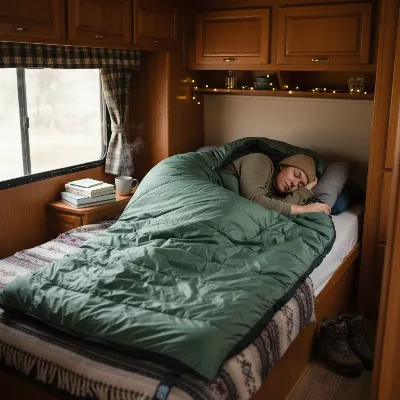 A person comfortably stretched out inside a spacious rectangular sleeping bag in an RV interior
Double Sleeping Bags
|
Our Picks for the Best Sleeping Bag in 2026
As an Amazon Associate I earn from qualifying purchases.
|
||
| Num | Product | Action |
|---|---|---|
| 1 | MalloMe Sleeping Bags for Adults Cold Weather & Warm - Backpacking Camping Sleeping Bag for Kids 10-12, Girls, Boys - Lightweight Compact Camping Essentials Gear Accessories Hiking Sleep Must Haves |

|
| 2 | Coleman Brazos 20/30°F Adult Cool-Weather Sleeping Bag with No-Snag Zipper & Stuff Sack, Machine Washable, Great for Camping, Traveling, Guests, & More |
|
| 3 | REDCAMP Cotton Flannel Sleeping Bag for Camping Backpacking, Adults Cold Weather Envelope Sleeping Bags with 2/3/4/6lbs Filling |
|
| 4 | BubblePanda Rayon Made from Bamboo Sleep Sack 6-12 Months 1.0 Tog Soft Toddler Sleeping Sack for Babies 2-Way Zipper Baby Wearable Blanket |
|
| 5 | Cold Weather Sleeping Bag 100% Cotton Flannel XXL for Adults Big and Tall,Free Compression Sack |
|
| 6 | 0 Degree Winter Sleeping Bags for Adults Camping (450GSM) - Temp Range (5F–32F) Portable Waterproof Compression Sack- Camping Sleeping Bags for Big and Tall in Env Hoodie: Backpacking Hiking 4 Season |
|
| 7 | oaskys Camping Sleeping Bag - 3 Season Warm & Cool Weather - Summer Spring Fall Lightweight Waterproof for Adults Kids - Camping Gear Equipment, Traveling, and Outdoors |
|
| 8 | Coleman Heritage Big & Tall 10°F Flannel Sleeping Bag, XL Sleeping Bag Fits Adults up to 6ft 7in Tall, Machine Washable, Great for Camping, Hunting, Guests, & More |
|
| 9 | MalloMe Sleeping Bags for Adults Cold Weather & Warm - Backpacking Camping Sleeping Bag for Kids 10-12, Girls, Boys - Lightweight Compact Camping Essentials Gear Accessories Hiking Sleep Must Haves |
|
| 10 | Coleman Brazos 20/30°F Adult Cool-Weather Sleeping Bag with No-Snag Zipper & Stuff Sack, Machine Washable, Great for Camping, Traveling, Guests, & More |
|
Designed for two, double sleeping bags are essentially oversized rectangular bags built to accommodate couples or small families. Their primary advantage lies in shared warmth and intimacy, creating a combined sleeping area that mimics a bed at home. Many models feature individual zippers on each side, allowing each person to adjust their ventilation without disturbing their partner. Some innovative designs can even be separated into two individual sleeping bags, offering flexibility for solo trips or when extra bedding is needed.
The main considerations for double bags are their sheer size and the need for coordinated movement if sharing. They are the bulkier option, requiring ample storage space, though this is typically less problematic in an RV setting. Double sleeping bags are ideal for couples enjoying RV camping, family trips where sharing body heat is desirable, or for individuals who simply crave an enormous amount of space to sprawl.
Other Types (Briefly)
While less suitable for the primary focus on RV comfort, mummy bags offer superior thermal efficiency and minimal weight for backpacking in cold weather, thanks to their tapered, body-hugging design and insulated hoods. Quilts are an even lighter, more minimalist option favored by ultralight backpackers who want flexibility and ventilation, often relying on a sleeping pad for bottom insulation. For RV camping, where space and warmth are generally controlled, the restrictive nature of mummy bags or the specialized use of quilts are usually unnecessary.
Comparing Different Sleeping Bag Types
Choosing the perfect sleeping bag involves weighing various factors against your specific camping style. For RV camping, comfort and space often take precedence over the ultralight criteria of backpacking. Here’s a comparison to highlight the distinctions:
| Feature | Rectangular Sleeping Bag | Double Sleeping Bag | Mummy Sleeping Bag | Quilt |
|---|---|---|---|---|
| Weight | Moderate to Heavy | Heavy | Light to Ultra-light | Ultra-light |
| Warmth Retention | Good (mild to cool) | Good (shared warmth) | Excellent (cold to extreme) | Moderate (relies on pad) |
| Interior Space | Very High (roomy) | Highest (for two) | Low (snug, restrictive) | High (open, flexible) |
| Packed Size | Large | Very Large | Small to Very Small | Very Small |
| Comfort | Excellent (freedom of movement) | Excellent (bed-like for two) | Moderate (can feel confined) | High (unrestricted movement) |
| Price | Mid-range | Mid to High-range | Mid to High-range | High-range |
| Ideal Use | RV/Car Camping, Mild Weather, Side Sleepers | RV/Car Camping, Couples/Families | Backpacking, Cold Weather, Expeditions | Ultralight Backpacking, Warm Sleepers |
Common Materials in Sleeping Bags
The performance and feel of a sleeping bag are largely determined by its construction materials, particularly the insulation and shell fabric. Understanding these components is crucial for selecting the right bag for your RV adventures.
Down
Down insulation, typically sourced from geese or ducks, is prized for its exceptional warmth-to-weight ratio and compressibility. A small amount of down can trap a significant amount of air, providing superior insulation with minimal bulk. This makes down bags incredibly lightweight and easy to pack, even for larger rectangular designs. The quality of down is measured by “fill power” (e.g., 600-fill, 800-fill), indicating its loftiness and insulating capability. Higher fill power means more warmth for less weight.
However, down has its drawbacks. It is generally more expensive than synthetic alternatives. Its most significant vulnerability is moisture; when wet, down loses its loft and, consequently, its insulating properties. While many modern down bags feature hydrophobic (water-resistant) treatments, proper care is essential. To maintain a down bag’s lifespan and performance, dry cleaning is often recommended, and it should always be stored uncompressed in a cool, dry place when not in use.
Synthetic
Synthetic insulation, made from various polyester fibers, offers a compelling alternative to down. Its primary advantages include a lower price point, excellent performance when wet, and quicker drying times. Unlike down, synthetic insulation retains much of its warmth even if it gets damp, making it a reliable choice for humid environments or accidental spills in the RV. It is also hypoallergenic, a benefit for those with feather allergies. Popular synthetic types include Polyester and Primaloft, each designed to mimic down’s loft and warmth.
On the downside, synthetic insulation is generally heavier and bulkier than down for a comparable warmth rating, making rectangular synthetic bags larger when packed. While synthetic fibers can be durable, they tend to lose their loft and insulating efficiency faster over many years of use and compression compared to high-quality down. Care for synthetic bags is typically easier; most can be machine washed and air-dried.
Fabric Durability
The outer and inner shell fabrics of a sleeping bag also play a vital role. Durability is often expressed in “Denier” (D), which refers to the fiber’s thickness.
- 7D fabric: Ultra-light and extremely compressible, but less resistant to abrasion. Good for weight minimization where durability is a secondary concern.
- 10D fabric: Offers a good balance between lightness and strength, popular for its versatile use.
- 20D fabric: Provides enhanced resistance to tearing and abrasion, making it a durable choice for general camping and demanding environments like an RV where it might rub against surfaces.
- 40D fabric: Heavy and less compressible, but offers very high durability for intensive use.
A Durable Water Repellent (DWR) treatment is also commonly applied to shell fabrics, causing water to bead up and roll off, adding an extra layer of protection against moisture.
How to Choose a Sleeping Bag (Buying Guide)
Selecting the ideal rectangular sleeping bag for your RV camping adventures requires careful consideration of several factors beyond just color and brand. Focusing on your specific needs will ensure comfort and satisfaction on every trip.
Determine Usage Purpose
For RV camping, your primary purpose is almost always comfort and relaxation. Unlike backpacking where every ounce and inch counts, RV life allows for more luxurious, spacious gear. Prioritize bags that offer ample room to move, soft linings, and features that enhance a “home-away-from-home” feel. Think about how often you’ll use it and for what activities—lounging in the RV, occasional tent setups, or simply as extra bedding.
Choose the Right Temperature Rating
Sleeping bags come with temperature ratings, indicating the lowest temperature at which they are designed to keep an average sleeper comfortable. These ratings typically assume use in a tent. However, RV interiors are usually warmer than the outside air, even without constant heating.
- Comfort Temperature: The lowest temperature at which a standard woman can expect to sleep comfortably in a relaxed position.
- Limit Temperature: The lowest temperature at which a standard man can remain in a strong curled position for eight hours without feeling cold.
- Extreme Temperature: The lowest temperature at which a standard woman can remain for six hours without risk of death from hypothermia (not to be used for comfort).
For most RV camping in mild to cool weather, a bag rated for 40°F (approx. 5°C) or 30°F (approx. -1°C) will often suffice. If you plan winter RV trips or tend to sleep cold, opt for a warmer rating like 20°F (approx. -7°C) or even 0°F (approx. -18°C). you can always unzip a bag to cool down, but you can’t add warmth that isn’t there.
Size and Style
Rectangular bags are chosen specifically for their roominess. Ensure the length is appropriate for your height to prevent your head or feet from pressing against the ends, which can create cold spots. If you’re tall, look for “long” versions. Consider the width as well; some rectangular bags are wider than others, offering even more space. For couples, a double rectangular sleeping bag is an excellent choice, fostering shared warmth and eliminating the need for two separate bags.
Weight and Packability
While less critical for RV camping than backpacking, weight and packed size are still factors to consider, especially if storage space in your RV is limited. Synthetic bags tend to be bulkier than down bags of comparable warmth. Check the “stuff sack” dimensions to ensure it fits into your designated storage areas. If you occasionally transition to tent camping or need to move the bag frequently, a slightly more compressible option might be beneficial.
Budget
Sleeping bags come in a wide price range. Synthetic rectangular bags are generally more affordable, making them an excellent entry-level option. Down-filled bags, especially those with higher fill powers or premium features, will command a higher price. Investing in a quality bag that meets your comfort and temperature needs is worthwhile if you camp frequently, as it contributes significantly to an enjoyable outdoor experience.
Top 5 Best Rectangular Sleeping Bags for RV Camping
For RVers, comfort, durability, and ample space are key. Here are five top-tier rectangular sleeping bags that excel in providing a luxurious night’s sleep on the road.
1. NEMO Jazz 30
The NEMO Jazz 30 is consistently praised for its exceptional comfort, often feeling more like a bed than a traditional sleeping bag. Designed with car camping in mind, it features a spacious rectangular shape, a blanket-fold draft collar near the face, and an integrated, removable sheet that makes it feel incredibly cozy. It’s often available in double sizes, making it a fantastic option for couples in an RV. The Jazz 30 uses high-quality synthetic insulation, providing reliable warmth in temperatures around 30°F (approx. -1°C), and its durable shell ensures it stands up to regular use. Its generous dimensions allow for plenty of stretching and tossing, crucial for a good night’s rest in your RV.
2. REI Co-op Siesta Hooded 20/25
The REI Co-op Siesta Hooded sleeping bag is a popular choice for its blend of affordability and comfort. Available in 20°F (-7°C) and 25°F (-4°C) ratings, it provides warmth suitable for various conditions while maintaining a spacious, rectangular shape. The “hooded” design offers additional head and neck warmth, a nice touch not always found on rectangular bags, allowing for extra coziness without restricting movement. Its soft lining and generous dimensions make it feel like a home bed, perfectly complementing the RV camping experience. The synthetic insulation is durable and performs well even if it encounters some moisture.
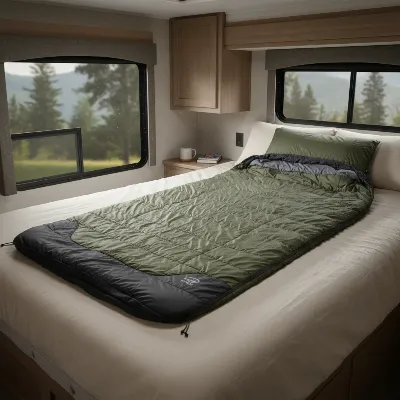 REI Co-op Siesta Hooded 20 sleeping bag laid out in a spacious RV bedroom
3. The North Face Eco Trail Bed
The North Face Eco Trail Bed offers a premium blend of comfort, durability, and environmental consciousness. This rectangular sleeping bag is crafted from recycled materials, appealing to eco-minded adventurers. It boasts a roomy interior, allowing for unrestricted movement throughout the night. With various temperature ratings available, it provides versatile warmth for most RV camping scenarios. Its robust construction ensures longevity, while the thoughtful design prioritizes a comfortable, bed-like feel, making it an excellent investment for those seeking both luxury and sustainability on their RV trips.
4. Kelty Tru.Comfort 20 Doublewide
For couples or those who simply desire a vast amount of space, the Kelty Tru.Comfort 20 Doublewide is an outstanding rectangular double sleeping bag. Rated for 20°F (-7°C), it offers substantial warmth for cooler nights. Its design features a “CloudLoft” synthetic insulation, a roomy rectangular shape, and two separate comfort layers, allowing each sleeper to adjust their warmth independently. The integrated blanket folds and foot vents add to its versatility. This bag is explicitly designed for car and RV camping, prioritizing comfort and space to deliver a truly luxurious sleep experience for two.
5. Coleman Brazos (or similar Coleman rectangular bag)
The Coleman Brazos (or other similar Coleman rectangular bags like the Kompact 40°F or Big Basin 15°F) stands out as an excellent budget-friendly option without sacrificing essential comfort for RV camping. These bags typically offer a classic rectangular shape, providing ample room to stretch out. While they might not boast the advanced features of more expensive models, Coleman bags are known for their reliable synthetic insulation and durable construction. They are often rated for mild to cool temperatures, making them suitable for three-season RV trips. For campers seeking a straightforward, spacious, and affordable sleeping solution for their RV, a Coleman rectangular bag is a solid, dependable choice.
> “A comfortable sleeping bag for your RV isn’t just about warmth; it’s about recreating that feeling of home on the open road. The right rectangular bag transforms a simple bunk into a sanctuary.” – Michael Chen, RV Lifestyle Blogger
Tips for Using and Maintaining Your Sleeping Bag
Proper care and usage are essential to maximize the lifespan and performance of your rectangular sleeping bag, ensuring it remains a comfortable companion on countless RV adventures.
How to Fold and Roll Your Sleeping Bag Correctly
While stuffing a sleeping bag into its sack is often quicker, especially for synthetic models, proper rolling can help preserve the loft of the insulation over time and make it easier to pack in an RV. Start by laying the bag flat and zipping it up. Fold it in half lengthwise, pushing out any trapped air. Then, starting from the foot end, roll it tightly and evenly, again pushing out air as you go. Once rolled, secure it with straps or gently guide it into its stuff sack. Avoid compressing down bags excessively for long periods.
How to Wash and Clean Your Sleeping Bag
Cleaning your sleeping bag is crucial for hygiene and maintaining its insulating properties. Always check the manufacturer’s care label first.
- For Synthetic Bags: Most synthetic rectangular bags can be machine washed. Use a large, front-loading commercial washing machine (top-loaders with agitators can damage the bag). Use a gentle cycle with cold water and a mild, non-detergent soap specifically designed for outdoor gear. Rinse thoroughly to remove all soap residue. Tumble dry on low heat with a few tennis balls to help fluff the insulation, periodically checking and manually breaking up clumps. Ensure it’s completely dry before storing.
- For Down Bags: Down bags require more delicate care. Hand washing or professional dry cleaning is often recommended. If hand washing, soak in a tub with cold water and a down-specific cleaner, gently kneading the bag. Rinse multiple times until the water runs clear. Drying a down bag can take several hours on low heat with tennis balls, requiring frequent fluffing to redistribute the down and prevent clumping. Incomplete drying can lead to mildew and damaged down.
How to Store Your Sleeping Bag
Correct storage is perhaps the most critical factor in prolonging your sleeping bag’s life. Never store a sleeping bag compressed in its stuff sack for extended periods. Compression crushes the insulation, reducing its ability to loft and trap warm air.
- Long-Term Storage: For down bags, store them in a large mesh storage sack or hung loosely in a closet. For synthetic bags, a large mesh bag or simply draped over a hanger in a dry, cool place is ideal. This allows the insulation to maintain its loft.
- In Your RV: If space is tight, keep it loosely rolled or folded under a bed or in a spacious cabinet. Avoid leaving it compressed in its stuff sack for more than a few days at a time. Ensuring your bag is clean and completely dry before storage will also prevent mildew and unpleasant odors.
Conclusion
Choosing the right rectangular sleeping bag is an investment in your comfort and enjoyment on every RV camping trip. Unlike lightweight backpacking gear, RV-specific bags prioritize spaciousness, plush materials, and features that mimic the cozy feel of a bed at home. By understanding the advantages of rectangular and double designs, considering insulation types like down and synthetic, and following a thoughtful buying guide, you can confidently select a bag that perfectly complements your mobile lifestyle.
The North Face Eco Trail Bed, REI Co-op Siesta Hooded, NEMO Jazz 30, Kelty Tru.Comfort 20 Doublewide, and the reliable Coleman Brazos all stand out as excellent choices, each offering unique benefits for the discerning RV camper. Proper care and storage will ensure your chosen sleeping bag remains a sanctuary of comfort for years to come. So, next time you hit the open road, that a truly great RV adventure begins with a truly great night’s sleep.
What features do you value most in a sleeping bag when planning your next RV getaway?
Frequently Asked Questions
What makes a rectangular sleeping bag ideal for RV camping?
Rectangular sleeping bags are ideal for RV camping because they offer ample room to move, stretch, and change sleeping positions, providing a comfort level closer to a home bed. Since weight and packed size are less critical in an RV, their spaciousness and often plush linings make them a superior choice for relaxation and unrestricted sleep.
Can I zip two rectangular sleeping bags together?
Yes, many rectangular sleeping bags from the same brand and series are designed with compatible zippers, allowing you to zip two individual bags together to create a larger, double sleeping bag. This feature is excellent for couples or families seeking shared warmth and more expansive sleeping quarters in an RV.
What temperature rating should I look for in an RV sleeping bag?
For most RV camping in mild to cool weather, a sleeping bag with a comfort rating around 30°F to 40°F (approximately -1°C to 5°C) is usually sufficient. Since RV interiors offer more protection and can be heated, you generally don’t need ratings as low as those required for tent camping in cold conditions.
Is synthetic or down insulation better for an RV sleeping bag?
Both synthetic and down insulation have merits for RV sleeping bags. Synthetic is typically more affordable, performs better if it gets wet, and is hypoallergenic. Down offers superior warmth-to-weight and compressibility but is more expensive and vulnerable to moisture. For RV use, where weight is less a concern and moisture exposure is minimal, either can be an excellent choice based on budget and preference.
How do I store a rectangular sleeping bag in an RV with limited space?
To maintain the loft and prolong the life of your rectangular sleeping bag, avoid storing it tightly compressed for long periods. If space is limited, try to store it loosely folded or in a large mesh storage sack under a bunk, in a spacious cabinet, or draped over a bed. Ensure it’s clean and dry before storage to prevent mildew.
Frequently Asked Questions
What makes a rectangular sleeping bag ideal for RV camping?
Rectangular sleeping bags are ideal for RV camping because they offer ample room to move, stretch, and change sleeping positions, providing a comfort level closer to a home bed. Since weight and packed size are less critical in an RV, their spaciousness and often plush linings make them a superior choice for relaxation and unrestricted sleep.
Can I zip two rectangular sleeping bags together?
Yes, many rectangular sleeping bags from the same brand and series are designed with compatible zippers, allowing you to zip two individual bags together to create a larger, double sleeping bag. This feature is excellent for couples or families seeking shared warmth and more expansive sleeping quarters in an RV.
What temperature rating should I look for in an RV sleeping bag?
For most RV camping in mild to cool weather, a sleeping bag with a comfort rating around 30u00b0F to 40u00b0F (approximately -1u00b0C to 5u00b0C) is usually sufficient. Since RV interiors offer more protection and can be heated, you generally don't need ratings as low as those required for tent camping in cold conditions.
Is synthetic or down insulation better for an RV sleeping bag?
Both synthetic and down insulation have merits for RV sleeping bags. Synthetic is typically more affordable, performs better if it gets wet, and is hypoallergenic. Down offers superior warmth-to-weight and compressibility but is more expensive and vulnerable to moisture. For RV use, where weight is less a concern and moisture exposure is minimal, either can be an excellent choice based on budget and preference.
How do I store a rectangular sleeping bag in an RV with limited space?
To maintain the loft and prolong the life of your rectangular sleeping bag, avoid storing it tightly compressed for long periods. If space is limited, try to store it loosely folded or in a large mesh storage sack under a bunk, in a spacious cabinet, or draped over a bed. Ensure it's clean and dry before storage to prevent mildew.
Get our weekly buyer guide
Practical specs, not advice. Unsubscribe anytime.

I’ve always struggled with feeling claustrophobic in traditional sleeping bags, so the focus on rectangular bags for sprawling comfort really resonated with me. The one I picked out is incredibly soft and provides ample space to move around. It’s made my RV camping so much more enjoyable, and I actually get a good night’s sleep now. No more feeling like a sardine!
I recently upgraded to one of the rectangular sleeping bags mentioned for my RV, and it’s been a game-changer. The extra room is fantastic; I can actually turn over without feeling constricted, which is a huge improvement over my old mummy bag. It really does make the RV feel more like a cozy bedroom. Highly recommend for anyone who values comfort on their motorhome trips.
I got the budget-friendly option from the list, and while it’s definitely spacious, I found it a bit bulkier than I expected, even for RV camping. It takes up a fair amount of storage space when packed, which is something to consider if you have a smaller RV. It’s comfortable enough for the price, but the packability could be better.
This guide was super helpful in choosing a new sleeping bag for our Class C. I went with one of the models that emphasized a bed-like experience, and it delivered. The material feels great, and it’s warm without being stifling. It’s perfect for those cooler nights when we’re parked somewhere scenic. Definitely a solid choice for comfort.