Properly storing a down sleeping bag at home involves keeping it dry, uncompressed, and in a breathable environment to maintain its loft and insulating power. This prevents damage from moisture, mold, mildew, and permanent compression, ensuring the bag remains effective for future use. Following specific steps like thorough drying and using appropriate storage containers significantly extends the lifespan of your investment.
The Importance of Proper Down Sleeping Bag Storage
Down insulation, prized for its exceptional warmth-to-weight ratio, relies on its ability to loft—to expand and create tiny air pockets that trap heat. This natural characteristic is what keeps you warm in chilly conditions. However, down feathers are delicate, and continuous compression can permanently damage their structure, causing them to lose their lofting ability. When down clusters are flattened for extended periods, they can break apart or lose their resilience, leading to “cold spots” and reduced warmth.
Beyond maintaining loft, proper storage also prevents detrimental environmental factors from compromising your bag. Moisture, whether from residual sweat after a trip or high humidity in storage, is the enemy of down. A damp environment creates the perfect breeding ground for mold and mildew, which can degrade the fabric, create unpleasant odors, and further damage the down insulation. Mildew can be difficult, if not impossible, to remove entirely. Pests, another concern, can also find an improperly stored bag an attractive nesting place, leading to irreversible damage. By understanding these vulnerabilities, you can implement simple yet effective storage strategies that safeguard your investment. For expert sleeping bags reviews on this site.
Step-by-Step Guide to Storing Your Down Sleeping Bag
Storing your down sleeping bag correctly is a straightforward process that will pay dividends in its lifespan and performance. Each step is crucial to preserving the delicate down insulation and preventing damage from moisture or pests.
Ensure Your Sleeping Bag is Completely Dry
This is arguably the most critical step before long-term storage. Any lingering moisture can lead to mold, mildew, and an unpleasant odor. After every trip, even if you think your bag is dry, assume it’s not.
- Air Drying: Fully unzip your sleeping bag and hang it over a clothesline, a large hanger, or lay it flat on a clean, dry surface in a well-ventilated area. Avoid direct sunlight, as UV rays can degrade the fabric over time. Turning it inside out for several hours can help dissipate moisture from the lining. Allow at least 24 hours for thorough drying.
- Machine Drying (with caution): If you’ve washed your bag or need to speed up drying, use a large commercial front-loading dryer on a low heat setting. Add two or three clean tennis balls or dryer balls to help break up down clumps and restore loft. Check frequently to prevent overheating or twisting, as high heat can melt delicate shell materials.
Free it from Compression
|
Our Picks for the Best Sleeping Bag in 2026
As an Amazon Associate I earn from qualifying purchases.
|
||
| Num | Product | Action |
|---|---|---|
| 1 | BubblePanda Rayon Made from Bamboo Sleep Sack 6-12 Months 1.0 Tog Soft Toddler Sleeping Sack for Babies 2-Way Zipper Baby Wearable Blanket |

|
| 2 | Coleman Heritage Big & Tall 10°F Flannel Sleeping Bag, XL Sleeping Bag Fits Adults up to 6ft 7in Tall, Machine Washable, Great for Camping, Hunting, Guests, & More |
|
| 3 | MalloMe Sleeping Bags for Adults Cold Weather & Warm - Backpacking Camping Sleeping Bag for Kids 10-12, Girls, Boys - Lightweight Compact Camping Essentials Gear Accessories Hiking Sleep Must Haves |
|
| 4 | MalloMe Sleeping Bags for Adults Cold Weather & Warm - Backpacking Camping Sleeping Bag for Kids 10-12, Girls, Boys - Lightweight Compact Camping Essentials Gear Accessories Hiking Sleep Must Haves |
|
| 5 | REDCAMP Cotton Flannel Sleeping Bag for Camping Backpacking, Adults Cold Weather Envelope Sleeping Bags with 2/3/4/6lbs Filling |
|
| 6 | Coleman Brazos 20/30°F Adult Cool-Weather Sleeping Bag with No-Snag Zipper & Stuff Sack, Machine Washable, Great for Camping, Traveling, Guests, & More |
|
| 7 | oaskys Camping Sleeping Bag - 3 Season Warm & Cool Weather - Summer Spring Fall Lightweight Waterproof for Adults Kids - Camping Gear Equipment, Traveling, and Outdoors |
|
| 8 | 0 Degree Winter Sleeping Bags for Adults Camping (450GSM) - Temp Range (5F–32F) Portable Waterproof Compression Sack- Camping Sleeping Bags for Big and Tall in Env Hoodie: Backpacking Hiking 4 Season |
|
| 9 | Coleman Brazos 20/30°F Adult Cool-Weather Sleeping Bag with No-Snag Zipper & Stuff Sack, Machine Washable, Great for Camping, Traveling, Guests, & More |
|
| 10 | Cold Weather Sleeping Bag 100% Cotton Flannel XXL for Adults Big and Tall,Free Compression Sack |
|
Stuff sacks are designed for compact transport, not for long-term storage. Leaving your down sleeping bag compressed for weeks or months will irreparably damage the down’s loft.
- Immediate Release: As soon as you return from a trip, remove your sleeping bag from its compression sack. Allow it to decompress and breathe.
- Gentle Handling: Avoid aggressively pulling or tugging the bag. Gently help the down expand by shaking and fluffing it.
Choose the Right Storage Container
The ideal storage container should allow the down to loft fully and facilitate air circulation.
- Large, Breathable Storage Sack: Most quality down sleeping bags come with a large mesh or cotton storage sack. These are designed to hold the bag without compressing it while allowing air to circulate. A common recommended size is 90 liters.
- DIY Alternatives: If you don’t have a dedicated storage sack, a king-size pillowcase or a large cotton laundry bag can serve the purpose. The key is breathability and ample space.
- Avoid Plastic Bags: Never store a down sleeping bag in an airtight plastic bag or a standard garbage bag. These trap moisture and can lead to mildew and odors, defeating the purpose of ensuring dryness.
Find the Ideal Storage Location
The environment where you store your sleeping bag significantly impacts its longevity.
- Cool, Dry, and Dark: The best place is a climate-controlled room, such as a closet or wardrobe, where temperatures are stable and humidity is low. Avoid damp basements, unheated garages, hot attics, or even car trunks, as these locations experience extreme temperature fluctuations and high moisture levels.
- Pest Protection: Ensure your chosen spot is free from rodents or insects that could damage the fabric or down. Storing the bag off the floor, if possible, can add an extra layer of protection.
> “A well-stored sleeping bag is a silent promise of future warmth and comfort on every adventure.” – Sarah M. Davies, Outdoor Gear Specialist
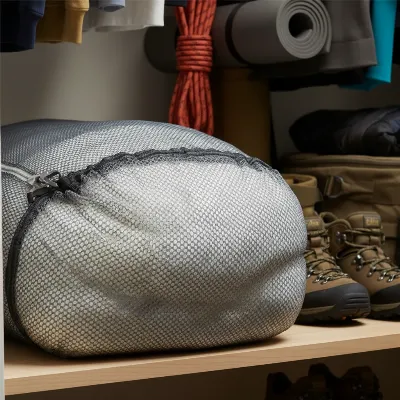 A down sleeping bag gently stuffed into a large, breathable mesh storage sack in a clean closet.
Common Mistakes to Avoid When Storing Down Sleeping Bags
Many common storage errors can lead to a premature decline in your sleeping bag’s performance. Being aware of these pitfalls can save you from costly replacements.
One of the most frequent mistakes is leaving the sleeping bag in its stuff sack for extended periods. While convenient for backpacking, this prolonged compression is detrimental to down’s ability to loft, significantly reducing its insulating power over time. Another critical error is storing a damp or dirty sleeping bag. Even a small amount of moisture from body oils or condensation can lead to unsightly and odorous mold and mildew growth. This not only makes the bag unpleasant to use but can also compromise the integrity of the down and fabric.
Furthermore, using airtight plastic bags or containers for storage is a common misstep. These non-breathable options trap any residual moisture, creating a perfect environment for mildew to thrive. Similarly, storing the bag in areas with extreme temperature fluctuations or high humidity, such as an attic, basement, or garage, exposes it to conditions that degrade both the fabric and the insulation. Finally, hanging a sleeping bag by small loops for extended periods can strain the fabric, potentially tearing the loops or distorting the bag’s shape, especially for heavier models. Opt for wider hangers or proper sacks instead.
Maintaining Loft and Longevity
Beyond the initial storage steps, a little ongoing attention can significantly extend your down sleeping bag’s life. Down thrives on expansion, so giving it room to breathe is paramount.
- Periodic Fluffing: Every few months, consider taking your sleeping bag out of its storage sack and giving it a good shake and fluff. This helps redistribute the down, prevents it from settling or clumping in one area, and allows fresh air to circulate through the insulation. Think of it as waking up the down from its long rest, ensuring it stays lively and ready to perform.
- Gentle Handling: When stuffing your bag into its large storage sack, avoid folding it systematically. Randomly stuffing it helps prevent the down from creasing in the same spots repeatedly, which can lead to permanent flat areas. This unstructured approach promotes even wear and better loft retention across the entire bag.
- Airing Out: If possible, occasionally air your bag out in a dry, shaded area for a few hours. This refreshes the fabric and helps eliminate any minor accumulated odors or trapped humidity that might have occurred during storage.
By incorporating these simple maintenance habits into your routine, you can ensure your down sleeping bag maintains its crucial loft and insulating properties, providing you with reliable warmth for many seasons to come.
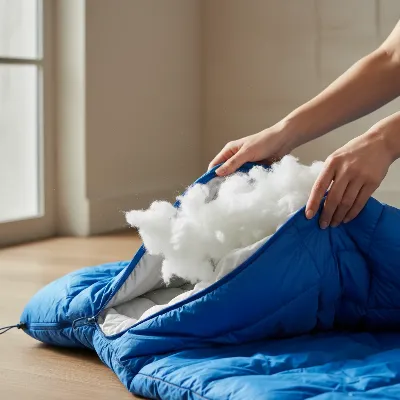 A person gently fluffing a down sleeping bag, holding it by the sides, to restore its loft and air circulation.
DIY Storage Solutions and Tips
You don’t always need specialized gear to properly store your down sleeping bag. Many effective DIY solutions leverage common household items, providing both protection and cost savings. The core principle remains: allow the down to expand and breathe.
- Using Old Duvet Covers or Large Pillowcases: An old duvet cover, especially a king-size one, makes an excellent, breathable storage solution. Simply stuff your sleeping bag inside. Large cotton pillowcases can also work for smaller bags. These provide ample space for the down to loft and protect it from dust and light.
- Creating a Dedicated Hanging Space: If you have closet space, hanging your sleeping bag can be an effective method, provided you use the right kind of hanger. Opt for an extra-wide, padded, or soft hanger to distribute the bag’s weight evenly across a large area, preventing stress on specific points of the fabric or insulation. You can even create a makeshift wide hanger using a sturdy piece of PVC pipe or a broomstick covered with a soft cloth. Ensure the bag is fully unzipped when hung to allow maximum airflow. Periodically shifting the hanging position can also prevent creases.
- Under-Bed Storage (with caution): For those with limited vertical space, storing the bag loosely under a bed in a large, breathable fabric bag can be an option. Ensure it’s not compressed by other items and that the area is dry and clean.
- Labeling: If you have multiple sleeping bags or seasonal gear, label your storage sacks with the bag type and any care instructions for quick identification.
These simple, at-home solutions offer practical ways to protect your down sleeping bag, ensuring it retains its loft, warmth, and readiness for your next adventure without requiring expensive, specialized equipment.
Conclusion
Your down sleeping bag is a vital companion for any outdoor enthusiast, offering warmth and comfort in the wild. Ensuring its longevity and peak performance hinges entirely on how you store it when it’s not accompanying you on an adventure. The fundamental principles are simple: keep it dry, uncompressed, and in a breathable environment. By removing it from its stuff sack immediately after use, thoroughly drying it, and housing it in a spacious, breathable sack in a cool, dry place, you protect the delicate down insulation from damage and degradation.
Investing a small amount of time in proper storage rituals will safeguard your investment, preserving its loft and insulating power for countless seasons. Don’t let improper care diminish the magic of your down sleeping bag. Which of these storage tips will you implement first to extend the life of your gear?
Frequently Asked Questions
Frequently Asked Questions
Can I store my down sleeping bag hanging up?
Yes, hanging your down sleeping bag is an excellent storage method. Use an extra-wide, soft hanger to distribute its weight evenly and prevent strain on the fabric. Ensure the bag is fully unzipped to allow maximum airflow.
What size storage sack do I need for my down sleeping bag?
You generally need a large, breathable storage sack, typically made of cotton or mesh, that allows the down to expand fully without compression. A 90-liter sack is a common recommendation, or a king-size pillowcase can work for smaller bags.
How often should I air out my sleeping bag in storage?
It's a good practice to take your sleeping bag out of storage every few months to give it a good shake and fluff. This helps redistribute the down and allows fresh air to circulate, maintaining its loft and preventing clumping.
Is it okay to store my down sleeping bag in a vacuum-sealed bag?
No, you should never store a down sleeping bag in a vacuum-sealed bag. Vacuum sealing compresses the down fibers excessively and for too long, causing permanent damage to the insulation and significantly reducing its ability to loft and provide warmth.
What's the best way to clean my down sleeping bag before storing it?
For light cleaning, spot-clean any soiled areas with a mild soap designed for down. For a thorough wash, use a large front-loading washing machine with a down-specific detergent on a gentle cycle. Always ensure it's completely dry before storing, which can take several hours in a dryer with tennis balls on low heat or extended air drying.
How to Store Your Down Sleeping Bag at Home
Properly storing your down sleeping bag ensures its longevity and maintains its insulating performance. Follow these steps to keep your bag in top condition.
Thoroughly dry your sleeping bag after every trip to prevent mold and mildew. Air dry it for at least 24 hours in a well-ventilated area, avoiding direct sunlight. For faster drying, use a large commercial front-loading dryer on a low heat setting with tennis balls to break up down clumps.
Immediately remove your sleeping bag from its stuff sack upon returning from a trip. Stuff sacks are for transport, not long-term storage, as prolonged compression damages down loft. Gently shake and fluff the bag to help the down expand and breathe.
Store your sleeping bag in a large, breathable container that allows the down to loft fully. A mesh or cotton storage sack (around 90 liters) is ideal. Alternatively, use a king-size pillowcase or a large cotton laundry bag, but never an airtight plastic bag.
Select a cool, dry, and dark location, such as a closet or wardrobe, with stable temperatures and low humidity. Avoid damp basements, hot attics, or garages prone to extreme temperature fluctuations. Ensure the area is free from pests and consider storing the bag off the floor.
Every few months, take your sleeping bag out of its storage sack and give it a good shake and fluff. This redistributes the down, prevents clumping, and allows fresh air to circulate, ensuring it stays lively and ready to perform.
Get our weekly buyer guide
Practical specs, not advice. Unsubscribe anytime.

I appreciate the tips on keeping down bags uncompressed. I’ve been using an old duvet cover for storage, which works okay, but it takes up a lot of space in my small apartment. I wish there were more practical, space-saving solutions mentioned for those of us with limited storage room. Still, good reminder about maintaining loft.
I’ve always been careful with my gear, but the detail about how down insulation relies on its ability to loft really clicked for me. It makes so much sense why proper storage is crucial. I’ve started using a larger cotton storage sack instead of the tiny one that came with my bag, and I can already feel the difference in its warmth and fluffiness. Great advice for extending the lifespan.
I used to just stuff my down bag into its compression sack and leave it in the closet, thinking that was fine. After reading about how continuous compression damages the down clusters, I switched to a large mesh storage bag. My bag definitely feels fluffier now, and I’m confident it’ll last much longer. This tip alone was a game-changer for my expensive investment.
The advice about making sure your sleeping bag is completely dry before storing it is so important. I once packed mine away after a slightly damp trip and found a bit of a musty smell when I pulled it out next season. Now I always air it out for a full day, even if it feels dry to the touch. It’s a small extra step but totally worth it to prevent mold and mildew.