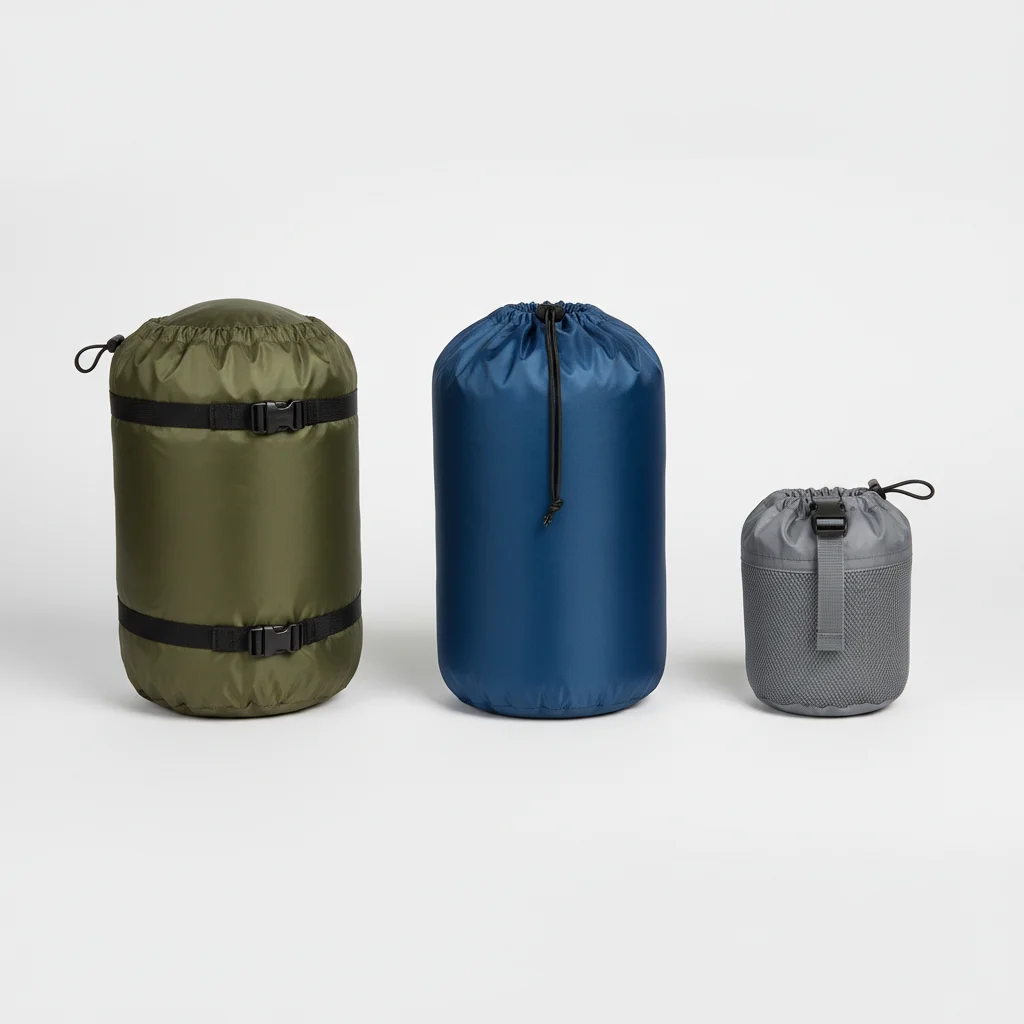
Sleeping bag stuff sacks are essential for protecting and compressing your sleeping bag, and there are three main types to consider: standard stuff sacks, compression sacks, and waterproof dry bags. Each type offers distinct advantages for different camping and backpacking scenarios, impacting how easily you can pack and protect your gear.
Standard Stuff Sacks: Simple Protection and Organization
Standard stuff sacks are the most basic and common type, typically made from lightweight nylon or polyester. Their primary function is to contain your sleeping bag, keeping it organized within your pack and protecting it from minor abrasions. They are generally cylindrical or rectangular and come in various sizes to accommodate different sleeping bag volumes. While they don’t offer significant compression, they are excellent for everyday use, car camping, or when space isn’t a critical concern. They are also often included with the purchase of a new sleeping bag.
Compression Sacks: Maximizing Space Efficiency
Compression sacks are designed to significantly reduce the volume of your sleeping bag, making them invaluable for backpackers and anyone needing to save space. These sacks feature external straps that, when tightened, compress the sleeping bag into a much smaller, denser package. They are typically made from durable, often water-resistant, materials to withstand the forces of compression. The main benefit is the ability to fit more gear into a smaller pack, or to use a smaller pack overall. However, over-compressing a down sleeping bag for extended periods can potentially reduce its loft over time, so it’s best to loosen the straps when storing your bag at home.
- Reduces packed volume by 30-50%
- Features multiple external compression straps
- Often made with durable, water-resistant fabrics
- Ideal for backpacking and minimalist trips
- Can be heavier than standard stuff sacks
Waterproof Dry Bags: Ultimate Protection from the Elements
|
Our Picks for the Best Sleeping Bag in 2026
As an Amazon Associate I earn from qualifying purchases.
|
||
| Num | Product | Action |
|---|---|---|
| 1 | oaskys Camping Sleeping Bag - 3 Season Warm & Cool Weather - Summer Spring Fall Lightweight Waterproof for Adults Kids - Camping Gear Equipment, Traveling, and Outdoors |

|
| 2 | MalloMe Sleeping Bags for Adults Cold Weather & Warm - Backpacking Camping Sleeping Bag for Kids 10-12, Girls, Boys - Lightweight Compact Camping Essentials Gear Accessories Hiking Sleep Must Haves |
|
| 3 | Coleman Brazos 20/30°F Adult Cool-Weather Sleeping Bag with No-Snag Zipper & Stuff Sack, Machine Washable, Great for Camping, Traveling, Guests, & More |
|
| 4 | 0 Degree Winter Sleeping Bags for Adults Camping (450GSM) - Temp Range (5F–32F) Portable Waterproof Compression Sack- Camping Sleeping Bags for Big and Tall in Env Hoodie: Backpacking Hiking 4 Season |
|
| 5 | Cold Weather Sleeping Bag 100% Cotton Flannel XXL for Adults Big and Tall,Free Compression Sack |
|
| 6 | Coleman Heritage Big & Tall 10°F Flannel Sleeping Bag, XL Sleeping Bag Fits Adults up to 6ft 7in Tall, Machine Washable, Great for Camping, Hunting, Guests, & More |
|
| 7 | REDCAMP Cotton Flannel Sleeping Bag for Camping Backpacking, Adults Cold Weather Envelope Sleeping Bags with 2/3/4/6lbs Filling |
|
| 8 | MalloMe Sleeping Bags for Adults Cold Weather & Warm - Backpacking Camping Sleeping Bag for Kids 10-12, Girls, Boys - Lightweight Compact Camping Essentials Gear Accessories Hiking Sleep Must Haves |
|
| 9 | Coleman Brazos 20/30°F Adult Cool-Weather Sleeping Bag with No-Snag Zipper & Stuff Sack, Machine Washable, Great for Camping, Traveling, Guests, & More |
|
| 10 | BubblePanda Rayon Made from Bamboo Sleep Sack 6-12 Months 1.0 Tog Soft Toddler Sleeping Sack for Babies 2-Way Zipper Baby Wearable Blanket |
|
Waterproof dry bags are the ultimate solution for protecting your sleeping bag from rain, snow, river crossings, and general moisture. These sacks are constructed from fully waterproof materials, such as coated nylon or PVC, and feature a roll-top closure that creates a watertight seal. They are indispensable for kayaking, canoeing, canyoneering, or any trip where your gear is likely to get wet. While they offer excellent protection, most dry bags do not provide significant compression, though some hybrid models exist that combine both features. They tend to be heavier and bulkier than standard stuff sacks but offer peace of mind in wet conditions.
Choosing the Right Stuff Sack for Your Adventure
The best stuff sack for you depends entirely on your specific needs and the conditions of your trip. For casual car camping or organized gear storage, a standard stuff sack is perfectly adequate. If you’re a backpacker or need to maximize every inch of space in your pack, a compression sack is a game-changer. For trips where water exposure is a real threat, a waterproof dry bag is non-negotiable. Consider the material of your sleeping bag as well; synthetic bags are more tolerant of moisture than down, but both benefit from protection. Always ensure the stuff sack is appropriately sized for your sleeping bag to allow for easy packing without excessive struggle.
Maintenance and Longevity of Your Stuff Sack
To ensure your stuff sack lasts as long as your sleeping bag, proper care is important. Regularly empty and air out your stuff sack, especially if it has been exposed to moisture, to prevent mildew and odors. If it gets dirty, most stuff sacks can be hand-washed with mild soap and air-dried. Inspect the seams and fabric periodically for any tears or abrasions, especially on compression sacks where stress is higher. Repair small holes promptly to prevent them from enlarging. By taking good care of your stuff sack, you’ll ensure it continues to protect your sleeping bag effectively for many adventures to come.
Get our weekly buyer guide
Practical specs, not advice. Unsubscribe anytime.
