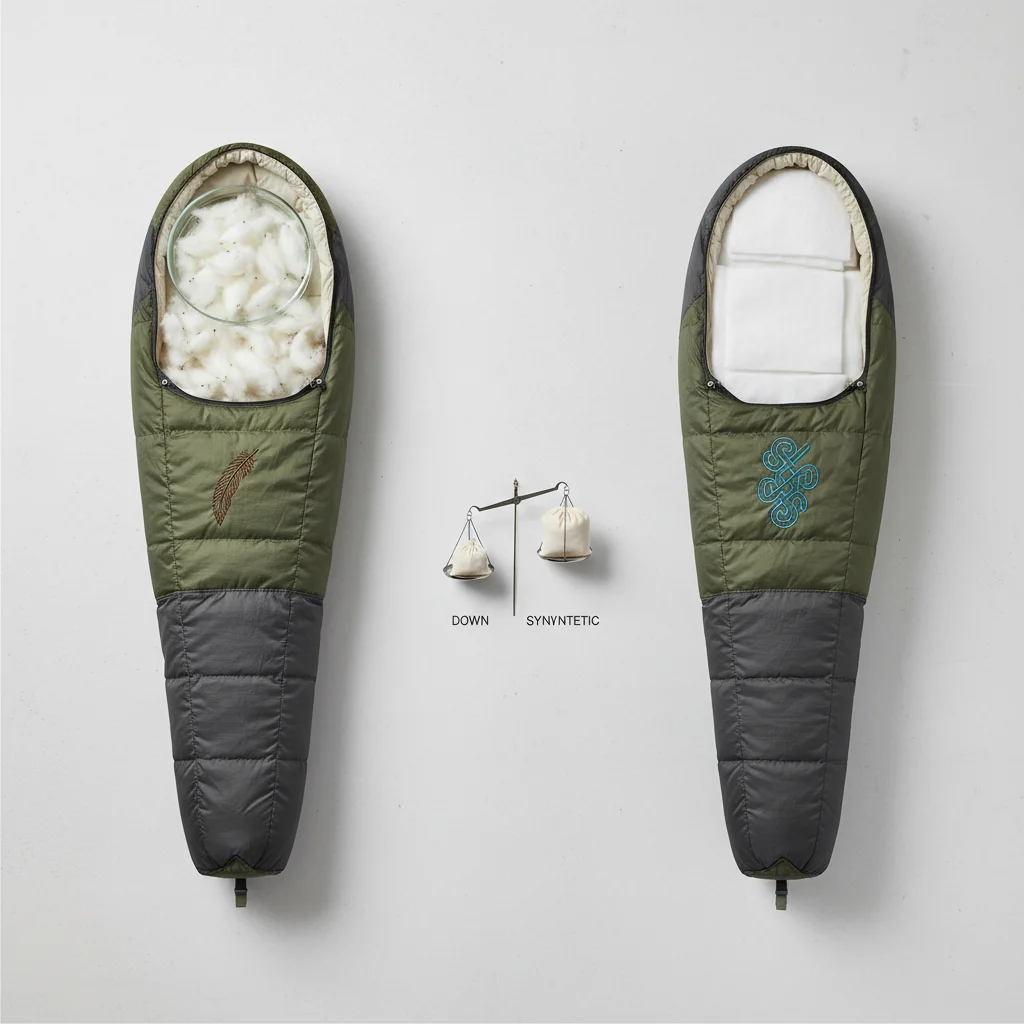
Choosing the right sleeping bag fill material is crucial for warmth and performance in the outdoors. The two primary types are down and synthetic, each offering distinct advantages and disadvantages depending on your camping style and expected conditions. Down fill, derived from the soft under-feathers of ducks or geese, is renowned for its superior warmth-to-weight ratio and compressibility. Synthetic fill, on the other hand, is made from polyester fibers designed to mimic down’s insulating properties, often excelling in wet conditions.
Understanding Down Fill: The Lightweight Champion
Down fill is the gold standard for lightweight and packable sleeping bags. Its intricate structure traps air efficiently, providing excellent insulation with minimal bulk. The quality of down is measured by ‘fill power,’ which indicates the loft (fluffiness) of one ounce of down. Higher fill power numbers, such as 800-fill or 900-fill, signify greater warmth for less weight and better compressibility. This makes down an ideal choice for backpackers and mountaineers where every ounce and inch of pack space counts. However, down’s primary drawback is its vulnerability to moisture. When wet, down clumps together, losing its loft and, consequently, its insulating capabilities. Many modern down bags feature hydrophobic down treatments to mitigate this issue, but they are still not as effective as synthetic insulation in truly saturated environments. For best sleeping bags roundups on this site.
- Exceptional warmth-to-weight ratio
- Highly compressible for easy packing
- Long lifespan with proper care
- Excellent breathability
- Environmentally friendly (when responsibly sourced)
Exploring Synthetic Fill: The All-Weather Performer
Synthetic fill, typically made from polyester fibers, is engineered to provide insulation even when wet. Unlike down, synthetic fibers retain much of their loft and insulating power when damp, making them a reliable choice for humid climates, rainy trips, or situations where a sleeping bag might get wet. While synthetic bags are generally heavier and bulkier than their down counterparts for the same temperature rating, they are often more affordable and easier to care for. They also tend to dry faster than down bags. Common synthetic insulation types include Primaloft, Climashield, and Hollow-Fiber, each with slightly different performance characteristics in terms of warmth, durability, and packability. For casual campers, car campers, or those on a tighter budget, synthetic sleeping bags offer excellent value and dependable performance.
The choice between down and synthetic ultimately depends on your priorities. If ultralight weight, maximum warmth, and extreme compressibility are paramount, and you can guarantee dry conditions, down is likely your best bet. For those who prioritize affordability, wet-weather performance, and easier maintenance, synthetic insulation offers a robust and reliable solution. Consider the typical weather conditions of your adventures and your budget when making this important decision.
Durability and Lifespan Considerations
|
Our Picks for the Best Sleeping Bag in 2026
As an Amazon Associate I earn from qualifying purchases.
|
||
| Num | Product | Action |
|---|---|---|
| 1 | MalloMe Sleeping Bags for Adults Cold Weather & Warm - Backpacking Camping Sleeping Bag for Kids 10-12, Girls, Boys - Lightweight Compact Camping Essentials Gear Accessories Hiking Sleep Must Haves |

|
| 2 | REDCAMP Cotton Flannel Sleeping Bag for Camping Backpacking, Adults Cold Weather Envelope Sleeping Bags with 2/3/4/6lbs Filling |
|
| 3 | Coleman Heritage Big & Tall 10°F Flannel Sleeping Bag, XL Sleeping Bag Fits Adults up to 6ft 7in Tall, Machine Washable, Great for Camping, Hunting, Guests, & More |
|
| 4 | oaskys Camping Sleeping Bag - 3 Season Warm & Cool Weather - Summer Spring Fall Lightweight Waterproof for Adults Kids - Camping Gear Equipment, Traveling, and Outdoors |
|
| 5 | Coleman Brazos 20/30°F Adult Cool-Weather Sleeping Bag with No-Snag Zipper & Stuff Sack, Machine Washable, Great for Camping, Traveling, Guests, & More |
|
| 6 | MalloMe Sleeping Bags for Adults Cold Weather & Warm - Backpacking Camping Sleeping Bag for Kids 10-12, Girls, Boys - Lightweight Compact Camping Essentials Gear Accessories Hiking Sleep Must Haves |
|
| 7 | BubblePanda Rayon Made from Bamboo Sleep Sack 6-12 Months 1.0 Tog Soft Toddler Sleeping Sack for Babies 2-Way Zipper Baby Wearable Blanket |
|
| 8 | Coleman Brazos 20/30°F Adult Cool-Weather Sleeping Bag with No-Snag Zipper & Stuff Sack, Machine Washable, Great for Camping, Traveling, Guests, & More |
|
| 9 | Cold Weather Sleeping Bag 100% Cotton Flannel XXL for Adults Big and Tall,Free Compression Sack |
|
| 10 | 0 Degree Winter Sleeping Bags for Adults Camping (450GSM) - Temp Range (5F–32F) Portable Waterproof Compression Sack- Camping Sleeping Bags for Big and Tall in Env Hoodie: Backpacking Hiking 4 Season |
|
Both down and synthetic sleeping bags can last for many years with proper care, but there are differences in their long-term performance. Down, if cared for correctly and kept dry, can maintain its loft and insulating properties for a decade or more. Its natural resilience allows it to be compressed and de-compressed repeatedly without significant loss of performance. Synthetic insulation, while durable, tends to break down over time with repeated compression and use. The fibers can flatten and lose their ability to trap air effectively, leading to a gradual decrease in warmth. This means a synthetic bag might need to be replaced sooner than a well-maintained down bag, especially if it sees frequent use. Regular cleaning and proper storage are vital for extending the life of both types of sleeping bags.
When considering a purchase, think about how often you’ll be using the bag and in what conditions. For occasional use in varied weather, a good quality synthetic bag might be perfect. For avid backpackers who need the lightest, most efficient warmth for many seasons, investing in a high-fill-power down bag could be more cost-effective in the long run, despite the higher initial price. Always check the manufacturer’s care instructions to ensure you can properly maintain your chosen sleeping bag fill material.
Cost and Maintenance Differences
Generally, down sleeping bags come with a higher upfront cost compared to synthetic bags of a similar temperature rating. This is due to the natural sourcing and processing of down. However, as mentioned, down’s longer lifespan can sometimes offset this initial investment over time. Synthetic bags are typically more budget-friendly, making them an accessible option for many campers. In terms of maintenance, synthetic bags are often easier to clean and dry at home, and they are less prone to damage from moisture during washing. Down bags require more careful washing, often needing specialized detergents and thorough drying to prevent clumping and mildew. Professional cleaning is sometimes recommended for down bags to ensure their longevity and performance.Regardless of the fill type, storing your sleeping bag uncompressed in a large mesh or cotton storage sack is crucial to maintain its loft and insulating power. Avoid storing either type of bag in its stuff sack for extended periods, as this can permanently damage the insulation.
Environmental Impact and Ethical Sourcing
The environmental impact and ethical sourcing of sleeping bag fill materials are increasingly important considerations for consumers. Responsibly sourced down, often certified by standards like the Responsible Down Standard (RDS), ensures that the down comes from ducks and geese that have not been subjected to unnecessary harm, such as force-feeding or live-plucking. This certification provides peace of mind for ethically conscious buyers. Synthetic insulation, while not derived from animals, is typically petroleum-based, meaning its production relies on fossil fuels. However, many manufacturers are now incorporating recycled polyester into their synthetic fills, reducing the environmental footprint.Some brands are also exploring bio-based synthetic alternatives to further improve sustainability. When making your choice, researching a brand’s commitment to ethical sourcing and sustainable practices can help you align your purchase with your values.
Get our weekly buyer guide
Practical specs, not advice. Unsubscribe anytime.

I got a synthetic bag for a trip where I knew it might rain, and it did hold up well in damp conditions, which was a relief. However, I found it a bit bulkier than I expected for the warmth it provided. It’s good for car camping, but I wouldn’t take it on a long thru-hike.
After years of using an older, heavier bag, I decided to try a newer synthetic option. I was really impressed with how well it insulated, even when there was some condensation in my tent. It’s not quite as light as down, but for the price and the peace of mind in wet weather, it’s perfect for my weekend trips.
I’ve always been a fan of down, especially for colder weather. My new bag has a high fill power, and you can really feel the difference in loft and warmth. It’s super cozy and I sleep like a baby even when the temps drop. Just make sure to keep it dry!
I finally upgraded to a down-filled bag for backpacking, and it’s a game changer! The warmth-to-weight ratio is incredible, and it packs down so small in my pack. I used to dread carrying my bulky synthetic bag, but this one barely takes up any space. Definitely worth the investment for serious hikers.