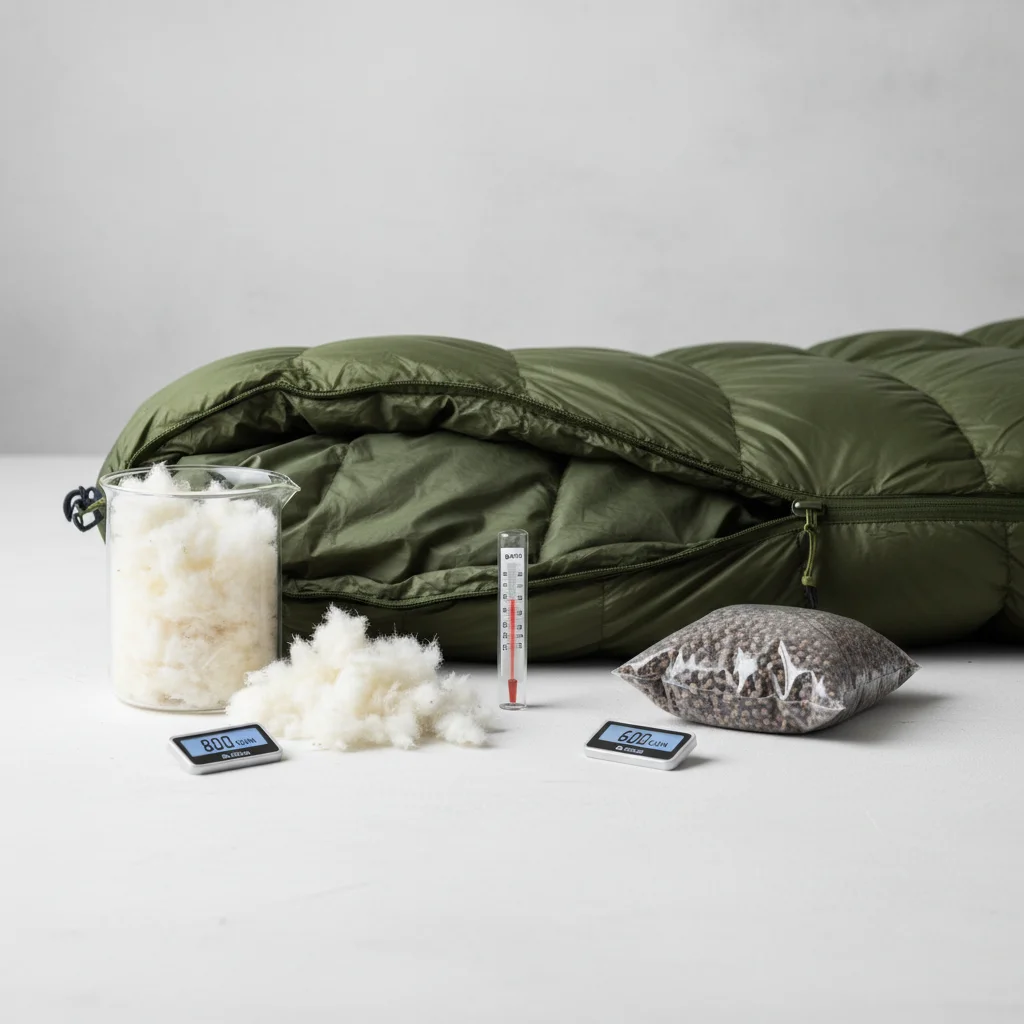
Sleeping bag fill power is a crucial metric that indicates the quality and insulating capability of down insulation. Specifically, it measures the loft or fluffiness of down, with higher numbers signifying greater warmth for a given weight. This rating is determined by how many cubic inches one ounce of down occupies when fully lofted, typically ranging from 600 to 900 for most quality sleeping bags.
Understanding Fill Power Numbers
Fill power numbers directly correlate with the down’s ability to trap air, which is what provides insulation. A higher fill power, such as 800 or 900, means that a smaller amount of down can provide the same warmth as a larger amount of lower fill power down. This translates to lighter, more compressible sleeping bags, which are highly valued by backpackers and ultralight enthusiasts. For example, a 900-fill power bag will be significantly lighter and pack smaller than a 600-fill power bag of the same temperature rating.
Conversely, lower fill power down, while still effective, requires more material to achieve the same warmth. This results in a bulkier and heavier sleeping bag. These bags are often more budget-friendly and can be perfectly suitable for car camping or less demanding trips where weight and packed size are not primary concerns.
Down vs. Synthetic Fill Power
It’s important to note that fill power ratings apply exclusively to down insulation. Synthetic insulation, while also designed to trap air, does not have a comparable fill power rating system. Instead, synthetic sleeping bags are typically rated by their overall weight and thickness, or by proprietary insulation names like Primaloft or Climashield. When comparing down and synthetic bags, focus on the temperature rating and overall weight rather than trying to find a direct fill power equivalent for synthetic options.
How Fill Power Affects Price and Performance
|
Our Picks for the Best Sleeping Bag in 2026
As an Amazon Associate I earn from qualifying purchases.
|
||
| Num | Product | Action |
|---|---|---|
| 1 | Coleman Heritage Big & Tall 10°F Flannel Sleeping Bag, XL Sleeping Bag Fits Adults up to 6ft 7in Tall, Machine Washable, Great for Camping, Hunting, Guests, & More |

|
| 2 | 0 Degree Winter Sleeping Bags for Adults Camping (450GSM) - Temp Range (5F–32F) Portable Waterproof Compression Sack- Camping Sleeping Bags for Big and Tall in Env Hoodie: Backpacking Hiking 4 Season |
|
| 3 | Coleman Brazos 20/30°F Adult Cool-Weather Sleeping Bag with No-Snag Zipper & Stuff Sack, Machine Washable, Great for Camping, Traveling, Guests, & More |
|
| 4 | Coleman Brazos 20/30°F Adult Cool-Weather Sleeping Bag with No-Snag Zipper & Stuff Sack, Machine Washable, Great for Camping, Traveling, Guests, & More |
|
| 5 | MalloMe Sleeping Bags for Adults Cold Weather & Warm - Backpacking Camping Sleeping Bag for Kids 10-12, Girls, Boys - Lightweight Compact Camping Essentials Gear Accessories Hiking Sleep Must Haves |
|
| 6 | oaskys Camping Sleeping Bag - 3 Season Warm & Cool Weather - Summer Spring Fall Lightweight Waterproof for Adults Kids - Camping Gear Equipment, Traveling, and Outdoors |
|
| 7 | Cold Weather Sleeping Bag 100% Cotton Flannel XXL for Adults Big and Tall,Free Compression Sack |
|
| 8 | BubblePanda Rayon Made from Bamboo Sleep Sack 6-12 Months 1.0 Tog Soft Toddler Sleeping Sack for Babies 2-Way Zipper Baby Wearable Blanket |
|
| 9 | REDCAMP Cotton Flannel Sleeping Bag for Camping Backpacking, Adults Cold Weather Envelope Sleeping Bags with 2/3/4/6lbs Filling |
|
| 10 | MalloMe Sleeping Bags for Adults Cold Weather & Warm - Backpacking Camping Sleeping Bag for Kids 10-12, Girls, Boys - Lightweight Compact Camping Essentials Gear Accessories Hiking Sleep Must Haves |
|
Generally, sleeping bags with higher fill power down are more expensive. This is due to the higher quality and scarcity of the down feathers that achieve these superior lofting properties. The performance benefits, however, often justify the cost for serious outdoor enthusiasts. A high fill power bag offers an excellent warmth-to-weight ratio, superior compressibility, and often a longer lifespan if properly cared for. These attributes are particularly beneficial for multi-day backpacking trips where every ounce counts.
- Higher fill power means lighter weight for the same warmth.
- Higher fill power bags are more compressible, saving pack space.
- They tend to be more expensive due to higher quality down.
- Proper care extends the lifespan of high fill power down.
- Ideal for backpacking and ultralight adventures.
Choosing the Right Fill Power for Your Needs
The ideal sleeping bag fill power depends on your specific camping and backpacking needs. For casual car camping or summer trips where weight isn’t a major concern, a 600-650 fill power bag like thecan offer excellent value and sufficient warmth. If you’re a backpacker or mountaineer who prioritizes minimal weight and pack size, investing in a 750-900 fill power bag, such as the, will provide significant advantages. Consider the typical temperatures you’ll encounter, your budget, and how often you’ll be carrying the bag long distances.
Maintaining Your Down Sleeping Bag’s Fill Power
To ensure your down sleeping bag maintains its loft and insulating properties, proper care is essential. Always store your sleeping bag uncompressed in a large mesh or cotton storage sack, rather than stuffed in its compression sack. When washing, use a down-specific cleaner and follow the manufacturer’s instructions carefully, ensuring the down is thoroughly dry before storage to prevent clumping and mildew. Regular fluffing and airing out can also help restore loft and keep the down evenly distributed.
Get our weekly buyer guide
Practical specs, not advice. Unsubscribe anytime.

Super helpful breakdown of fill power. I used to just look at temperature ratings, but understanding the loft makes so much more sense now. My old bag was a 600-fill, and while it was decent, I can definitely see the benefit of upgrading to something like a 900-fill for those colder, longer trips where every ounce counts. Great info!
This article confirmed my suspicions about my new sleeping bag. I splurged on a 900-fill power bag for a winter camping trip, and the difference was night and day. It was incredibly warm, and I barely noticed it in my pack. The compressibility is truly a game-changer for serious hikers. Definitely worth the investment if you can swing it.
I always wondered about fill power and how it actually worked. This really cleared things up! I recently got an 800-fill power bag for a backpacking trip, and it was amazing how warm it kept me without adding much weight to my pack. It compressed down so small too, which is a huge plus when space is limited.
Good explanation of how fill power works. I’ve always been a bit confused by the numbers. My main issue is that while higher fill power sounds great for warmth-to-weight, those bags are usually way out of my budget. I wish there was more discussion on finding a good balance for someone who isn’t an ultralight enthusiast and just needs a reliable bag for car camping without breaking the bank.