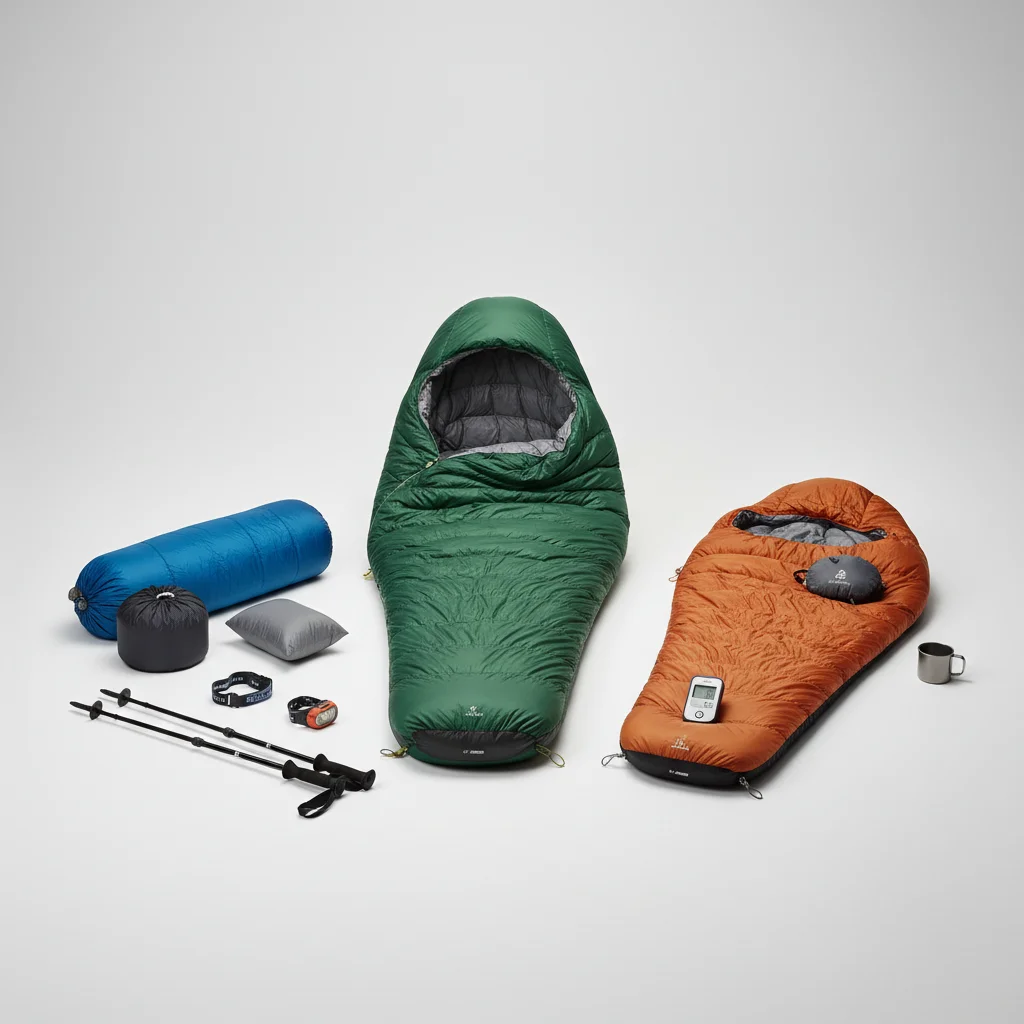
Choosing the right sleeping bag is crucial for a comfortable and safe camping or backpacking trip. There are five key factors to consider when making your selection: temperature rating, shape, insulation type, shell material, and weight/packability. Understanding these elements will help you find a bag that perfectly matches your needs and the conditions you’ll encounter.
Understanding Temperature Ratings for Sleeping Bags
The temperature rating is arguably the most important factor when selecting a sleeping bag. This rating indicates the lowest temperature at which the bag is designed to keep an average sleeper warm. Most bags feature an EN (European Norm) or ISO (International Organization for Standardization) rating, which provides a standardized measurement. Look for a ‘comfort’ rating for women and a ‘limit’ rating for men, as these are more realistic indicators of warmth. Always choose a bag with a rating slightly lower than the coldest temperature you expect to encounter to ensure you stay warm.
Sleeping Bag Shapes: Mummy, Rectangular, and Semi-Rectangular
Sleeping bags come in various shapes, each offering different levels of warmth and comfort. Mummy bags are tapered at the feet and shoulders, minimizing dead air space and maximizing warmth-to-weight ratio, making them ideal for backpacking. Rectangular bags offer the most room to move, resembling a blanket, and are best suited for car camping or warmer conditions where space isn’t a concern. Semi-rectangular bags, also known as ‘barrel’ or ‘spoon’ shapes, offer a compromise between the two, providing more room than a mummy bag but still retaining some thermal efficiency. Consider your preferred sleeping position and activity type when choosing a shape.
Down vs. Synthetic Insulation: Which is Right for You?
|
Our Picks for the Best Sleeping Bag in 2026
As an Amazon Associate I earn from qualifying purchases.
|
||
| Num | Product | Action |
|---|---|---|
| 1 | Cold Weather Sleeping Bag 100% Cotton Flannel XXL for Adults Big and Tall,Free Compression Sack |

|
| 2 | REDCAMP Cotton Flannel Sleeping Bag for Camping Backpacking, Adults Cold Weather Envelope Sleeping Bags with 2/3/4/6lbs Filling |
|
| 3 | 0 Degree Winter Sleeping Bags for Adults Camping (450GSM) - Temp Range (5F–32F) Portable Waterproof Compression Sack- Camping Sleeping Bags for Big and Tall in Env Hoodie: Backpacking Hiking 4 Season |
|
| 4 | Coleman Brazos 20/30°F Adult Cool-Weather Sleeping Bag with No-Snag Zipper & Stuff Sack, Machine Washable, Great for Camping, Traveling, Guests, & More |
|
| 5 | BubblePanda Rayon Made from Bamboo Sleep Sack 6-12 Months 1.0 Tog Soft Toddler Sleeping Sack for Babies 2-Way Zipper Baby Wearable Blanket |
|
| 6 | oaskys Camping Sleeping Bag - 3 Season Warm & Cool Weather - Summer Spring Fall Lightweight Waterproof for Adults Kids - Camping Gear Equipment, Traveling, and Outdoors |
|
| 7 | MalloMe Sleeping Bags for Adults Cold Weather & Warm - Backpacking Camping Sleeping Bag for Kids 10-12, Girls, Boys - Lightweight Compact Camping Essentials Gear Accessories Hiking Sleep Must Haves |
|
| 8 | Coleman Brazos 20/30°F Adult Cool-Weather Sleeping Bag with No-Snag Zipper & Stuff Sack, Machine Washable, Great for Camping, Traveling, Guests, & More |
|
| 9 | Coleman Heritage Big & Tall 10°F Flannel Sleeping Bag, XL Sleeping Bag Fits Adults up to 6ft 7in Tall, Machine Washable, Great for Camping, Hunting, Guests, & More |
|
| 10 | MalloMe Sleeping Bags for Adults Cold Weather & Warm - Backpacking Camping Sleeping Bag for Kids 10-12, Girls, Boys - Lightweight Compact Camping Essentials Gear Accessories Hiking Sleep Must Haves |
|
The type of insulation significantly impacts a sleeping bag’s warmth, weight, and performance in wet conditions. Down insulation, typically from geese or ducks, offers an excellent warmth-to-weight ratio and is highly compressible, making it ideal for ultralight backpacking. However, down loses its insulating properties when wet and can be more expensive. Synthetic insulation, made from polyester fibers, performs well even when damp, is generally more affordable, and is hypoallergenic. While synthetic bags are often bulkier and heavier than their down counterparts, advancements in synthetic technology are continually improving their performance. For wet environments or budget-conscious campers, synthetic is a strong contender.
Shell Materials and Their Impact on Durability and Water Resistance
The outer shell material of a sleeping bag plays a crucial role in its durability, water resistance, and breathability. Common materials include nylon and polyester, often treated with a Durable Water Repellent (DWR) finish. Ripstop nylon is a popular choice for its strength-to-weight ratio and resistance to tears. Higher denier fabrics (e.g., 20D, 30D) indicate a thicker, more durable material, while lower denier fabrics are lighter. Some bags feature waterproof/breathable membranes, offering enhanced protection in damp conditions, though these can add to the cost and weight. Consider the environments you’ll be camping in when evaluating shell materials.
Weight and Packability for Backpacking and Travel
For backpackers and travelers, the weight and packability of a sleeping bag are paramount. An ultralight sleeping bag can significantly reduce the load on your back, making long treks more enjoyable. Look for bags with high fill power down (e.g., 800-fill or higher) for the best warmth-to-weight ratio and compressibility. Synthetic bags, while improving, generally remain heavier and bulkier. Always check the packed dimensions of a sleeping bag to ensure it will fit comfortably in your backpack. Many bags come with a stuff sack, and some include a compression sack to further reduce their volume.
- Consider a bag with a comfort rating 10-15 degrees Fahrenheit lower than expected night temperatures.
- Mummy bags are best for cold weather and backpacking due to their thermal efficiency.
- Synthetic insulation is a reliable choice for damp conditions and budget-conscious campers.
- Look for ripstop nylon shells with DWR treatment for a balance of durability and water resistance.
- Prioritize fill power and packed size for ultralight backpacking adventures.
Get our weekly buyer guide
Practical specs, not advice. Unsubscribe anytime.
