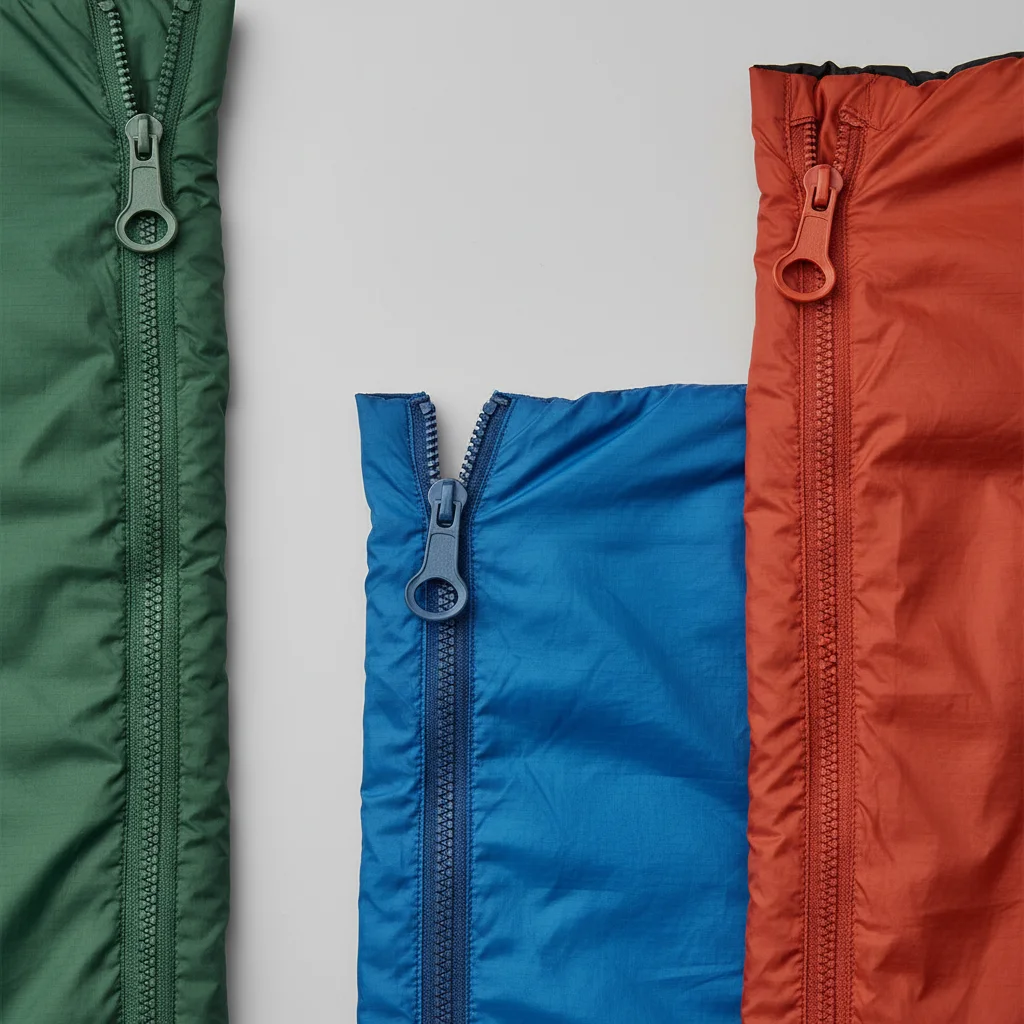
Sleeping bag zippers are a critical component for warmth retention, ventilation, and overall user experience. There are three main types of zippers commonly found on sleeping bags: coil zippers, molded tooth zippers, and invisible zippers. Each type offers distinct advantages and disadvantages in terms of durability, snag resistance, and ease of use, directly impacting a sleeping bag’s functionality in various camping and backpacking scenarios.
Coil Zippers: The Flexible Standard
Coil zippers, also known as nylon coil zippers, are the most common type found on sleeping bags. They consist of a continuous coil of monofilament plastic, typically nylon, sewn onto the zipper tape. This design makes them highly flexible and resistant to corrosion, which is beneficial in damp outdoor environments. Their flexibility also allows them to curve easily around the footbox or hood of a sleeping bag, providing a smooth operation. However, coil zippers can be more prone to snagging on the sleeping bag’s fabric, especially if the fabric is thin or loose. They are generally lighter than molded tooth zippers, making them a popular choice for ultralight backpacking sleeping bags. For more sleeping bags guides on this site.
Molded Tooth Zippers: Durability and Strength
Molded tooth zippers, often made from plastic such as acetal resin, feature individual teeth that are molded directly onto the zipper tape. These zippers are known for their superior strength and durability, making them less likely to break or deform under stress. They offer excellent resistance to snagging compared to coil zippers because the larger, more rigid teeth are less likely to catch on fabric. This makes them a preferred choice for heavy-duty sleeping bags designed for extreme conditions or frequent use. While more robust, molded tooth zippers are typically heavier and less flexible than coil zippers, which can sometimes make them feel stiffer to operate around curves.
Invisible Zippers: Aesthetics and Smoothness
|
Our Picks for the Best Sleeping Bag in 2026
As an Amazon Associate I earn from qualifying purchases.
|
||
| Num | Product | Action |
|---|---|---|
| 1 | Coleman Brazos 20/30°F Adult Cool-Weather Sleeping Bag with No-Snag Zipper & Stuff Sack, Machine Washable, Great for Camping, Traveling, Guests, & More |

|
| 2 | MalloMe Sleeping Bags for Adults Cold Weather & Warm - Backpacking Camping Sleeping Bag for Kids 10-12, Girls, Boys - Lightweight Compact Camping Essentials Gear Accessories Hiking Sleep Must Haves |
|
| 3 | Cold Weather Sleeping Bag 100% Cotton Flannel XXL for Adults Big and Tall,Free Compression Sack |
|
| 4 | BubblePanda Rayon Made from Bamboo Sleep Sack 6-12 Months 1.0 Tog Soft Toddler Sleeping Sack for Babies 2-Way Zipper Baby Wearable Blanket |
|
| 5 | REDCAMP Cotton Flannel Sleeping Bag for Camping Backpacking, Adults Cold Weather Envelope Sleeping Bags with 2/3/4/6lbs Filling |
|
| 6 | Coleman Heritage Big & Tall 10°F Flannel Sleeping Bag, XL Sleeping Bag Fits Adults up to 6ft 7in Tall, Machine Washable, Great for Camping, Hunting, Guests, & More |
|
| 7 | oaskys Camping Sleeping Bag - 3 Season Warm & Cool Weather - Summer Spring Fall Lightweight Waterproof for Adults Kids - Camping Gear Equipment, Traveling, and Outdoors |
|
| 8 | MalloMe Sleeping Bags for Adults Cold Weather & Warm - Backpacking Camping Sleeping Bag for Kids 10-12, Girls, Boys - Lightweight Compact Camping Essentials Gear Accessories Hiking Sleep Must Haves |
|
| 9 | Coleman Brazos 20/30°F Adult Cool-Weather Sleeping Bag with No-Snag Zipper & Stuff Sack, Machine Washable, Great for Camping, Traveling, Guests, & More |
|
| 10 | 0 Degree Winter Sleeping Bags for Adults Camping (450GSM) - Temp Range (5F–32F) Portable Waterproof Compression Sack- Camping Sleeping Bags for Big and Tall in Env Hoodie: Backpacking Hiking 4 Season |
|
Invisible zippers, as their name suggests, are designed to be concealed within the seam of the sleeping bag, providing a clean and seamless appearance. The teeth are located on the underside of the zipper tape, making them virtually invisible when closed. While primarily used for aesthetic purposes in clothing, some specialized sleeping bags, particularly those with unique designs or integrated features, might incorporate them for a streamlined look. However, invisible zippers are generally less robust and more prone to snagging or failure in high-stress applications compared to coil or molded tooth zippers. They are not typically recommended for the main closure of a sleeping bag where durability and ease of use in the dark are paramount, but might be found on smaller pockets or vents.
Choosing the Right Zipper for Your Needs
When selecting a sleeping bag, the type of zipper can significantly influence your experience. Consider the following factors:
- Durability: For rugged use and extreme conditions, molded tooth zippers offer the best longevity.
- Weight: Ultralight backpackers will appreciate the lighter weight of coil zippers.
- Snag Resistance: Molded tooth zippers generally provide the best snag resistance, reducing frustration during use.
- Flexibility: Coil zippers are more flexible, making them easier to operate around complex curves.
- Repairability: While all zippers can be repaired, coil zippers are often easier to fix in the field due to their continuous nature.
Ultimately, the best zipper type depends on your specific camping style and priorities. For general camping, a high-quality coil zipper is often sufficient. For demanding expeditions, the robust nature of a molded tooth zipper might be a better investment.
Get our weekly buyer guide
Practical specs, not advice. Unsubscribe anytime.

Understanding the difference between coil and molded tooth zippers was really helpful. I camp a lot in damp environments, so knowing that coil zippers are resistant to corrosion is a huge plus for me. My new sleeping bag has one, and it’s held up perfectly through several rainy trips. Definitely recommend paying attention to this detail when buying!
I appreciate the info on invisible zippers. I bought a lightweight summer bag that uses one, and while it looks really sleek and doesn’t add bulk, I’ve found it a bit fiddly to use in the dark. It’s not as easy to grab and pull compared to the more common types. It’s fine for warm nights, but I wouldn’t trust it for anything serious.
Good breakdown of the different zipper types. I’ve mostly used bags with coil zippers because of their flexibility, which is great for packing. I recently tried a bag with a molded tooth zipper for a colder trip, and while it felt super durable, it wasn’t quite as smooth to operate. Still, it held up well in some pretty rough conditions.
I’ve always struggled with my old sleeping bag’s zipper getting stuck, especially when I’m half-asleep and trying to get out in the morning. This post really helped me understand why. I ended up getting a new bag with a coil zipper, and it’s been a game-changer. So much smoother and no more frustrating snags!