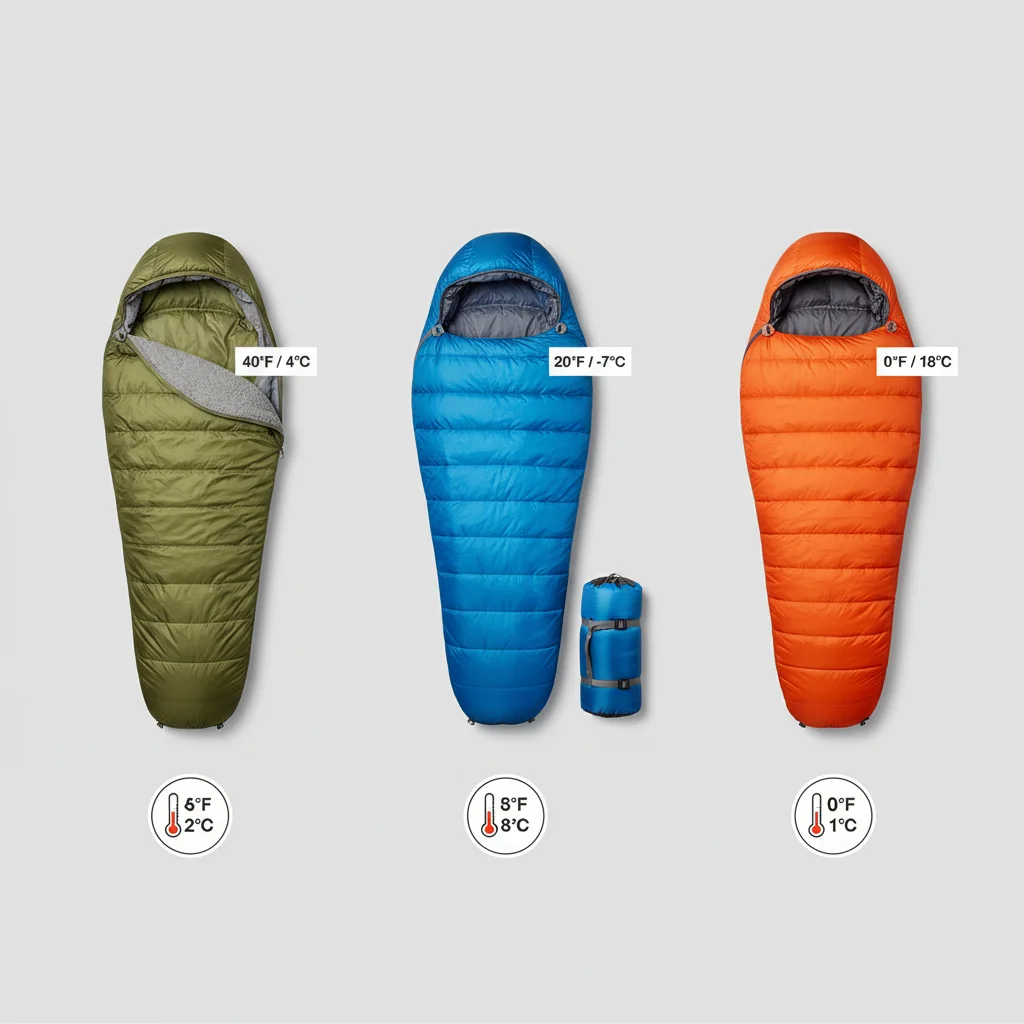
Choosing the correct sleeping bag temperature rating is crucial for comfort and safety during your outdoor adventures. The ideal rating depends on several factors, including the lowest expected ambient temperature, your personal metabolism, and whether you are a warm or cold sleeper. Generally, you should select a bag with a rating that is at least 10-20 degrees Fahrenheit lower than the coldest temperature you anticipate encountering to ensure adequate warmth and a comfortable night’s sleep.
Understanding EN/ISO Temperature Ratings
Modern sleeping bags often come with EN/ISO (European Norm/International Organization for Standardization) ratings, which provide a more standardized and reliable measure of a bag’s performance. These ratings typically include a ‘Comfort’ limit, ‘Lower Limit’, and ‘Extreme’ limit. The Comfort rating indicates the temperature at which an average woman can sleep comfortably, while the Lower Limit is the temperature at which an average man can sleep comfortably for eight hours in a curled position. The Extreme rating is a survival rating, indicating the minimum temperature at which a person can survive for six hours without risk of hypothermia, though significant discomfort is expected. For most recreational campers, focusing on the Comfort or Lower Limit is most appropriate, depending on your gender and personal warmth preferences.
these ratings are laboratory-tested and can vary in real-world conditions. Factors like humidity, wind, and your sleeping pad’s R-value can significantly impact how warm you feel. Always consider these external elements when making your selection.
Factors Influencing Your Temperature Rating Choice
Several key factors should guide your decision when selecting a sleeping bag’s temperature rating. First, consider the season and geographic location of your trips. A summer bag for desert camping will have a vastly different rating than a winter bag for mountain expeditions. Second, your personal physiology plays a significant role; some people naturally sleep warmer than others. Third, the type of shelter you’ll be using (tent, hammock, bivy) and the insulation of your sleeping pad will also affect your overall warmth. A high R-value sleeping pad is essential for preventing heat loss to the ground, even with a warm sleeping bag.
- Consider the lowest expected night temperature.
- Account for your personal warmth preference (warm vs. cold sleeper).
- Factor in the R-value of your sleeping pad.
- Evaluate the type of shelter you’ll be using.
- Think about the clothing you’ll wear to bed.
Matching Your Bag to Your Adventure
|
Our Picks for the Best Sleeping Bag in 2026
As an Amazon Associate I earn from qualifying purchases.
|
||
| Num | Product | Action |
|---|---|---|
| 1 | MalloMe Sleeping Bags for Adults Cold Weather & Warm - Backpacking Camping Sleeping Bag for Kids 10-12, Girls, Boys - Lightweight Compact Camping Essentials Gear Accessories Hiking Sleep Must Haves |

|
| 2 | Coleman Brazos 20/30°F Adult Cool-Weather Sleeping Bag with No-Snag Zipper & Stuff Sack, Machine Washable, Great for Camping, Traveling, Guests, & More |
|
| 3 | 0 Degree Winter Sleeping Bags for Adults Camping (450GSM) - Temp Range (5F–32F) Portable Waterproof Compression Sack- Camping Sleeping Bags for Big and Tall in Env Hoodie: Backpacking Hiking 4 Season |
|
| 4 | oaskys Camping Sleeping Bag - 3 Season Warm & Cool Weather - Summer Spring Fall Lightweight Waterproof for Adults Kids - Camping Gear Equipment, Traveling, and Outdoors |
|
| 5 | Cold Weather Sleeping Bag 100% Cotton Flannel XXL for Adults Big and Tall,Free Compression Sack |
|
| 6 | REDCAMP Cotton Flannel Sleeping Bag for Camping Backpacking, Adults Cold Weather Envelope Sleeping Bags with 2/3/4/6lbs Filling |
|
| 7 | MalloMe Sleeping Bags for Adults Cold Weather & Warm - Backpacking Camping Sleeping Bag for Kids 10-12, Girls, Boys - Lightweight Compact Camping Essentials Gear Accessories Hiking Sleep Must Haves |
|
| 8 | Coleman Heritage Big & Tall 10°F Flannel Sleeping Bag, XL Sleeping Bag Fits Adults up to 6ft 7in Tall, Machine Washable, Great for Camping, Hunting, Guests, & More |
|
| 9 | Coleman Brazos 20/30°F Adult Cool-Weather Sleeping Bag with No-Snag Zipper & Stuff Sack, Machine Washable, Great for Camping, Traveling, Guests, & More |
|
| 10 | BubblePanda Rayon Made from Bamboo Sleep Sack 6-12 Months 1.0 Tog Soft Toddler Sleeping Sack for Babies 2-Way Zipper Baby Wearable Blanket |
|
For casual summer camping in mild climates, a bag rated for 30-40°F (0-5°C) is often sufficient. If you’re planning shoulder-season trips or camping at higher elevations, a 15-25°F (-9 to -4°C) bag might be more appropriate. For serious winter expeditions or very cold conditions, you’ll need a bag rated for 0°F (-18°C) or even lower. Always err on the side of caution; it’s easier to vent a warm bag than to get warm in a bag that’s not sufficient for the conditions.
The Role of Sleeping Bag Liners and Clothing
While the sleeping bag’s temperature rating is primary, you can enhance its warmth and versatility with accessories. A sleeping bag liner can add an extra 5-15°F of warmth, depending on the material (fleece, silk, or synthetic). Liners also help keep your sleeping bag clean, extending its lifespan. The clothing you wear to bed makes a difference. Opt for clean, dry base layers made of wool or synthetic materials. Avoid cotton, as it loses its insulating properties when wet. A warm hat can also prevent significant heat loss from your head.
Common Mistakes to Avoid
One common mistake is relying solely on the manufacturer’s stated temperature rating without considering the EN/ISO standards or your personal needs. Another is neglecting the importance of a good sleeping pad; even the warmest sleeping bag will feel cold if you’re losing heat to the ground. Overpacking or underpacking clothing for sleep can also lead to discomfort. Finally, always check the weather forecast for your specific location and elevation before your trip, as conditions can change rapidly.
Get our weekly buyer guide
Practical specs, not advice. Unsubscribe anytime.
