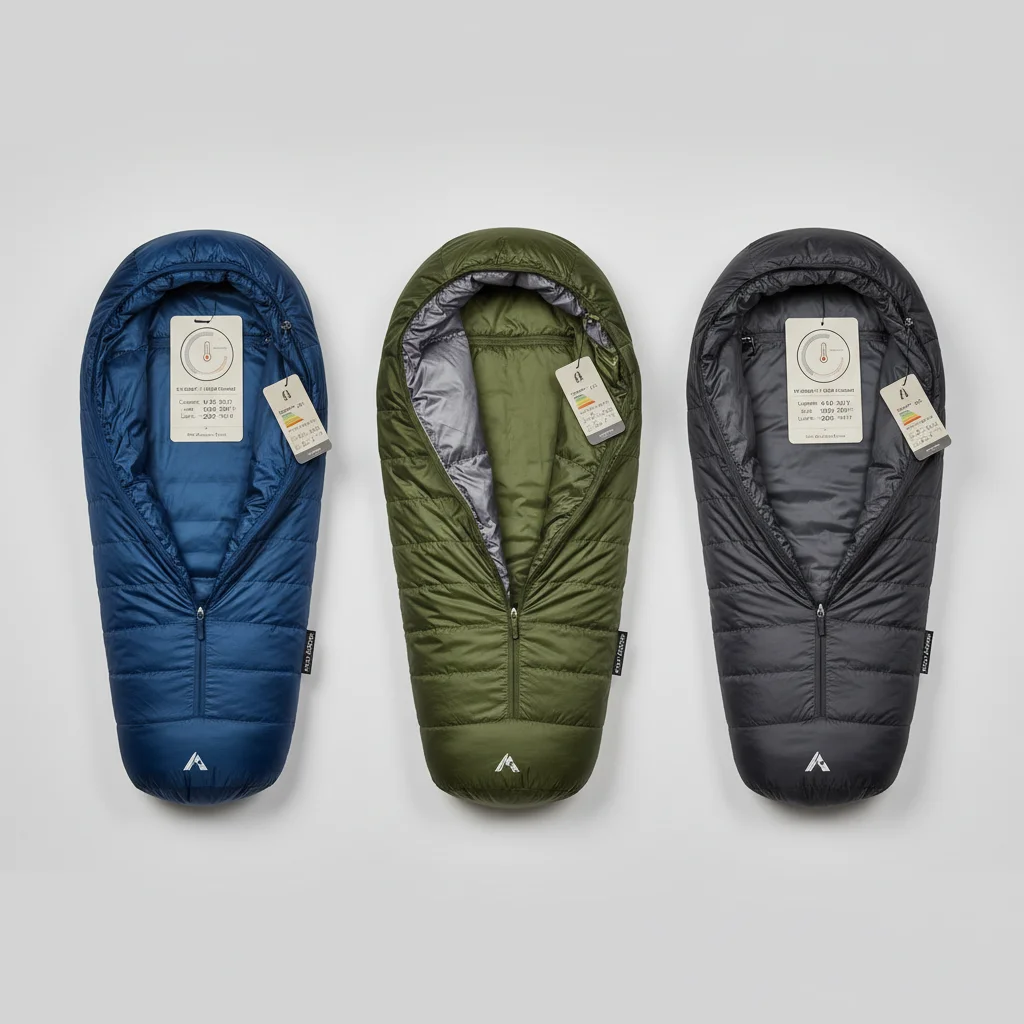
Sleeping bag EN ratings, now officially ISO 23537 standards, provide a standardized way to compare the thermal performance of sleeping bags. These ratings are crucial for campers and backpackers to understand how warm a sleeping bag will actually keep them in various conditions. There are typically three main ratings you’ll encounter: Comfort, Limit, and Extreme, each indicating a different level of thermal protection for a ‘standard’ user.
Understanding these ratings helps you select a bag that matches your expected lowest night-time temperatures and personal cold tolerance, preventing uncomfortable or even dangerous situations in the backcountry. For browse all sleeping bags articles on this site.
Understanding the ISO 23537 Standard
The ISO 23537 standard (formerly EN 13537) is an international testing protocol designed to provide consistent and comparable temperature ratings for sleeping bags. This standard uses a thermal manikin in a controlled cold chamber to measure the insulation properties of a sleeping bag. The manikin, dressed in specific base layers, simulates human heat loss, and sensors record the temperature at which the bag maintains a stable internal temperature. This scientific approach aims to remove the guesswork from manufacturers’ self-proclaimed temperature ratings.
While the standard provides a robust framework, it’s important to remember that individual factors like metabolism, hydration, clothing, and sleeping pad insulation can significantly influence how warm you feel in a given bag.
The Three Key Temperature Ratings Explained
When you look at a sleeping bag’s specifications, you’ll typically see three distinct temperature ratings:
- Comfort Temperature: This is the lowest temperature at which a ‘standard’ woman (assumed to be 60kg, 1.60m) can expect to sleep comfortably in a relaxed position. This is often the most useful rating for general campers and those who tend to sleep cold.
- Limit Temperature: This is the lowest temperature at which a ‘standard’ man (assumed to be 70kg, 1.73m) can sleep for eight hours in a curled position without feeling excessively cold. This rating is more relevant for experienced users who know their cold tolerance and are willing to endure some discomfort.
- Extreme Temperature: This is a survival rating, indicating the minimum temperature at which a ‘standard’ woman can survive for six hours without risk of hypothermia, though severe discomfort and health risk are expected. This rating should not be used for planning purposes, as it does not represent a comfortable or even safe sleeping temperature.
Always prioritize the Comfort rating for women and cold sleepers, and the Limit rating for men and warm sleepers, when making your selection.
Factors Influencing Your Perceived Warmth
|
Our Picks for the Best Sleeping Bag in 2026
As an Amazon Associate I earn from qualifying purchases.
|
||
| Num | Product | Action |
|---|---|---|
| 1 | Coleman Brazos 20/30°F Adult Cool-Weather Sleeping Bag with No-Snag Zipper & Stuff Sack, Machine Washable, Great for Camping, Traveling, Guests, & More |

|
| 2 | MalloMe Sleeping Bags for Adults Cold Weather & Warm - Backpacking Camping Sleeping Bag for Kids 10-12, Girls, Boys - Lightweight Compact Camping Essentials Gear Accessories Hiking Sleep Must Haves |
|
| 3 | MalloMe Sleeping Bags for Adults Cold Weather & Warm - Backpacking Camping Sleeping Bag for Kids 10-12, Girls, Boys - Lightweight Compact Camping Essentials Gear Accessories Hiking Sleep Must Haves |
|
| 4 | oaskys Camping Sleeping Bag - 3 Season Warm & Cool Weather - Summer Spring Fall Lightweight Waterproof for Adults Kids - Camping Gear Equipment, Traveling, and Outdoors |
|
| 5 | BubblePanda Rayon Made from Bamboo Sleep Sack 6-12 Months 1.0 Tog Soft Toddler Sleeping Sack for Babies 2-Way Zipper Baby Wearable Blanket |
|
| 6 | Coleman Brazos 20/30°F Adult Cool-Weather Sleeping Bag with No-Snag Zipper & Stuff Sack, Machine Washable, Great for Camping, Traveling, Guests, & More |
|
| 7 | 0 Degree Winter Sleeping Bags for Adults Camping (450GSM) - Temp Range (5F–32F) Portable Waterproof Compression Sack- Camping Sleeping Bags for Big and Tall in Env Hoodie: Backpacking Hiking 4 Season |
|
| 8 | Coleman Heritage Big & Tall 10°F Flannel Sleeping Bag, XL Sleeping Bag Fits Adults up to 6ft 7in Tall, Machine Washable, Great for Camping, Hunting, Guests, & More |
|
| 9 | Cold Weather Sleeping Bag 100% Cotton Flannel XXL for Adults Big and Tall,Free Compression Sack |
|
| 10 | REDCAMP Cotton Flannel Sleeping Bag for Camping Backpacking, Adults Cold Weather Envelope Sleeping Bags with 2/3/4/6lbs Filling |
|
While ISO ratings offer a solid baseline, several personal and environmental factors can alter your actual warmth perception. Your metabolism, for instance, plays a significant role; some people naturally run warmer or colder. Hydration and nutrition before bed can also impact your body’s ability to generate heat. The clothing you wear inside your sleeping bag, such as thermal base layers, can add several degrees of warmth. Furthermore, the insulation value of your sleeping pad is critical, as a significant amount of heat can be lost to the ground. A high R-value sleeping pad is just as important as a warm sleeping bag in cold conditions.
Consider these variables when choosing a bag, and perhaps opt for a slightly warmer rating if you tend to sleep cold or anticipate challenging conditions.
Why ISO Ratings Matter for Campers
For campers and backpackers, ISO ratings are invaluable because they provide a common language for comparing sleeping bags across different brands. Without this standard, manufacturers could use arbitrary testing methods, making it nearly impossible to accurately assess a bag’s performance. This standardization helps consumers make informed decisions, ensuring they purchase a sleeping bag that genuinely meets their needs for a specific trip or climate. It reduces the risk of being caught unprepared in cold weather, enhancing both comfort and safety in the outdoors.
Always look for the ISO 23537 or EN 13537 label when purchasing a new sleeping bag.
Choosing the Right Rating for Your Adventure
Selecting the appropriate EN/ISO rating depends entirely on your planned activities and personal preferences. For summer camping in mild climates, a bag with a Comfort rating around 40-50°F (5-10°C) might suffice. For three-season backpacking in varied conditions, a Comfort rating of 20-30°F (-7 to -1°C) is often a versatile choice. If you’re venturing into winter conditions or high altitudes, you’ll need a bag with a much lower Comfort rating, potentially down to 0°F (-18°C) or even colder. Always consider the lowest possible temperature you might encounter, not just the average. It’s generally better to have a bag that’s slightly too warm than one that’s not warm enough, as you can always vent a warmer bag.
Get our weekly buyer guide
Practical specs, not advice. Unsubscribe anytime.
