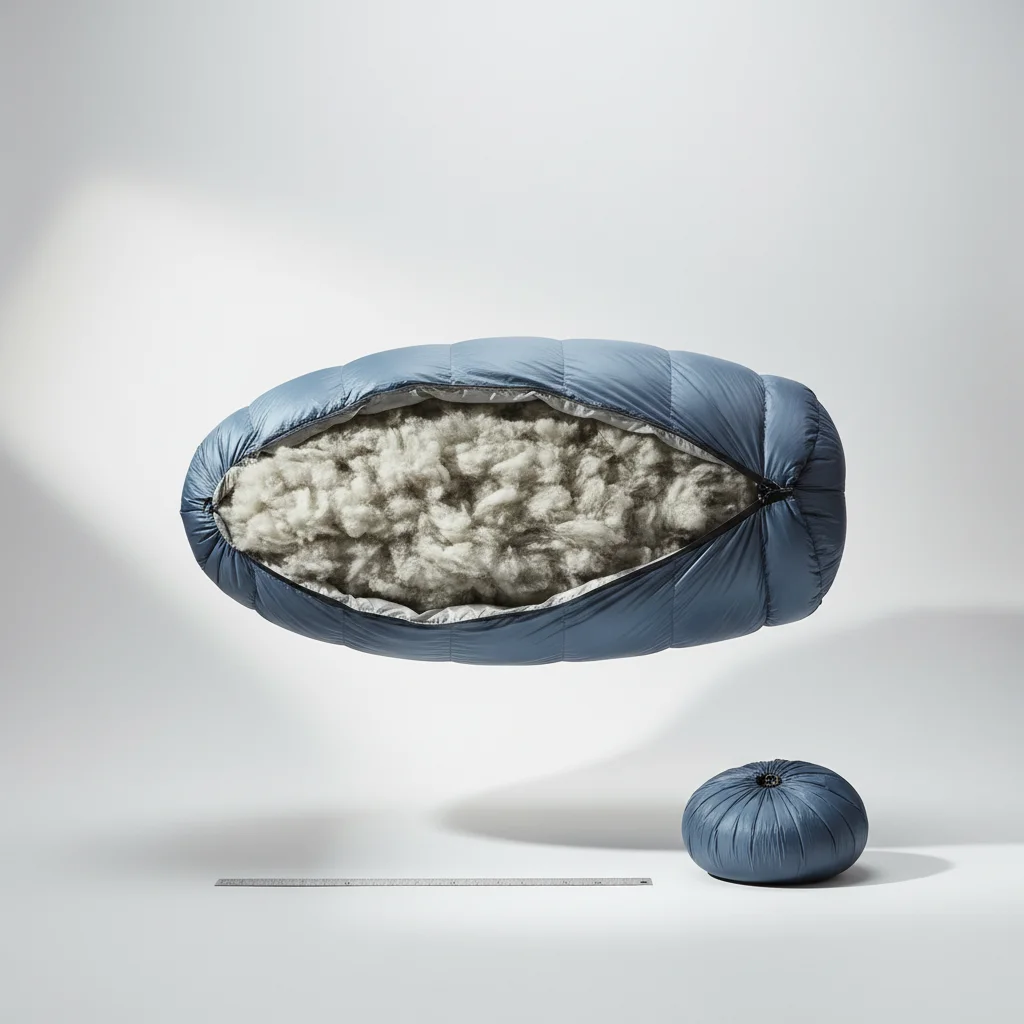
Sleeping bag loft directly affects warmth by trapping air, and there are three primary factors that determine how much loft a sleeping bag can achieve: fill power, fill type, and construction. Loft refers to the thickness or “fluffiness” of the insulation within a sleeping bag. This trapped air creates an insulating barrier that prevents your body heat from escaping and cold air from penetrating. The more loft a sleeping bag has, the more air it can trap, and consequently, the warmer it will be for a given temperature rating.
Understanding Fill Power and Its Impact on Loft
Fill power is a crucial metric, especially for down sleeping bags, indicating the quality of the down. It measures the amount of space one ounce of down occupies when compressed. For example, 800-fill-power down means one ounce of down fills 800 cubic inches. Higher fill power down is more efficient at trapping air because it’s lighter and more compressible, allowing it to expand more and create greater loft with less material. This translates to a warmer sleeping bag for its weight and packed size. While synthetic insulation doesn’t have a fill power rating in the same way, its quality is also measured by its ability to loft and trap air effectively.
A sleeping bag with 850-fill-power down will provide significantly more warmth for its weight compared to a 600-fill-power bag. This is why ultralight backpackers often prioritize high fill power down to minimize their pack weight while maximizing warmth. The ability of down to regain its loft after compression is also a key indicator of its longevity and performance.
Down vs. Synthetic Fill: Lofting Differences
The type of insulation—down or synthetic—plays a significant role in how a sleeping bag lofts and performs. Down insulation, typically from geese or ducks, offers superior loft-to-weight ratio and compressibility. It can expand significantly, trapping a large volume of air, and is highly durable if properly cared for. However, down loses its loft and insulating properties when wet, making it less effective in damp conditions.
Synthetic insulation, made from polyester fibers, is designed to mimic down’s lofting ability. While generally heavier and bulkier than down for the same warmth, synthetic insulation retains much of its insulating power even when wet. This makes synthetic bags a reliable choice for wet environments or for campers who prioritize moisture resistance. Modern synthetic insulations, like those found in some premium bags, are engineered to offer impressive loft and compressibility, closing the gap with down in certain performance aspects.
Sleeping Bag Construction and Loft Distribution
|
Our Picks for the Best Sleeping Bag in 2026
As an Amazon Associate I earn from qualifying purchases.
|
||
| Num | Product | Action |
|---|---|---|
| 1 | Coleman Heritage Big & Tall 10°F Flannel Sleeping Bag, XL Sleeping Bag Fits Adults up to 6ft 7in Tall, Machine Washable, Great for Camping, Hunting, Guests, & More |

|
| 2 | BubblePanda Rayon Made from Bamboo Sleep Sack 6-12 Months 1.0 Tog Soft Toddler Sleeping Sack for Babies 2-Way Zipper Baby Wearable Blanket |
|
| 3 | Coleman Brazos 20/30°F Adult Cool-Weather Sleeping Bag with No-Snag Zipper & Stuff Sack, Machine Washable, Great for Camping, Traveling, Guests, & More |
|
| 4 | Cold Weather Sleeping Bag 100% Cotton Flannel XXL for Adults Big and Tall,Free Compression Sack |
|
| 5 | REDCAMP Cotton Flannel Sleeping Bag for Camping Backpacking, Adults Cold Weather Envelope Sleeping Bags with 2/3/4/6lbs Filling |
|
| 6 | oaskys Camping Sleeping Bag - 3 Season Warm & Cool Weather - Summer Spring Fall Lightweight Waterproof for Adults Kids - Camping Gear Equipment, Traveling, and Outdoors |
|
| 7 | MalloMe Sleeping Bags for Adults Cold Weather & Warm - Backpacking Camping Sleeping Bag for Kids 10-12, Girls, Boys - Lightweight Compact Camping Essentials Gear Accessories Hiking Sleep Must Haves |
|
| 8 | MalloMe Sleeping Bags for Adults Cold Weather & Warm - Backpacking Camping Sleeping Bag for Kids 10-12, Girls, Boys - Lightweight Compact Camping Essentials Gear Accessories Hiking Sleep Must Haves |
|
| 9 | 0 Degree Winter Sleeping Bags for Adults Camping (450GSM) - Temp Range (5F–32F) Portable Waterproof Compression Sack- Camping Sleeping Bags for Big and Tall in Env Hoodie: Backpacking Hiking 4 Season |
|
| 10 | Coleman Brazos 20/30°F Adult Cool-Weather Sleeping Bag with No-Snag Zipper & Stuff Sack, Machine Washable, Great for Camping, Traveling, Guests, & More |
|
The construction of a sleeping bag, specifically its baffle design, directly influences how insulation is distributed and how effectively it can loft. Baffles are internal walls of fabric that create compartments for the insulation, preventing it from shifting and clumping. There are several common baffle types:
- Box Baffles: These create three-dimensional boxes that allow down to fully loft and prevent cold spots. They are common in high-quality down bags.
- Sewn-Through Construction: The shell and liner fabrics are sewn directly together, creating channels. This is lighter but can create cold spots where the stitching compresses the insulation.
- Trapezoidal Baffles: Similar to box baffles but with a trapezoidal shape, designed to optimize down distribution and minimize cold spots.
- Vertical Baffles: Run vertically down the bag, often used in conjunction with other baffle types to prevent down migration to the sides.
Proper baffle design ensures that the insulation remains evenly distributed, maximizing loft and eliminating cold spots that can compromise warmth. A well-designed baffle system allows the insulation to achieve its full potential loft, providing consistent warmth throughout the sleeping bag.
Maintaining Loft for Optimal Warmth
To ensure your sleeping bag continues to provide optimal warmth, maintaining its loft is essential. When storing your sleeping bag, avoid compressing it for extended periods. Instead, store it loosely in a large mesh or cotton storage sack. This allows the insulation to remain uncompressed and maintain its loft. After each use, air out your sleeping bag to remove moisture, which can degrade insulation over time. When packing for a trip, stuff your sleeping bag into its compression sack rather than rolling it, as stuffing helps to distribute the insulation more evenly and prevents creasing that can damage the fibers.
When Loft Decreases: Signs and Solutions
Over time, even with proper care, a sleeping bag’s loft can decrease due to dirt, body oils, and repeated compression. Signs of decreased loft include a noticeable thinning of the insulation, cold spots, and a general reduction in warmth. If your down sleeping bag is losing loft, a gentle washing can often restore it. Use a down-specific cleaner and follow the manufacturer’s instructions carefully. For synthetic bags, washing can also help to rejuvenate the fibers. If washing doesn’t fully restore the loft, it might be a sign that the insulation is reaching the end of its lifespan, and it could be time to consider a new sleeping bag, especially if you’re heading into cold conditions.
Get our weekly buyer guide
Practical specs, not advice. Unsubscribe anytime.

This really helped me understand why my old bag wasn’t cutting it anymore. The concept of trapped air preventing heat escape is key. I just bought a new bag with much better loft and the difference is night and day. No more shivering on those early morning mountain trips!
I appreciate the info on construction, but I wish there was more detail on specific types of baffles. My current bag has sewn-through construction and I’ve noticed some cold spots, which is a bummer. It’s warm enough for summer, but for colder weather, I definitely need something with better insulation distribution.
I’ve been using a synthetic fill bag for years and it’s been decent, but after reading about how loft affects warmth, I’m seriously considering an upgrade. The way it traps air to create an insulating barrier makes so much sense. I’m looking for something that packs down smaller too, so a higher loft down bag seems like the way to go.
I always wondered why some sleeping bags felt warmer than others even with similar temperature ratings. This explanation of fill power really cleared things up for me! My new 800-fill-power down bag is incredibly lightweight and keeps me toasty even on chilly nights. It’s amazing how much difference that ‘fluffiness’ makes.