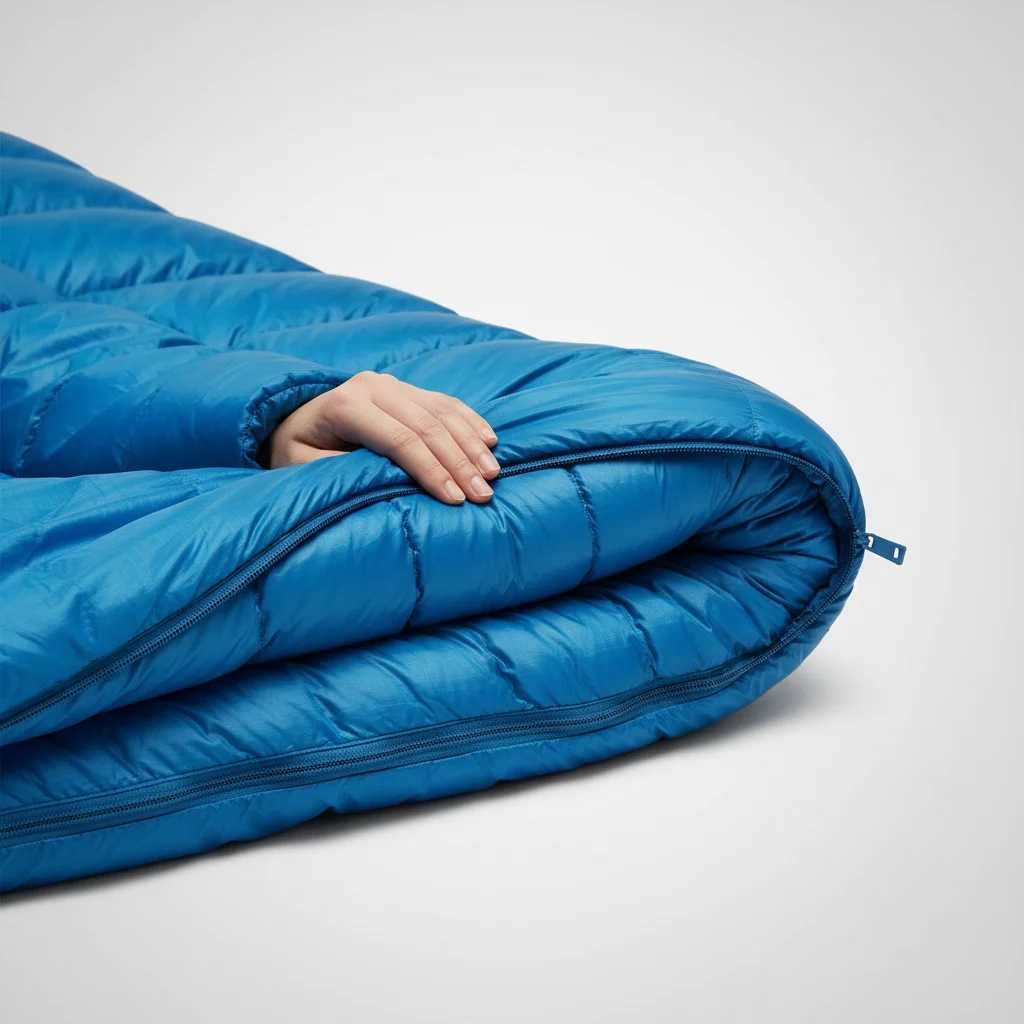
Sleeping bag draft tubes are an essential, yet often overlooked, component designed to prevent heat loss through the zipper. These insulated flaps, typically running the full length of the zipper, create a thermal barrier that significantly enhances a sleeping bag’s warmth retention. Without an effective draft tube, even the most highly-rated sleeping bag can lose a substantial amount of heat, making your nights colder than expected.
What is a Sleeping Bag Draft Tube?
A sleeping bag draft tube is essentially a long, insulated flap of material sewn along the inside of the zipper. Its primary function is to block cold air from seeping in through the zipper teeth and warm air from escaping. Zippers, by their very nature, are not airtight and can act as a thermal bridge, allowing heat to transfer out of the sleeping bag. The draft tube creates a physical and insulated barrier, ensuring that the warmth generated by your body stays trapped inside the bag. For explore our sleeping bags reviews on this site.
How Draft Tubes Improve Warmth and Comfort
The effectiveness of a draft tube directly correlates with the overall warmth and comfort of your sleeping bag. By sealing off the zipper, draft tubes prevent cold spots from forming along your side, which can be particularly noticeable in colder temperatures. This consistent warmth allows your body to maintain its core temperature more efficiently, leading to a more restful night’s sleep. A well-designed draft tube will be generously filled with insulation, often matching the fill material of the sleeping bag itself, whether it’s down or synthetic.
Types of Draft Tube Construction
|
Our Picks for the Best Sleeping Bag in 2026
As an Amazon Associate I earn from qualifying purchases.
|
||
| Num | Product | Action |
|---|---|---|
| 1 | REDCAMP Cotton Flannel Sleeping Bag for Camping Backpacking, Adults Cold Weather Envelope Sleeping Bags with 2/3/4/6lbs Filling |

|
| 2 | 0 Degree Winter Sleeping Bags for Adults Camping (450GSM) - Temp Range (5F–32F) Portable Waterproof Compression Sack- Camping Sleeping Bags for Big and Tall in Env Hoodie: Backpacking Hiking 4 Season |
|
| 3 | MalloMe Sleeping Bags for Adults Cold Weather & Warm - Backpacking Camping Sleeping Bag for Kids 10-12, Girls, Boys - Lightweight Compact Camping Essentials Gear Accessories Hiking Sleep Must Haves |
|
| 4 | MalloMe Sleeping Bags for Adults Cold Weather & Warm - Backpacking Camping Sleeping Bag for Kids 10-12, Girls, Boys - Lightweight Compact Camping Essentials Gear Accessories Hiking Sleep Must Haves |
|
| 5 | BubblePanda Rayon Made from Bamboo Sleep Sack 6-12 Months 1.0 Tog Soft Toddler Sleeping Sack for Babies 2-Way Zipper Baby Wearable Blanket |
|
| 6 | Coleman Brazos 20/30°F Adult Cool-Weather Sleeping Bag with No-Snag Zipper & Stuff Sack, Machine Washable, Great for Camping, Traveling, Guests, & More |
|
| 7 | Coleman Heritage Big & Tall 10°F Flannel Sleeping Bag, XL Sleeping Bag Fits Adults up to 6ft 7in Tall, Machine Washable, Great for Camping, Hunting, Guests, & More |
|
| 8 | Cold Weather Sleeping Bag 100% Cotton Flannel XXL for Adults Big and Tall,Free Compression Sack |
|
| 9 | Coleman Brazos 20/30°F Adult Cool-Weather Sleeping Bag with No-Snag Zipper & Stuff Sack, Machine Washable, Great for Camping, Traveling, Guests, & More |
|
| 10 | oaskys Camping Sleeping Bag - 3 Season Warm & Cool Weather - Summer Spring Fall Lightweight Waterproof for Adults Kids - Camping Gear Equipment, Traveling, and Outdoors |
|
Draft tubes come in various constructions, each with its own advantages. The most common types include single-flap, double-flap, and differential-cut designs. Single-flap tubes are straightforward, offering a basic barrier. Double-flap tubes provide enhanced insulation with two layers of material and fill. Differential-cut draft tubes are designed to have a larger circumference than the inner shell of the sleeping bag, allowing the insulation to fully loft without being compressed by the zipper, thus maximizing thermal efficiency. Some high-end bags also feature anti-snag strips along the draft tube to prevent the zipper from catching on the fabric.
- Single-flap draft tubes: Basic insulation, common in budget bags.
- Double-flap draft tubes: Enhanced insulation with two layers.
- Differential-cut draft tubes: Maximize loft and thermal efficiency.
- Anti-snag strips: Prevent zipper from catching on fabric.
- Integrated neck baffles: Extend warmth to the neck and shoulders.
Maintaining Your Sleeping Bag’s Draft Tube
To ensure your draft tube continues to perform optimally, proper care is essential. Avoid compressing the draft tube excessively during storage, as this can reduce the loft of its insulation over time. When washing your sleeping bag, follow the manufacturer’s instructions carefully to prevent clumping of the fill material within the draft tube. Regularly inspect the draft tube for any tears or damage, as even small punctures can compromise its insulating properties. If damage occurs, prompt repair can prevent further heat loss and extend the life of your sleeping bag.
When is a Draft Tube Most Critical?
While beneficial in all conditions, a robust draft tube becomes absolutely critical in colder environments. For camping or backpacking trips where temperatures drop significantly, the difference between a sleeping bag with an effective draft tube and one without can be the difference between a comfortable night and a miserable one. Always check for the presence and quality of the draft tube when purchasing a sleeping bag, especially if you plan to use it in three-season or winter conditions. A well-insulated draft tube is a hallmark of a high-quality sleeping bag designed for serious outdoor use.
Get our weekly buyer guide
Practical specs, not advice. Unsubscribe anytime.
