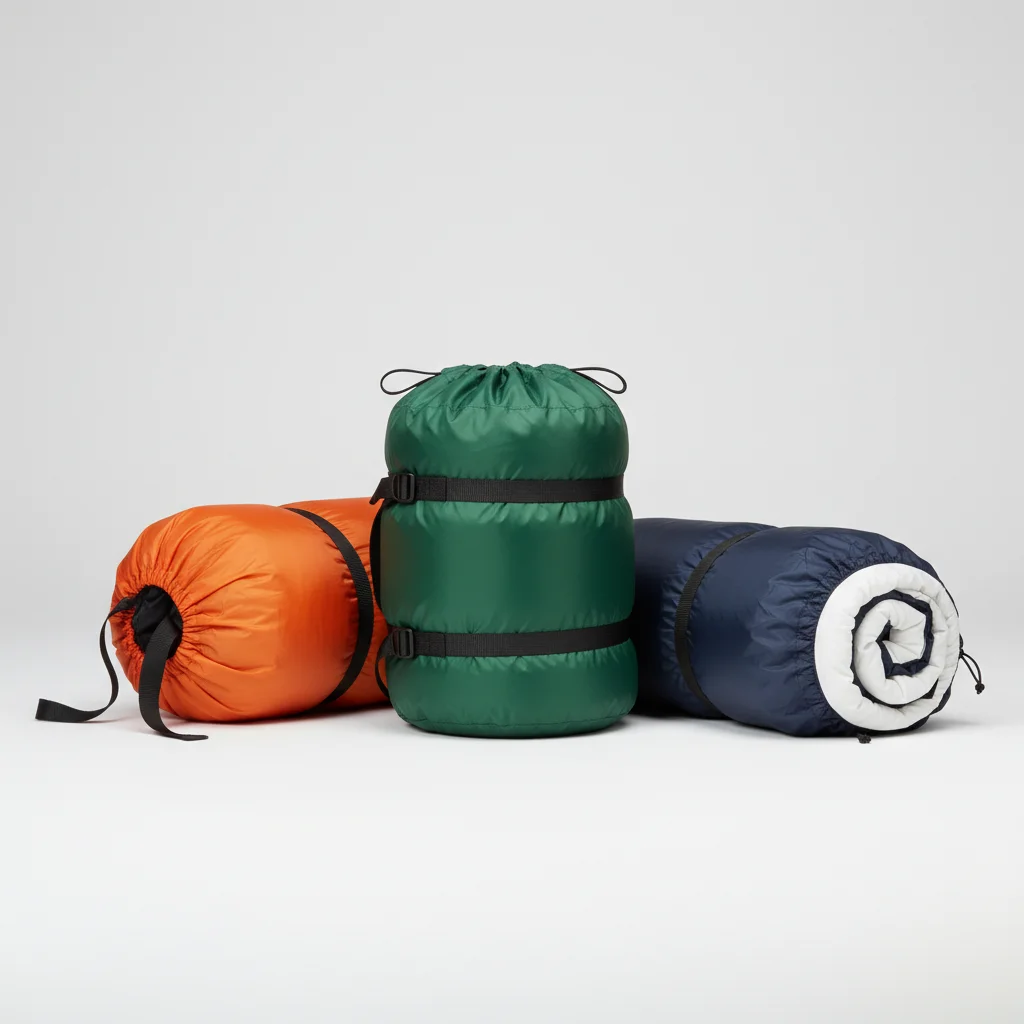
Sleeping bag compression sacks are a valuable accessory for backpackers and campers looking to minimize their gear’s bulk. While not strictly essential for every trip, they offer significant advantages in terms of space-saving and organization, especially when pack space is at a premium. You’ll typically find that a good compression sack can reduce your sleeping bag’s volume by 30-50%, making a noticeable difference in your pack.
What is a Sleeping Bag Compression Sack?
A sleeping bag compression sack is a specialized stuff sack designed with straps that allow you to cinch down and reduce the overall volume of your sleeping bag. Unlike a standard stuff sack, which merely holds the sleeping bag, a compression sack actively squeezes out air and compacts the insulation, making the bag much smaller. They are typically made from durable, lightweight materials like nylon or polyester, often with a water-resistant coating to protect your sleeping bag from moisture.
The design usually involves a main cylindrical bag with a lid or top flap, and several external straps that run around the circumference and over the top. As you tighten these straps, the bag compresses, forcing air out and compacting the contents. This is particularly useful for bulky items like sleeping bags, which can otherwise take up a disproportionate amount of space in a backpack.
Benefits of Using a Compression Sack
The primary benefit of a compression sack is the significant reduction in packed volume. This is crucial for backpackers who need to fit all their gear into a limited space, allowing for a smaller pack or more room for other essentials. Beyond space-saving, compression sacks also help to organize your pack, keeping your sleeping bag neatly contained and preventing it from expanding and filling every available void.
- Maximizes Pack Space: Reduces sleeping bag volume by up to 50%, freeing up crucial room.
- Improves Organization: Keeps your sleeping bag contained and prevents it from expanding.
- Protects from Elements: Many are water-resistant, offering an extra layer of protection.
- Easier Packing: A compact sleeping bag is simpler to load and unload from your pack.
- Weight Distribution: A more compact item can be placed strategically for better balance.
When to Use a Compression Sack
|
Our Picks for the Best Sleeping Bag in 2026
As an Amazon Associate I earn from qualifying purchases.
|
||
| Num | Product | Action |
|---|---|---|
| 1 | Cold Weather Sleeping Bag 100% Cotton Flannel XXL for Adults Big and Tall,Free Compression Sack |

|
| 2 | MalloMe Sleeping Bags for Adults Cold Weather & Warm - Backpacking Camping Sleeping Bag for Kids 10-12, Girls, Boys - Lightweight Compact Camping Essentials Gear Accessories Hiking Sleep Must Haves |
|
| 3 | BubblePanda Rayon Made from Bamboo Sleep Sack 6-12 Months 1.0 Tog Soft Toddler Sleeping Sack for Babies 2-Way Zipper Baby Wearable Blanket |
|
| 4 | Coleman Brazos 20/30°F Adult Cool-Weather Sleeping Bag with No-Snag Zipper & Stuff Sack, Machine Washable, Great for Camping, Traveling, Guests, & More |
|
| 5 | oaskys Camping Sleeping Bag - 3 Season Warm & Cool Weather - Summer Spring Fall Lightweight Waterproof for Adults Kids - Camping Gear Equipment, Traveling, and Outdoors |
|
| 6 | REDCAMP Cotton Flannel Sleeping Bag for Camping Backpacking, Adults Cold Weather Envelope Sleeping Bags with 2/3/4/6lbs Filling |
|
| 7 | Coleman Brazos 20/30°F Adult Cool-Weather Sleeping Bag with No-Snag Zipper & Stuff Sack, Machine Washable, Great for Camping, Traveling, Guests, & More |
|
| 8 | 0 Degree Winter Sleeping Bags for Adults Camping (450GSM) - Temp Range (5F–32F) Portable Waterproof Compression Sack- Camping Sleeping Bags for Big and Tall in Env Hoodie: Backpacking Hiking 4 Season |
|
| 9 | MalloMe Sleeping Bags for Adults Cold Weather & Warm - Backpacking Camping Sleeping Bag for Kids 10-12, Girls, Boys - Lightweight Compact Camping Essentials Gear Accessories Hiking Sleep Must Haves |
|
| 10 | Coleman Heritage Big & Tall 10°F Flannel Sleeping Bag, XL Sleeping Bag Fits Adults up to 6ft 7in Tall, Machine Washable, Great for Camping, Hunting, Guests, & More |
|
Compression sacks are most beneficial for multi-day backpacking trips, thru-hikes, or any adventure where minimizing pack size and weight is critical. If you’re car camping or on a short overnight trip where space isn’t an issue, a standard stuff sack or even just loosely packing your sleeping bag might suffice. However, for serious outdoor enthusiasts, the advantages often outweigh the minor added weight of the sack itself.
Consider the type of sleeping bag you have as well. Down sleeping bags, while highly compressible, benefit immensely from a compression sack to reach their smallest possible size. Synthetic sleeping bags are generally bulkier and can also see significant volume reduction with a good compression sack.
Choosing the Right Compression Sack
When selecting a compression sack, consider its volume, material, and closure system. The volume should be appropriate for your sleeping bag’s size when uncompressed; a sack that’s too small will be difficult to use, while one that’s too large won’t compress effectively. Look for durable, lightweight, and water-resistant materials. Roll-top closures often provide better water resistance than drawstring tops.
Also, pay attention to the number and quality of the compression straps. More straps generally allow for more even compression and prevent bulging. Some compression sacks are also designed to be waterproof, offering superior protection in wet conditions, which can be a major upgrade for keeping your sleeping bag dry.
Alternatives and Best Practices
While compression sacks are excellent, some backpackers opt to simply stuff their sleeping bag loosely into the bottom of their pack. This method can fill irregular spaces and sometimes offers a similar level of compression without the added weight of a sack. However, it offers less protection from moisture and can make retrieving other items more challenging.
Regardless of whether you use a compression sack, always ensure your sleeping bag is completely dry before packing it away to prevent mildew and preserve its loft. When storing your sleeping bag long-term at home, it’s best to keep it uncompressed in a large mesh storage sack or hung up, allowing the insulation to fully loft and maintain its warmth over time.
Get our weekly buyer guide
Practical specs, not advice. Unsubscribe anytime.
