Proper maintenance is crucial for extending the lifespan and preserving the insulating properties of your sleeping bag. Regular cleaning, correct storage, and timely repairs prevent degradation of materials and ensure your bag remains a reliable source of warmth and comfort for many years. For instance, storing a sleeping bag compressed can reduce its warmth by up to 30% over time.
Understanding Your Sleeping Bag’s Materials
Effective sleeping bag maintenance begins with understanding its core components. Modern sleeping bags primarily use two types of insulation: down and synthetic. Each material has unique properties that dictate specific care requirements, ensuring optimal performance and longevity. Ignoring these differences can lead to irreversible damage and a significant reduction in your bag’s warmth.
Down-Filled Sleeping Bags
Down insulation, typically from geese or ducks, is renowned for its exceptional warmth-to-weight ratio and compressibility. These tiny clusters of feathers efficiently trap air, providing superior insulation. However, down is highly susceptible to moisture, which causes it to clump and lose its loft, drastically reducing warmth. Proper cleaning and thorough drying are crucial to maintain down’s delicate structure and insulating power. Dry cleaning is never recommended for down bags, as the chemicals can strip natural oils from the down. For sleeping bags buying guides on this site.
Synthetic-Filled Sleeping Bags
Synthetic insulation, often made from polyester fibers, offers a more budget-friendly and quick-drying alternative to down. Unlike down, synthetic materials retain some insulating properties even when wet, making them a robust choice for damp conditions. While generally more resilient to moisture and easier to care for than down, synthetic insulation can still lose loft over time with improper compression and washing. They also tend to be heavier and bulkier for the same warmth level.
Proper Cleaning Techniques
Regular cleaning is vital to remove accumulated dirt, sweat, and body oils that can compromise your sleeping bag’s insulation and fabric. However, “regular” for a sleeping bag usually means only when necessary—typically after 40-50 nights of use—as over-washing can also reduce its lifespan. Always check the manufacturer’s care label for specific instructions before proceeding.
Hand Washing Your Sleeping Bag
Hand washing is a gentle and effective method, especially suitable for delicate down bags or if you lack access to a large capacity front-loading machine.
- Preparation: Close all zippers and Velcro tabs. Spot clean heavily soiled areas like the hood and collar with a damp cloth and a small amount of mild, non-detergent soap.
- Washing: Fill a bathtub with lukewarm water and add a specialized sleeping bag cleaner (down-specific for down bags, a technical cleaner like Nikwax Tech Wash for synthetics). Submerge the bag completely, gently kneading it to work the soap through the insulation. Avoid wringing or twisting, which can damage the internal structure and baffles, especially in down bags.
- Rinsing: Drain the soapy water and refill the tub with clean, lukewarm water. Gently press the bag to remove soap residue. Repeat this rinsing process several times until the water runs completely clear and no suds remain. This can take multiple rinses.
- Draining: Carefully press out as much water as possible. To move the heavy, wet bag, support its entire weight, perhaps by placing it in a laundry basket, to prevent damage to the internal baffles.
Machine Washing Your Sleeping Bag
|
Our Picks for the Best Sleeping Bag in 2026
As an Amazon Associate I earn from qualifying purchases.
|
||
| Num | Product | Action |
|---|---|---|
| 1 | MalloMe Sleeping Bags for Adults Cold Weather & Warm - Backpacking Camping Sleeping Bag for Kids 10-12, Girls, Boys - Lightweight Compact Camping Essentials Gear Accessories Hiking Sleep Must Haves |

|
| 2 | Cold Weather Sleeping Bag 100% Cotton Flannel XXL for Adults Big and Tall,Free Compression Sack |
|
| 3 | BubblePanda Rayon Made from Bamboo Sleep Sack 6-12 Months 1.0 Tog Soft Toddler Sleeping Sack for Babies 2-Way Zipper Baby Wearable Blanket |
|
| 4 | oaskys Camping Sleeping Bag - 3 Season Warm & Cool Weather - Summer Spring Fall Lightweight Waterproof for Adults Kids - Camping Gear Equipment, Traveling, and Outdoors |
|
| 5 | Coleman Brazos 20/30°F Adult Cool-Weather Sleeping Bag with No-Snag Zipper & Stuff Sack, Machine Washable, Great for Camping, Traveling, Guests, & More |
|
| 6 | Coleman Brazos 20/30°F Adult Cool-Weather Sleeping Bag with No-Snag Zipper & Stuff Sack, Machine Washable, Great for Camping, Traveling, Guests, & More |
|
| 7 | MalloMe Sleeping Bags for Adults Cold Weather & Warm - Backpacking Camping Sleeping Bag for Kids 10-12, Girls, Boys - Lightweight Compact Camping Essentials Gear Accessories Hiking Sleep Must Haves |
|
| 8 | REDCAMP Cotton Flannel Sleeping Bag for Camping Backpacking, Adults Cold Weather Envelope Sleeping Bags with 2/3/4/6lbs Filling |
|
| 9 | Coleman Heritage Big & Tall 10°F Flannel Sleeping Bag, XL Sleeping Bag Fits Adults up to 6ft 7in Tall, Machine Washable, Great for Camping, Hunting, Guests, & More |
|
| 10 | 0 Degree Winter Sleeping Bags for Adults Camping (450GSM) - Temp Range (5F–32F) Portable Waterproof Compression Sack- Camping Sleeping Bags for Big and Tall in Env Hoodie: Backpacking Hiking 4 Season |
|
If machine washing, use a large capacity front-loading washer (7kg drum size or larger is ideal). Never use a top-loading machine with an agitator, as it can severely damage the bag’s insulation and fabric.
- Preparation: Zip up all zippers, secure Velcro, and release tension on drawcords. Turn synthetic bags inside out for better water penetration into the insulation, but down bags can be washed right-side out. Spot clean if needed.
- Detergent: Use a minimal amount (about one-third of a normal dose) of a specialized down soap for down bags, or a mild liquid detergent specifically designed for outdoor gear or synthetic insulation. Absolutely avoid fabric softeners, bleach, or conventional laundry detergents, which can damage the fill or outer shell.
- Cycle: Select a delicate or gentle cycle with cold or lukewarm water (no higher than 30-40°C/86-100°F). Include an extra rinse cycle to ensure all soap is thoroughly removed.
- Spin Cycle: Choose a faster or longer spin cycle to remove as much water as possible before drying.
Drying Your Sleeping Bag Effectively
Drying is perhaps the most critical—and often the longest—step in sleeping bag maintenance. Improper drying can lead to mildew, clumping, and permanent loss of loft.
- Tumble Drying: Use a large commercial dryer on the lowest heat setting or an air-dry cycle. Add two or three clean tennis balls or dryer balls to the drum. These help break up insulation clumps and restore loft as the bag tumbles. Check the bag frequently (every 30-60 minutes), taking it out to shake, fluff, and gently break apart any remaining clumps by hand. This process can take 2-6 hours, or even longer for down bags, which are notoriously slow to dry.
- Air Drying: If you prefer air drying or don’t have access to a suitable dryer, lay the bag flat over a clean clothes horse or hang it over a wide line in a well-ventilated area. Avoid direct sunlight, as UV rays can degrade fabric over time. Turn the bag regularly (every few hours) to ensure both sides dry completely and fluff it periodically to redistribute the insulation.
- Complete Dryness: The bag must be completely, absolutely dry before storage. Even a hint of moisture can lead to mildew. If in doubt, continue drying.
 A sleeping bag being carefully air-dried on a clothesline outdoors after washing, with sunshine in the background.
Essential Storage Practices
The way you store your sleeping bag between trips significantly impacts its lifespan and performance. Compression is your bag’s enemy when it comes to long-term storage.
Short-Term vs. Long-Term Storage
- On the Trail (Short-Term): When you’re out camping, it’s perfectly fine to stuff your sleeping bag into its compression sack. Stuffing (rather than rolling) helps protect the loft and prevents repeated stress on the same fabric lines.
- At Home (Long-Term): For storage between adventures, never keep your sleeping bag compressed in its stuff sack. Prolonged compression damages the insulation, causing it to lose its loft and, consequently, its warmth.
The Importance of a Storage Sack
- Loosely Stowed: The best way to store your sleeping bag at home is loosely in a large, breathable storage sack. Many quality sleeping bags come with one; if not, a king-size pillowcase or a dedicated mesh storage bag (around 90L) works well. This allows the insulation to remain fully lofted, preserving its insulating capabilities.
- Hanging: If you have the space, hanging your sleeping bag from a large, padded hanger in a closet is another excellent option. Use the hanging loops often found at the foot of the bag.
- Location: Store your bag in a cool, dry place, away from direct sunlight and extreme temperatures. Ensure it is completely dry before storage to prevent mold and mildew. Leave zippers unzipped slightly for better airflow.
Repairing Minor Damages
Even with the best care, accidents happen. Small tears, snags, or zipper issues don’t have to spell the end for your sleeping bag. Many minor damages can be easily repaired, extending your bag’s life and saving you money.
Patching Tears and Holes
- Small Snags: For tiny pinprick holes or where a few feathers escape from a down bag, gently pull any exposed down back into the bag from the inside. Then, wet your fingers and rub the fabric to try and seal the hole.
- Larger Tears: For tears larger than a pinprick, a repair patch is your best friend.
- Preparation: Push any exposed down or synthetic fill back into the bag. Clean and thoroughly dry the area around the tear using an alcohol wipe or non-aggressive degreaser.
- Patching: Cut a self-adhesive fabric repair patch (like Gear Aid Tenacious Tape) so it extends at least 2-2.5 cm (about an inch) beyond the tear on all sides. Crucially, round the corners of the patch, as straight corners are more prone to peeling. Apply the patch, smoothing it from the center outwards to avoid air bubbles. For very large tears, you might consider hand-stitching the rip closed first, especially for down bags, to prevent fill from escaping and ensure a neater repair.
- Professional Repair: For significant damage, such as large rips or baffle tears in down bags, consider sending it to the manufacturer or a professional gear repair service for a more permanent and durable fix.
Zipper Maintenance
Zippers are a common point of failure on sleeping bags. Regular care can prevent frustrating snags and breaks.
- Gentle Use: Always operate your zipper gently. Yanking can cause fabric to snag or the zipper slider to break. Get familiar with your bag’s zipper before you’re in a dark tent trying to quickly zip up.
- Cleaning and Lubrication: Keep the zipper teeth clean from dirt and debris. If the zipper starts to stick, apply a zipper lubricant or rub a graphite pencil along the teeth. This can help it glide smoothly again.
- Repairing Sliders: A sticking zipper might sometimes be fixed by carefully crimping the slider with pliers, but be very gentle as too much force can break it entirely.
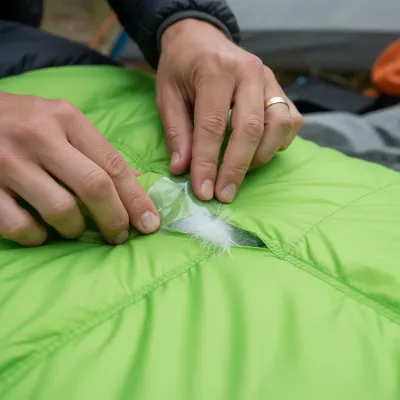 A hand carefully applying a self-adhesive repair patch to a small tear on a green sleeping bag fabric, with the down insulation visible underneath.
Pro Tips for Extending Lifespan
Beyond basic cleaning and storage, a few additional habits can significantly prolong your sleeping bag’s life and enhance your comfort.
Using a Sleeping Bag Liner
A sleeping bag liner is a simple yet incredibly effective accessory. It acts as a barrier between your body and the inside of your sleeping bag, absorbing sweat, dirt, and body oils. This keeps your actual sleeping bag much cleaner, significantly reducing the frequency of washes needed. Liners are much easier to wash and dry than a full sleeping bag. They also offer added warmth in colder conditions (5-15°F, sometimes more for insulated liners) and can be used on their own as a lightweight cover in warm weather.
Airing Out Your Bag
After every trip, and ideally each morning during a multi-day trip, air out your sleeping bag. Even on cold nights, your body produces moisture through sweat and condensation, which can accumulate in the insulation and reduce its effectiveness. Unzip your bag fully and hang it over a line, a branch, or lay it flat to dry in a well-ventilated area for several hours. This simple step helps release trapped moisture and keeps your bag fresh.
Avoiding Compression
While compression sacks are excellent for saving space during transport, prolonged compression is detrimental to your sleeping bag’s insulation. The loft that provides warmth comes from the air trapped within the fill material. Constant compression crushes this fill, breaking down the fibers (synthetic) or causing down clusters to lose their ability to fully expand. This leads to a permanent reduction in warmth. Always store your bag loosely, as discussed in the storage section.
When to Consider Professional Cleaning or Repair
While many maintenance tasks can be handled at home, there are times when professional intervention is the best course of action. If your sleeping bag is excessively dirty, has a strong odor that home washing can’t remove, or features stubborn stains, a professional cleaning service specializing in outdoor gear might be necessary. They have industrial-sized machines and expertise with delicate insulation. Similarly, for major repairs like torn baffles, zipper replacements, or extensive fabric damage, seeking a professional repair shop or contacting the manufacturer directly is advisable. These specialists can often restore your bag to near-original condition, protecting your investment.
Conclusion
Your sleeping bag is a crucial piece of outdoor equipment, and treating it with the care it deserves ensures it remains a reliable source of warmth and comfort for countless adventures. By understanding the nuances of its materials, practicing proper cleaning and drying techniques, storing it correctly, and addressing minor repairs promptly, you’ll significantly extend its lifespan. A well-maintained sleeping bag isn’t just about cleanliness; it’s about preserving its insulating power, ensuring your safety and enjoyment in the wilderness. Invest a little time in these essential maintenance tips, and your sleeping bag will reward you with many more years of cozy nights under the stars. What vital sleeping bag maintenance tip have you found most effective for your outdoor gear?
Frequently Asked Questions
How often should I wash my sleeping bag?
You should only wash your sleeping bag when necessary, typically after 40-50 nights of use, or if it becomes noticeably dirty or odorous. Excessive washing can diminish the insulation’s performance over time, so spot cleaning is recommended for minor dirt.
Can I use a regular washing machine for my sleeping bag?
Only use a large capacity front-loading washing machine, never a top-loader with an agitator, as the agitator can damage the insulation and fabric. Always select a gentle cycle with cold or lukewarm water and a specialized cleaner.
How long does it take for a sleeping bag to dry completely?
Drying a sleeping bag can take a significant amount of time, typically 2-6 hours in a tumble dryer on low heat with dryer balls, or even longer (24+ hours) if air-drying. Down bags, in particular, require patience to ensure the fill is completely dry and fluffy.
Is it okay to store my sleeping bag in its stuff sack?
No, for long-term storage, you should never keep your sleeping bag compressed in its stuff sack. Prolonged compression damages the insulation, reducing its loft and warmth over time. Always store it loosely in a large breathable sack or hung up.
What are the benefits of using a sleeping bag liner?
A sleeping bag liner acts as a protective barrier, keeping your sleeping bag cleaner and extending its lifespan by absorbing sweat and body oils. It also adds extra warmth, enhances comfort, and can be used independently in warmer conditions.
Can I dry clean my sleeping bag?
No, dry cleaning is strongly discouraged for sleeping bags, especially down-filled ones. The chemicals used in dry cleaning can strip the natural oils from down, causing it to lose its loft and insulating properties permanently, and can also damage synthetic fills and fabrics.
Frequently Asked Questions
How often should I wash my sleeping bag?
You should wash your sleeping bag only when necessary, typically after 40-50 nights of use, or if it becomes noticeably dirty or odorous. Over-washing can diminish the insulation's performance, so spot cleaning is recommended for minor dirt.
Can I use a regular washing machine for my sleeping bag?
Only use a large capacity front-loading washing machine (7kg or larger), never a top-loader with an agitator, as the agitator can damage the insulation and fabric. Always select a gentle cycle with cold or lukewarm water and a specialized cleaner.
How long does it take for a sleeping bag to dry completely?
Drying a sleeping bag can take a significant amount of time, typically 2-6 hours in a tumble dryer on low heat with dryer balls, or even longer (24+ hours) if air-drying. Down bags, in particular, require patience to ensure the fill is completely dry and fluffy.
Is it okay to store my sleeping bag in its stuff sack?
No, for long-term storage, you should never keep your sleeping bag compressed in its stuff sack. Prolonged compression damages the insulation, reducing its loft and warmth over time. Always store it loosely in a large breathable sack or hung up.
What are the benefits of using a sleeping bag liner?
A sleeping bag liner acts as a protective barrier, keeping your sleeping bag cleaner and extending its lifespan by absorbing sweat and body oils. It also adds 5-15u00b0F extra warmth, enhances comfort, and can be used independently in warmer conditions.
Can I dry clean my sleeping bag?
No, dry cleaning is strongly discouraged for sleeping bags, especially down-filled ones. The chemicals used in dry cleaning can strip the natural oils from down, causing it to lose its loft and insulating properties permanently, and can also damage synthetic fills and fabrics.
How to Clean and Store Your Sleeping Bag
Learn the essential steps to properly clean, dry, and store your sleeping bag to maintain its insulation and extend its lifespan.
Close all zippers and Velcro tabs on your sleeping bag. Spot clean any heavily soiled areas, such as the hood or collar, using a damp cloth and a small amount of mild, non-detergent soap. This pre-treatment helps address stubborn dirt before the main wash.
For machine washing, use a large capacity front-loading washer (7kg+ drum) on a delicate cycle with cold or lukewarm water (max 40u00b0C). Add a specialized down soap or mild liquid detergent for outdoor gear. For hand washing, submerge the bag in a bathtub with lukewarm water and specialized cleaner, gently kneading it. Avoid top-loading machines with agitators.
After washing, ensure all soap residue is completely removed. For machine washing, use an extra rinse cycle. For hand washing, drain the soapy water and refill the tub with clean water multiple times, gently pressing the bag until the water runs clear and no suds remain. This step is crucial to prevent residue from compromising insulation.
Tumble dry on the lowest heat setting in a large commercial dryer with 2-3 clean tennis balls or dryer balls to break up clumps and restore loft. This can take 2-6 hours for synthetic bags and longer for down. Alternatively, air dry flat in a well-ventilated area, turning and fluffing regularly. The bag must be absolutely dry before storage to prevent mildew.
For long-term storage, never keep your sleeping bag compressed in its stuff sack, as this damages insulation. Instead, store it loosely in a large, breathable storage sack (like a king-size pillowcase or mesh bag) or hang it from padded hangers in a cool, dry place. Ensure zippers are slightly unzipped for airflow.
Get our weekly buyer guide
Practical specs, not advice. Unsubscribe anytime.

I’ve always been careful with my gear, but the point about understanding the specific care for down versus synthetic materials was a game-changer. I have both types, and realizing I was treating them too similarly helped me adjust my routine. My down bag especially is thanking me!
Great advice on cleaning! I always worried about washing my synthetic bag incorrectly and ruining the insulation. Following the steps here made it super easy, and my bag came out looking and feeling fresh. It’s good to know how to properly care for different materials.
The tips on timely repairs were helpful, but I wish there was more detail on specific repair kits or methods for different types of tears. My zipper is starting to snag, and I’m not sure if these general tips apply. Still, good reminder to not ignore small issues.
I used to just shove my sleeping bag into its stuff sack and leave it there, but after reading about how much warmth you lose by storing it compressed, I changed my ways. My old down bag feels so much loftier now, and I swear it’s warmer. These tips really do make a difference for longevity.