For couples who find solace and adventure in the great outdoors, a shared sleeping system can transform a cold, cramped night into a cozy, memorable experience. Double sleeping bags and quilts offer the warmth of shared body heat and the comfort of togetherness, making them an increasingly popular choice for everything from car camping to serious backpacking. With innovations in materials, insulation, and design, choosing the right two-person sleeping solution can be the key to unlocking deeper connections and restful nights under the stars.
The evolution of sleeping bags has been remarkable, moving from rudimentary blankets to highly engineered systems designed for specific environments and user preferences. Early versions were simple wraps, often made of canvas and wool, offering basic protection from the elements. Over time, advancements led to the introduction of down and synthetic insulations, improving warmth-to-weight ratios dramatically. The concept of a double sleeping bag, or a two-person sleep system, emerged from the desire for shared comfort in the wilderness. Modern double bags and quilts are a testament to this journey, offering specialized features, ergonomic designs, and sustainable materials to ensure that outdoor adventurers can enjoy the comforts of home, even when far from it.
Popular Double Sleeping Bag Types
When exploring double sleeping bags, you’ll encounter a variety of designs, each with unique advantages and suited for different adventures. Understanding these types is crucial for making an informed decision for your shared outdoor experience.
Double Sleeping Bags: Rectangle and Semi-Rectangle
These are the most common forms of double sleeping bags, offering ample space and a feel akin to a bed at home. They typically provide generous room for two individuals to move comfortably, making them ideal for car camping, family camping, or van touring where weight and packed size are less critical.
- Pros: Excellent comfort and freedom of movement, roomy design, often include features like internal sheets or pillow pockets.
- Cons: Generally bulkier and heavier than other types, may not retain heat as efficiently as mummy-style bags due to larger internal volume.
- Best for: Car camping, casual camping trips, RV and van touring, couples who prioritize comfort and space.
|
Our Picks for the Best Sleeping Bag in 2026
As an Amazon Associate I earn from qualifying purchases.
|
||
| Num | Product | Action |
|---|---|---|
| 1 | BubblePanda Rayon Made from Bamboo Sleep Sack 6-12 Months 1.0 Tog Soft Toddler Sleeping Sack for Babies 2-Way Zipper Baby Wearable Blanket |

|
| 2 | oaskys Camping Sleeping Bag - 3 Season Warm & Cool Weather - Summer Spring Fall Lightweight Waterproof for Adults Kids - Camping Gear Equipment, Traveling, and Outdoors |
|
| 3 | 0 Degree Winter Sleeping Bags for Adults Camping (450GSM) - Temp Range (5F–32F) Portable Waterproof Compression Sack- Camping Sleeping Bags for Big and Tall in Env Hoodie: Backpacking Hiking 4 Season |
|
| 4 | REDCAMP Cotton Flannel Sleeping Bag for Camping Backpacking, Adults Cold Weather Envelope Sleeping Bags with 2/3/4/6lbs Filling |
|
| 5 | MalloMe Sleeping Bags for Adults Cold Weather & Warm - Backpacking Camping Sleeping Bag for Kids 10-12, Girls, Boys - Lightweight Compact Camping Essentials Gear Accessories Hiking Sleep Must Haves |
|
| 6 | Coleman Brazos 20/30°F Adult Cool-Weather Sleeping Bag with No-Snag Zipper & Stuff Sack, Machine Washable, Great for Camping, Traveling, Guests, & More |
|
| 7 | Coleman Heritage Big & Tall 10°F Flannel Sleeping Bag, XL Sleeping Bag Fits Adults up to 6ft 7in Tall, Machine Washable, Great for Camping, Hunting, Guests, & More |
|
| 8 | MalloMe Sleeping Bags for Adults Cold Weather & Warm - Backpacking Camping Sleeping Bag for Kids 10-12, Girls, Boys - Lightweight Compact Camping Essentials Gear Accessories Hiking Sleep Must Haves |
|
| 9 | Cold Weather Sleeping Bag 100% Cotton Flannel XXL for Adults Big and Tall,Free Compression Sack |
|
| 10 | Coleman Brazos 20/30°F Adult Cool-Weather Sleeping Bag with No-Snag Zipper & Stuff Sack, Machine Washable, Great for Camping, Traveling, Guests, & More |
|
Double Sleeping Bags: Mummy-Style Hooded
While true mummy-shaped double sleeping bags are less common, some rectangular models incorporate mummy-style hoods to enhance warmth. These designs offer a balance between shared space and superior thermal efficiency.
- Pros: Superior warmth retention, especially with a cinched hood, often more compact than full rectangular bags for their temperature rating.
- Cons: Can feel more restrictive due to the contoured fit, less room for movement compared to rectangular options.
- Best for: Cold weather camping, situations where maximum warmth is paramount without sacrificing the benefits of a double bag.
Double Quilts
Double quilts have gained significant popularity among ultralight backpackers and those seeking more freedom of movement. Unlike traditional sleeping bags, quilts typically lack a back, relying on the insulation of a sleeping pad underneath. They are often designed to attach to a sleeping pad, preventing drafts.
- Pros: Significantly lighter and more packable than double sleeping bags, less confining, excellent warmth-to-weight ratio, easy to ventilate, allow for shared body heat to maximize warmth.
- Cons: Requires a well-insulated sleeping pad (R-value 4+ recommended) for warmth from below, can be drafty if not properly secured, may lack a draft collar which can lead to heat loss between shoulders.
- Best for: Backpacking, ultralight adventures, warmer sleepers, those who prioritize versatility and minimal packed size.
Modular or Zip-Together Systems
Some brands offer individual sleeping bags designed to zip together, or double bags that can be split into two single bags or used as blankets. This versatility allows couples to adapt their sleep system to different conditions or even solo trips.
- Pros: Highly versatile for various trip types and temperatures, allows for individual temperature regulation (one person can unzip their side), easier to clean when separated.
- Cons: Zippers can be potential cold spots if not well-designed, may result in a slightly heavier or bulkier system when used as a double compared to a dedicated double bag.
- Best for: Couples who frequently undertake both solo and tandem trips, those with differing temperature preferences, car camping where versatility is valued.
Comparing Double Sleeping Bag Types
Choosing between the various types of double sleeping bags and quilts involves weighing several factors against your specific camping style and preferences. The table below provides a quick comparison to help you navigate your options.
| Feature | Rectangle/Semi-Rectangle Sleeping Bag | Mummy-Style Hooded Sleeping Bag | Double Quilt | Modular/Zip-Together System |
|---|---|---|---|---|
| Weight | Heavy | Moderate to Heavy | Light to Ultralight | Moderate |
| Warmth Retention | Good, but can have cold spots due to volume | Excellent | Excellent (with proper pad) | Good, but zippers can be drafts |
| Size/Packability | Bulky, less compressible | Moderate, good for warmth | Very compact, highly compressible | Moderate, depends on separation |
| Price | Mid-range | Mid-to-High | High (for performance quilts) | Mid-to-High |
| Comfort | Very high, roomy | High, but restrictive | High, freedom of movement | High, versatile |
| Best Use | Car camping, casual trips | Cold weather car camping | Backpacking, ultralight | Versatile (solo/tandem) |
Materials Used in Double Sleeping Bags
The choice of insulation and shell materials significantly impacts a double sleeping bag’s performance, weight, and durability. Two primary types of insulation dominate the market: down and synthetic.
Down Insulation
Down, typically from geese or ducks, is renowned for its exceptional warmth-to-weight ratio and compressibility. It traps air efficiently, creating a highly insulating layer.
- Pros: Unmatched warmth for its weight, packs down incredibly small, very durable if properly cared for.
- Cons: More expensive than synthetic, loses insulating properties significantly when wet, requires specialized cleaning and storage. Hydrophobic down treatments mitigate the moisture issue but do not eliminate it entirely.
- Care Tips: Always keep dry; use a waterproof stuff sack. When storing for long periods, keep it uncompressed in a large mesh bag to maintain loft. Professional cleaning is recommended for washing.
Synthetic Insulation
Synthetic insulation, made from materials like polyester, Primaloft, or recycled stratofiber, offers a more budget-friendly and practical alternative to down, especially in damp conditions.
- Pros: Retains warmth even when wet, typically more affordable, easier to clean and maintain, hypoallergenic.
- Cons: Heavier and bulkier than down for the same warmth, less compressible, may not last as long as high-quality down.
- Types of Synthetic Fills: Polyester is common for budget bags, offering decent warmth and durability. Primaloft and FireLine Max are examples of higher-performance synthetic fills designed to mimic down’s loft and warmth more closely.
- Care Tips: Can often be machine-washed in a large, front-loading washer (check manufacturer instructions). Store loosely uncompressed to maintain loft.
Guide to Choosing a Double Sleeping Bag
Selecting the perfect double sleeping bag or quilt involves considering your specific needs and priorities for outdoor adventures.
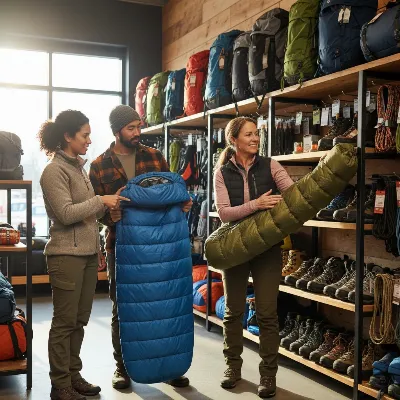 A couple looking at different double sleeping bags in an outdoor gear store, discussing features with a knowledgeable sales assistant.
Determine Your Purpose and Climate
Your activity and the expected weather are the most critical factors. Are you car camping in mild summer evenings, or backpacking through chilly mountain nights?
- Activity: For car camping or van touring, weight and packed size are less important, allowing you to prioritize comfort and features. For backpacking, ultralight double quilts or lightweight sleeping bags become essential.
- Climate: Consider the typical temperatures you’ll encounter. A versatile 3-in-1 bag like The North Face Dolomite One can adapt to varying conditions, while a dedicated 0-degree bag is crucial for extreme cold.
Select the Right Temperature Rating
Sleeping bags come with temperature ratings (often standardized by ISO or EN testing) to indicate their performance.
- Comfort Temperature: The lowest temperature at which an average woman can sleep comfortably in a relaxed position. This is the most practical rating for most users.
- Limit Temperature: The lowest temperature at which an average man can sleep for eight hours in a curled position without being uncomfortably cold.
- Extreme Temperature: A survival rating, indicating the minimum temperature at which a sleeping bag will prevent hypothermia for six hours, but not necessarily comfortably.
It’s important to remember that shared body heat in a double sleeping bag can make a 30-degree bag feel more like a 20-25 degree bag for two individuals, as partners mutually warm each other.
Consider Size and Shape
Ensure the bag is long enough for the taller person and wide enough for both to comfortably move without feeling constricted.
- Rectangular or Semi-Rectangular: Offer the most space and comfort, allowing for natural sleeping positions.
- Mummy-Style Hood: Found on some bags (like the Teton Sports Mammoth), these hoods provide excellent heat retention but can be more restrictive around the head and shoulders.
- Quilts: Provide the most freedom of movement as they don’t fully enclose you from underneath, allowing you to spread out.
Evaluate Weight and Packability
For backpacking, weight and packed size are paramount. Every ounce counts.
- Ultralight Quilts: Often the best choice for minimal weight and bulk, as they omit the back insulation.
- Lightweight Double Bags: Some synthetic options, like the Big Agnes Dream Island, offer a good balance of features and reasonable weight.
- Car Camping Bags: Can be heavier and bulkier, as transportation is less of a concern. Look for oversized stuff sacks for easier packing.
Set a Budget
Double sleeping bags and quilts vary significantly in price, from budget-friendly options to high-end technical gear.
- Investing in a quality sleeping bag or quilt is worthwhile if you camp frequently, as it directly impacts your comfort and enjoyment. Down-filled and ultralight options tend to be more expensive but offer superior performance.
- Consider features like recycled materials, durable DWR finishes, and robust zippers as indicators of quality and longevity, which can justify a higher initial investment.
Top 5 Best Double Sleeping Bags for Couples in 2026
After careful consideration of performance, features, and user experience, here are the top 5 double sleeping bags and quilts for couples in 2026, offering a range of options for different camping styles and preferences.
1. Nemo Jazz Duo Double Sleeping Bag
Best Overall Double Sleeping Bag
The Nemo Jazz Duo consistently earns high marks for its exceptional comfort and user-friendly design, feeling more like a bed than a traditional sleeping bag. It features a plush, recycled synthetic Stratofiber fill and a soft, removable sheet, making it versatile across different seasons. With a 30-degree F rating, a DWR finish for water resistance, and compatibility with a double-wide sleeping pad (or two single pads), it’s a car camper’s dream. The integrated draft collar and pillow pocket enhance coziness. While bulky for backpacking, its ease of packing into an oversized stuff sack makes it convenient for car camping.
2. Big Agnes Dream Island Double Sleeping Bag
Best Synthetic Double Sleeping Bag
The Big Agnes Dream Island is a standout for its synthetic insulation and smart design. Weighing 7 pounds with a 20-degree F rating, it features FireLine Max synthetic fill and treated ripstop material for durability and water resistance. Its semi-rectangular shape offers comfort, and offset quilt lines eliminate cold spots. A unique wraparound zipper allows the quilted top to be used independently as a blanket or solo bag, and an internal divider can separate sleepers. It includes a sleeve on the base to hold a sleeping mat in place and accommodates users up to 6’6″.
3. The North Face Dolomite One Double Sleeping Bag
Best Versatile Double Sleeping Bag for Backpacking
For couples seeking adaptability, The North Face Dolomite One is a versatile 3-in-1 system. This synthetic-filled bag can adjust its temperature rating from 15 degrees F (both layers combined) to 50 degrees F (top layer only). Its rectangular shape, fleece lining, and bottom zippers for ventilation offer comfort across various conditions. The ability to use individual layers as camp blankets adds to its utility. While it might be slightly bulkier with all layers, its relatively modest weight for its temperature range and versatility make it a strong contender for couples who backpack and encounter diverse climates.
4. Therm-a-Rest Vela 20F/-6C Double Quilt
Best Lightweight Double Quilt for Backpackers
When ultralight backpacking with a partner, the Therm-a-Rest Vela Quilt is an excellent choice. Weighing just 1.27kg, this down-filled quilt provides exceptional warmth-to-weight. It features a footbox for secure sleeping, and an oversized design allows for tucking in at the sides, creating a cozy cocoon. The 650 fill-power down is ethically sourced and treated with Nikwax for water resistance, ensuring insulation even in damp conditions. Ideal for summer through milder shoulder seasons, it offers the freedom of movement and packability that traditional bags can’t match.
5. Teton Sports Mammoth 0-Degree Double Sleeping Bag
Best 0-Degree Double Sleeping Bag for Extreme Cold
For couples venturing into truly cold environments, the Teton Sports Mammoth is built to provide warmth down to 0 degrees F. This robust bag, weighing over 16 pounds, features SuperLoft Elite Single Channel Hollow Fiber synthetic fill and a durable taffeta shell. Its rectangular shape combined with a soft, mummy-style hood traps heat effectively. The bag can also fully unzip to create two camp comforters. Despite its weight due to the dense insulation, its superior warmth and a lifetime warranty make it a reliable choice for extreme cold weather car camping.
Tips for Using and Maintaining Your Double Sleeping Bag
To ensure your double sleeping bag or quilt provides years of comfort and performance, proper use and maintenance are essential.
Proper Packing and Unpacking
When packing your sleeping bag, resist the urge to meticulously roll it. Instead, stuff it feet-first into its compression sack. This random compression helps to prevent consistent stress on the same seams and insulation points, extending the bag’s lifespan. For larger double bags, it often takes two people to stuff it efficiently. When unpacking, allow the bag plenty of time to loft up before use, especially in cold weather, to maximize its insulating power.
Cleaning and Washing
- Synthetic Bags: Many synthetic double sleeping bags can be machine washed at home. Use a large, front-loading washing machine (top-loaders with agitators can damage insulation). Use a gentle cycle with cold water and a mild detergent. Rinse thoroughly and air dry completely, or tumble dry on very low heat with dryer balls to help fluff the insulation.
- Down Bags/Quilts: Down requires more delicate care. Hand washing is often recommended, or a specialized down wash cycle in a front-loading machine. Use a specific down-friendly soap. Ensure all soap is rinsed out completely. Drying is critical: use a large dryer on low heat with several clean tennis balls or dryer balls to break up clumps of down and restore loft. This process can take several hours. For best results and to avoid damage, consider professional cleaning for down products.
- Avoid frequent washing: Only wash when necessary, as washing can reduce the lifespan of any sleeping bag. Spot clean minor stains.
Long-Term Storage
Never store your sleeping bag or quilt compressed in its stuff sack for extended periods. Compression damages the insulation over time, reducing its loft and warmth. Instead:
- Ensure the bag is completely dry and clean.
- Store it loosely in a large, breathable mesh storage sack or hung in a closet. This allows the insulation to remain fully lofted, preserving its insulating capabilities for your next adventure.
- Keep it in a cool, dry place away from direct sunlight.
“A good sleeping bag is not just gear; it’s an investment in comfort, warmth, and countless shared memories under the open sky.”
Conclusion
Choosing the ideal double sleeping bag or quilt for couples is about finding the perfect balance between comfort, warmth, weight, and features that align with your unique outdoor lifestyle. Whether you opt for the spacious luxury of a rectangular sleeping bag for car camping, the adaptable versatility of a modular system, or the ultralight efficiency of a double quilt for backpacking, the right gear enhances the magic of sharing an adventure. By considering your intended use, temperature needs, and material preferences, you can ensure cozy nights and unforgettable moments with your partner.
What type of adventure are you planning next that calls for the perfect shared sleep system?
Frequently Asked Questions
How long do double sleeping bags typically last?
The lifespan of a double sleeping bag varies based on its materials, construction quality, and frequency of use, but generally ranges from 5 to 15 years. High-quality down bags, with proper care and infrequent heavy compression, can last even longer, sometimes up to 20-30 years.
Why are sleeping bags warmer than regular blankets?
Sleeping bags are designed to create an insulated microclimate around your body. Their enclosed design and specialized insulation (down or synthetic) trap air, which acts as a barrier, slowing down the transfer of heat away from your body. This concentrated warmth is more effective than a loose blanket, which allows more heat to escape.
What is the coldest temperature a double sleeping bag can withstand?
Double sleeping bags are available with various temperature ratings, just like single bags. For extreme cold, some performance-oriented double sleeping bags are rated for 0 degrees F (-18 C) or even lower, such as -20 to -40 degrees F. However, always refer to the specific comfort and limit ratings, and remember that shared body heat can make a bag feel warmer than its stated rating for a single person.
