Summer camp is a cherished childhood experience, a time for new friendships, outdoor adventures, and unforgettable memories. Ensuring your child has a comfortable and safe night’s sleep is paramount to a successful camp experience, and that starts with the right sleeping bag. As an outdoor gear technician with over a decade of experience reviewing hundreds of sleeping bags, I understand the nuances that make a good bag great, especially for young campers. This guide will walk you through the essential factors to consider, the best types, materials, and top brands to help you select the perfect sleeping bag for your child’s summer camp adventures in 2026.
Sleeping Bags: An Overview and Their Evolution
A sleeping bag is more than just a blanket; it’s a carefully engineered piece of gear designed to provide insulation and comfort, allowing campers to rest soundly regardless of the ambient temperature. For children, a well-chosen sleeping bag can be the difference between a night of restless shivering and one of restorative sleep, crucial for enjoying the next day’s activities.
The concept of insulated coverings for sleep dates back centuries, evolving from simple animal hides and woven blankets. Modern sleeping bags began to take shape in the late 19th and early 20th centuries, with early designs focusing on wool and canvas. Over time, advancements in materials and manufacturing techniques led to the development of lighter, warmer, and more compact options. Today’s sleeping bags, especially those designed for children, incorporate sophisticated insulation, durable fabrics, and thoughtful features like adjustable lengths and snag-free zippers, making them highly specialized tools for outdoor comfort.
Popular Types of Kids’ Sleeping Bags
The world of sleeping bags offers a variety of shapes and designs, each suited to different conditions and preferences. Understanding these types is the first step in finding the ideal fit for your child’s summer camp adventures.
Mummy-shaped Sleeping Bags
Mummy bags are characterized by their tapered design, snug fit around the body, and often a hooded top. This shape minimizes dead air space inside the bag, which the body then needs to heat, making them incredibly efficient at retaining warmth.
- Pros: Excellent thermal efficiency, very lightweight and compact when packed.
- Cons: Restrictive, limiting freedom of movement for children who toss and turn.
- Ideal for: Colder summer nights, backpacking trips where weight and packed size are critical, or children who naturally sleep still.
|
Our Picks for the Best Sleeping Bag in 2026
As an Amazon Associate I earn from qualifying purchases.
|
||
| Num | Product | Action |
|---|---|---|
| 1 | Coleman Heritage Big & Tall 10°F Flannel Sleeping Bag, XL Sleeping Bag Fits Adults up to 6ft 7in Tall, Machine Washable, Great for Camping, Hunting, Guests, & More |

|
| 2 | oaskys Camping Sleeping Bag - 3 Season Warm & Cool Weather - Summer Spring Fall Lightweight Waterproof for Adults Kids - Camping Gear Equipment, Traveling, and Outdoors |
|
| 3 | 0 Degree Winter Sleeping Bags for Adults Camping (450GSM) - Temp Range (5F–32F) Portable Waterproof Compression Sack- Camping Sleeping Bags for Big and Tall in Env Hoodie: Backpacking Hiking 4 Season |
|
| 4 | MalloMe Sleeping Bags for Adults Cold Weather & Warm - Backpacking Camping Sleeping Bag for Kids 10-12, Girls, Boys - Lightweight Compact Camping Essentials Gear Accessories Hiking Sleep Must Haves |
|
| 5 | MalloMe Sleeping Bags for Adults Cold Weather & Warm - Backpacking Camping Sleeping Bag for Kids 10-12, Girls, Boys - Lightweight Compact Camping Essentials Gear Accessories Hiking Sleep Must Haves |
|
| 6 | Coleman Brazos 20/30°F Adult Cool-Weather Sleeping Bag with No-Snag Zipper & Stuff Sack, Machine Washable, Great for Camping, Traveling, Guests, & More |
|
| 7 | Cold Weather Sleeping Bag 100% Cotton Flannel XXL for Adults Big and Tall,Free Compression Sack |
|
| 8 | Coleman Brazos 20/30°F Adult Cool-Weather Sleeping Bag with No-Snag Zipper & Stuff Sack, Machine Washable, Great for Camping, Traveling, Guests, & More |
|
| 9 | REDCAMP Cotton Flannel Sleeping Bag for Camping Backpacking, Adults Cold Weather Envelope Sleeping Bags with 2/3/4/6lbs Filling |
|
| 10 | BubblePanda Rayon Made from Bamboo Sleep Sack 6-12 Months 1.0 Tog Soft Toddler Sleeping Sack for Babies 2-Way Zipper Baby Wearable Blanket |
|
Rectangular Sleeping Bags
The classic rectangular sleeping bag offers a straightforward, roomy design, allowing plenty of space for movement. They are often favored for casual camping and sleepovers due to their comfort and versatility.
- Pros: Spacious and comfortable, can often be unzipped fully to form a blanket, less constricting.
- Cons: Generally heavier and bulkier than mummy bags, and less thermally efficient due to more interior air volume.
- Ideal for: Car camping, cabin stays, warmer summer nights, and children who prefer ample room to move around.
Double Sleeping Bags
Designed to comfortably accommodate two people, double sleeping bags are essentially two rectangular bags zipped together or a single large bag. For siblings or close friends at camp, they can offer shared warmth and a cozy experience.
- Pros: Allows for shared body heat, creating extra warmth; can be a comforting option for children, and potentially saves space if packing two separate bags is challenging.
- Cons: Requires coordination if one person moves; larger and heavier than single bags; can be awkward for individual use.
- Ideal for: Pairs of siblings or friends camping together, providing a shared and warm sleeping space.
Sleeping Quilts
While less common for younger children, sleeping quilts are gaining popularity among ultralight adult campers and older, experienced youth. A quilt typically lacks a full back, relying on a sleeping pad for insulation beneath the camper.
- Pros: Extremely lightweight and packable, offers maximum freedom of movement, highly versatile for venting.
- Cons: Requires a quality sleeping pad for insulation, needs specific technique to use effectively, may not be warm enough for all conditions without proper layering.
- Ideal for: Experienced youth campers prioritizing minimal weight, warm summer nights where back insulation is less critical, or those who frequently move in their sleep.
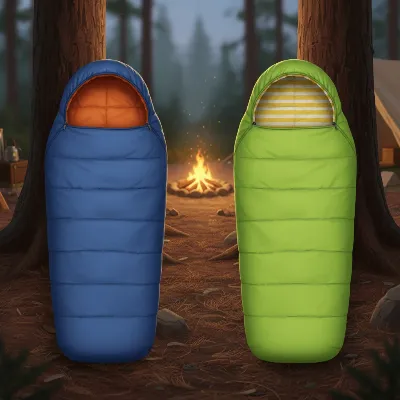 Illustration of different types of kids sleeping bags for summer camp
Comparing Kids’ Sleeping Bags
Choosing the best sleeping bag involves weighing various factors. This table offers a quick comparison of the popular types to help you decide.
| Feature | Mummy-shaped | Rectangular | Double | Quilt |
|---|---|---|---|---|
| Warmth Retention | Excellent | Good | Very Good (shared heat) | Variable (pad dependent) |
| Weight | Light to Ultralight | Medium to Heavy | Heavy | Ultralight |
| Packed Size | Very Compact | Bulky | Very Bulky | Extremely Compact |
| Comfort/Roominess | Restrictive | Very Roomy | Very Roomy (for two) | Unrestricted |
| Price Range | Moderate to High | Low to Moderate | Moderate to High | High |
| Best Use | Cold weather, backpacking | Car camping, warmer weather | Shared sleeping, comfort | Ultralight camping, warm weather |
Common Materials Used in Kids’ Sleeping Bags
The insulating material inside a sleeping bag, known as the fill, is the primary factor determining its warmth, weight, and packability. Understanding the differences between down and synthetic options is crucial.
Down Insulation
Down, typically from ducks or geese, is prized for its exceptional warmth-to-weight ratio and compressibility. It consists of soft, fluffy clusters that trap air efficiently, providing superior insulation.
- Pros: Offers incredible warmth for its weight, packs down very small, and is highly durable if properly cared for.
- Cons: Expensive, loses insulating power when wet, and takes a long time to dry. Can be an issue for children prone to accidents or in damp environments.
- Care: Requires specialized cleaning (often dry cleaning or careful washing with specific detergents), and must be stored uncompressed in a large mesh bag to maintain loft.
Synthetic Insulation
Synthetic insulation, made from polyester fibers, is designed to mimic the loft and warmth of down. Unlike down, synthetic fibers retain much of their insulating ability even when wet.
- Pros: More affordable than down, maintains warmth when damp, dries quickly, and is typically hypoallergenic and easy to care for (often machine washable).
- Cons: Heavier and bulkier than down for the same warmth, and may not last as long as high-quality down.
- Popular types: Polyester fibers are common due to their balance of warmth, durability, and cost. Primaloft is a premium synthetic insulation known for its softness, loft, and water resistance, often approaching down-like performance.
Shell and Liner Fabrics
The outer shell of a sleeping bag is typically made from durable, lightweight polyester or nylon, often treated with a DWR (Durable Water Repellent) finish. This protects the insulation from external moisture and wear. The inner liner, which touches the skin, can be made from soft polyester, nylon, or comfortable cotton flannel. For kids’ bags, a soft, comfortable lining like cotton flannel is often preferred for its cozy feel, while polyester is common for its durability and quick-drying properties.
How to Choose the Right Kids’ Sleeping Bag (Buying Guide)
Selecting the perfect sleeping bag for your child requires careful consideration of several factors beyond just aesthetics. Making an informed choice ensures comfort, safety, and enjoyment on their summer camp adventures.
Determine Usage
Before anything else, consider how and where your child will be using the sleeping bag.
- Activity Type: Will it be for car camping in a tent, sleeping in a cabin, or more adventurous backpacking trips? Car camping or cabin stays allow for heavier, bulkier bags, while backpacking demands a lightweight, compact option.
- Expected Weather: While it’s summer camp, temperatures can vary significantly. Are they going to a mountain camp where nights are cool, or a warmer lakeside retreat? This dictates the required temperature rating.
Select Appropriate Temperature Rating
The temperature rating indicates the lowest temperature at which the bag is designed to keep a person warm. For children’s bags, these ratings are often simplified.
- Comfort Temperature: This is the temperature at which an average person can sleep comfortably. For summer camp, look for bags with a comfort rating typically between 30°F to 50°F (-1°C to 10°C).
- Limit Temperature: The lowest temperature at which a person can sleep without risk of hypothermia, but likely not comfortably.
- Extreme Temperature: A survival-only rating, not for comfortable sleep.
It’s always safer to choose a bag with a slightly lower (warmer) temperature rating than anticipated for a child, as they generally get colder faster than adults.
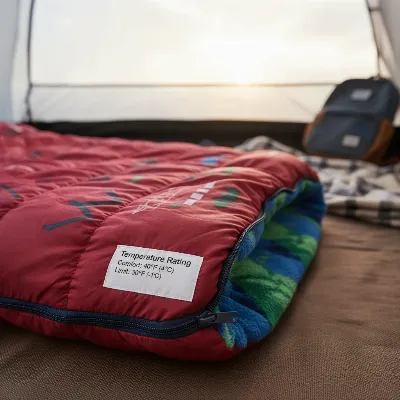 A child's sleeping bag with a prominent temperature rating tag visible, highlighting comfort and limit temperatures for camping
Size and Fit
Proper sizing is paramount for warmth and comfort. A bag that is too long or wide will have excessive air space, making it harder for your child’s body to heat.
- Choose a bag that fits your child’s height without too much extra space at the foot. Some bags, like the REI Co-op Kindercone or KingCamp Galaxy Zoo, offer adjustable lengths, allowing them to grow with your child and creating a snugger fit for smaller kids.
- Consider a mummy shape for better heat retention or a rectangular shape for more room to move, depending on your child’s preference and the expected temperatures.
Weight and Packability
If your child will be carrying their own gear, weight and packed size become critical.
- Lightweight options: Look for synthetic bags designed for backpacking or, for older kids, consider a down bag if budget allows and dampness isn’t a major concern.
- Stuff Sacks and Compression: Many kids’ sleeping bags come with stuff sacks for easy packing. Some even have integrated stuff sacks, which are a boon for preventing lost items and making cleanup easier for young campers.
Budget
Sleeping bags for children come in a wide range of prices.
- While it’s tempting to opt for the cheapest option, investing in a quality bag that provides adequate warmth and comfort can greatly enhance your child’s camp experience and last for several seasons.
- Consider durability and features like machine washability, which add value over time.
Reputable Kids’ Sleeping Bag Brands
The market offers numerous brands, but some consistently stand out for their quality, features, and reliability when it comes to kids’ sleeping bags.
- REI Co-op: Known for high-quality outdoor gear, their Kindercone series is specifically designed for children, often featuring adjustable lengths and clever packing solutions like attached stuff sacks, making them an excellent choice for first-time campers.
- Kelty: A well-regarded name in camping gear, Kelty offers durable and comfortable kids’ sleeping bags like the Mistral 30 or 20 Degree, which are often sized-down versions of popular adult bags, ensuring good insulation and features like insulated draft tubes.
- Coleman: A household name in camping, Coleman provides affordable and functional kids’ sleeping bags, such as their Kids 30 Degree Sleeping Bag, which often include kid-friendly features like no-snag zippers and internal pockets.
- L.L. Bean: Renowned for their quality and classic outdoor apparel, L.L. Bean’s kids’ sleeping bags, like the Kids’ Adventure Sleeping Bag, typically offer a blend of comfort, durability, and reliable warmth for general summer camping.
- KingCamp: This brand often focuses on adjustable and versatile designs, with models like the Galaxy Zoo C 300 featuring adjustable lengths and comfortable linings, making them suitable for growing children and varied camp conditions.
- Wenzel: Wenzel offers budget-friendly options that prioritize comfort and ease of use for casual campers, often with fun designs and features like self-repairing zippers.
Tips for Using and Maintaining Kids’ Sleeping Bags
Proper care and usage will extend the life of your child’s sleeping bag and ensure it performs optimally for many summer camps to come.
- Packing Correctly: Instead of carefully rolling, teach your child to stuff the sleeping bag into its stuff sack. This distributes the insulation more evenly, prevents creases, and is generally easier for kids. If the bag has an attached stuff sack, even better!
- Cleaning: Most synthetic sleeping bags are machine washable. Use a front-loading washer on a gentle cycle with a mild detergent (avoid fabric softener). For down bags, specialized down cleaner is recommended, and they often require professional cleaning or very careful home washing. Always refer to the manufacturer’s care instructions.
- Drying: For synthetic bags, tumble dry on a low heat setting with a few clean tennis balls to help fluff up the insulation. Down bags can take many hours to dry and require frequent manual fluffing to prevent clumping. Ensure the bag is completely dry before storing to prevent mildew.
- Storage: Never store a sleeping bag compressed for long periods. This can damage the insulation’s loft, reducing its warmth over time. Store it loosely in a large mesh storage bag, hung in a closet, or spread out under a bed in a cool, dry place.
“A quality sleeping bag isn’t just gear; it’s a key ingredient for happy camp memories. Ensuring your child is warm and comfortable means they’ll wake up refreshed, ready for whatever adventures the day brings.”
Conclusion
Choosing the ideal sleeping bag for your child’s summer camp experience is a vital step in preparing them for a memorable adventure. By understanding the different types, materials, and crucial features like temperature rating and proper sizing, you can confidently select a bag that offers the perfect balance of warmth, comfort, and durability. Whether it’s a cozy rectangular bag for cabin nights or a lightweight mummy for tent camping, investing in the right gear ensures your child sleeps soundly, ready to embrace the joys of the outdoors. With the insights shared here, you are well-equipped to make an informed decision for 2026 and beyond.
What kind of exciting summer camp adventures is your child looking forward to this year?
Frequently Asked Questions
How do I choose the right temperature rating for summer camp?
For most summer camps, where nighttime temperatures typically range from cool to mild, a sleeping bag with a comfort rating between 30°F to 50°F (-1°C to 10°C) is generally suitable. It’s always best to check the specific camp location’s typical overnight lows and consider opting for a bag with a slightly lower (warmer) rating for added comfort, as children tend to feel the cold more easily than adults.
Can kids use adult sleeping bags for summer camp?
While technically possible, it’s not ideal. Adult sleeping bags are typically too long and wide for children, creating excessive air pockets inside the bag. This extra space makes it harder for a child’s body to heat, leading to a colder and less comfortable night’s sleep. Proper sizing is crucial for efficient insulation, so a dedicated kids’ sleeping bag or an adjustable-length bag is highly recommended.
How do I clean a kids’ sleeping bag after camp?
Most kids’ sleeping bags, especially those with synthetic insulation, are machine washable. Use a large-capacity, front-loading washing machine (top-loaders with agitators can damage bags) on a gentle cycle with a mild, non-detergent soap. Tumble dry on low heat with a few clean tennis balls to help break up and fluff the insulation, ensuring it’s completely dry before storing to prevent mildew and maintain loft. Always check the specific care instructions on the bag’s label first.
What’s the main difference between down and synthetic fill for kids’ sleeping bags?
The primary difference lies in performance and care. Down offers superior warmth-to-weight and compressibility but is more expensive, loses insulating power when wet, and requires delicate care. Synthetic insulation is more affordable, retains warmth when damp, dries quickly, and is easier to clean, making it a popular and practical choice for kids’ bags despite being heavier and bulkier for the same warmth.
Are adjustable-length sleeping bags worth the investment for children?
Yes, adjustable-length sleeping bags, such as the REI Co-op Kindercone or KingCamp Galaxy Zoo, can be a worthwhile investment. They allow you to cinch the foot of the bag to fit a smaller child snugly, minimizing cold spots, and then extend it as your child grows. This feature ensures a proper fit for several seasons, providing better warmth and comfort over a longer period, thus offering good value.
