The insulating power of a down sleeping bag is a cornerstone of comfortable outdoor adventures, offering unparalleled warmth-to-weight. However, few things are more disheartening than waking up to a tent littered with escaping feathers, questioning the integrity of your trusted gear. While a small amount of down shedding is a normal part of owning a high-performance sleeping bag, excessive feather loss signals a deeper issue that needs attention. This guide will delve into the common reasons behind feather leakage, equipping you with practical solutions and preventative measures to keep your sleeping bag performing its best for many seasons to come.
Understanding Feather Loss in Down Sleeping Bags
It is important to differentiate between the occasional stray feather and persistent, widespread down leakage. A new down sleeping bag may experience a minimal amount of feather loss as the fill settles and individual quills work their way through the fabric weave. This is often considered normal and is not typically a cause for alarm. Down fill, especially lower-quality varieties, often contains small, stiff feather quills that can poke through the tightly woven shell fabric. High-quality down, consisting primarily of soft, fluffy down clusters with minimal quills, is generally less prone to this issue.
Primary Causes of Excessive Down Leakage
Understanding why your sleeping bag is shedding feathers is the first step toward effective mitigation. Several factors, from wear and tear to improper care, can contribute to this frustrating problem.
Fabric Integrity and Wear
|
Our Picks for the Best Sleeping Bag in 2026
As an Amazon Associate I earn from qualifying purchases.
|
||
| Num | Product | Action |
|---|---|---|
| 1 | Coleman Brazos 20/30°F Adult Cool-Weather Sleeping Bag with No-Snag Zipper & Stuff Sack, Machine Washable, Great for Camping, Traveling, Guests, & More |

|
| 2 | BubblePanda Rayon Made from Bamboo Sleep Sack 6-12 Months 1.0 Tog Soft Toddler Sleeping Sack for Babies 2-Way Zipper Baby Wearable Blanket |
|
| 3 | Coleman Brazos 20/30°F Adult Cool-Weather Sleeping Bag with No-Snag Zipper & Stuff Sack, Machine Washable, Great for Camping, Traveling, Guests, & More |
|
| 4 | MalloMe Sleeping Bags for Adults Cold Weather & Warm - Backpacking Camping Sleeping Bag for Kids 10-12, Girls, Boys - Lightweight Compact Camping Essentials Gear Accessories Hiking Sleep Must Haves |
|
| 5 | Cold Weather Sleeping Bag 100% Cotton Flannel XXL for Adults Big and Tall,Free Compression Sack |
|
| 6 | REDCAMP Cotton Flannel Sleeping Bag for Camping Backpacking, Adults Cold Weather Envelope Sleeping Bags with 2/3/4/6lbs Filling |
|
| 7 | oaskys Camping Sleeping Bag - 3 Season Warm & Cool Weather - Summer Spring Fall Lightweight Waterproof for Adults Kids - Camping Gear Equipment, Traveling, and Outdoors |
|
| 8 | MalloMe Sleeping Bags for Adults Cold Weather & Warm - Backpacking Camping Sleeping Bag for Kids 10-12, Girls, Boys - Lightweight Compact Camping Essentials Gear Accessories Hiking Sleep Must Haves |
|
| 9 | 0 Degree Winter Sleeping Bags for Adults Camping (450GSM) - Temp Range (5F–32F) Portable Waterproof Compression Sack- Camping Sleeping Bags for Big and Tall in Env Hoodie: Backpacking Hiking 4 Season |
|
| 10 | Coleman Heritage Big & Tall 10°F Flannel Sleeping Bag, XL Sleeping Bag Fits Adults up to 6ft 7in Tall, Machine Washable, Great for Camping, Hunting, Guests, & More |
|
Over time, the fabric of your sleeping bag naturally experiences wear and tear. Older bags that have seen extensive use are particularly susceptible to fabric thinning and the development of microscopic holes, allowing down to escape. The type and density of the shell fabric also play a crucial role. Lightweight nylon fabrics, often used to reduce overall bag weight, can sometimes have a looser weave that is less effective at containing down, especially when under stress.
Physical Damage and Manufacturing Imperfections
Accidental tears, snags, or punctures from sharp objects encountered during camping or storage are direct pathways for down to escape. Even small holes, no bigger than a pinprick, can lead to a significant loss of insulation over time. Less common, but still possible, are manufacturing defects such as loose stitching along seams or tiny imperfections in the fabric that create vulnerabilities for feathers to escape. If feather loss is noticeable from the very beginning of the bag’s life, a manufacturing defect might be the culprit.
Down Quality and Movement
The quality of the down fill itself can influence feather retention. Lower-quality down often contains more brittle feather quills that are prone to breaking and pushing through the fabric. Furthermore, the constant movement of the sleeper inside the bag, coupled with the compression and decompression during packing and unpacking, can cause down clusters and individual feathers to shift and eventually work their way through the shell material or baffle seams.
Accumulation of Oils and Moisture
Body oils from sweat, skin, and even sunscreen, along with dirt and grime, can accumulate on the down over time. This can cause the down to mat together, making it slicker and potentially easier for feathers to pass through the fabric’s tiny openings. Moisture also plays a role; wet or damp down becomes heavier, which can contribute to its migration within the baffles and make it more likely to poke through the outer shell.
Immediate Solutions for Leaking Feathers
When you spot feathers escaping, quick action can prevent further loss and preserve your bag’s insulating power.
The “No-Pull” Technique for Protruding Feathers
The most crucial rule when dealing with a protruding feather is never to pull it out from the outside. Doing so can enlarge the tiny hole, making the problem worse. Instead, gently reach inside the sleeping bag, pinch the base of the feather, and pull it back into the bag. Once the feather is retracted, moisten the fabric around the tiny hole with a little water or saliva and gently rub or massage the area. This helps the fabric fibers to realign and close up the minuscule opening.
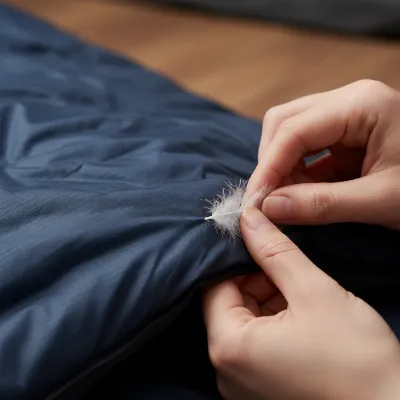 A person demonstrating how to push a feather back into a sleeping bag fabric
Applying On-the-Spot Repair Patches
For small tears, snags, or holes larger than a pinprick, an adhesive repair patch is an excellent immediate fix. Products like Gear Aid’s Tenacious Tape are specifically designed for outdoor gear and offer a strong, flexible, and waterproof bond. For emergency situations, duct tape can be used, but be aware that its adhesive can be difficult to remove and may leave residue or even damage the fabric upon removal.
To apply a patch effectively:
- Clean the Area: Ensure the fabric around the tear is clean and dry. Use an alcohol wipe if available.
- Prepare the Patch: Cut a circular or oval patch from the repair tape. Rounded edges are less likely to peel up than sharp corners. The patch should extend at least half an inch beyond the damaged area on all sides.
- Apply Firmly: Pinch and push any exposed down back into the baffle. Carefully apply the patch over the hole, smoothing it from the center outwards to eliminate air bubbles and ensure a secure bond. Avoid patching across existing stitch lines if possible, as this can create stress points.
Proactive Care for Long-Term Down Retention
Beyond immediate fixes, consistent care and maintenance are key to preventing feather loss and extending the lifespan of your down sleeping bag.
Optimal Washing and Drying Practices
Washing your down sleeping bag is not something you need to do frequently, but when it becomes dirty or loses loft, proper washing can help. Always use a specialist down cleaning product, such as Nikwax Down Wash Direct or Grangers Down Wash, and avoid conventional detergents or fabric softeners, which can strip down of its natural oils and impair its loft.
When drying, use a large commercial tumble dryer on a very low heat setting with several clean tennis balls or dryer balls. These help to break up clumps of down, redistribute the fill evenly, and restore the bag’s loft. Be patient, as drying can take several hours, and ensure the down is completely dry to prevent mildew and further clumping.
Proper Storage for Down Longevity
How you store your sleeping bag when not in use significantly impacts its longevity and down retention. Never store a down sleeping bag compressed in its stuff sack for extended periods. Prolonged compression crushes the delicate down clusters, reducing their ability to loft and trap air, which ultimately diminishes insulation and can lead to feather migration. Instead, store your sleeping bag uncompressed in a large, breathable storage sack or even a king-size pillowcase. Keep it in a dry, well-ventilated area, away from direct sunlight and extreme temperatures.
Minimizing Wear During Use
Adopting mindful habits while using your sleeping bag can greatly reduce wear and tear:
- Use a Sleeping Bag Liner: Liners protect the inside of your bag from body oils, sweat, and dirt, keeping the down cleaner and reducing the need for frequent washing.
- Be Gentle: Avoid placing your sleeping bag on rough surfaces or near sharp objects that could snag or tear the fabric. Be cautious around campfires to prevent burn holes.
- Air it Out: During multi-day trips, air out your sleeping bag daily for about 30 minutes to allow any accumulated moisture from your body to evaporate.
- Redistribute Down: Regularly shake and fluff your bag to redistribute the down evenly throughout the baffles, preventing cold spots and reducing pressure on specific fabric areas.
When It’s Time to Consider Replacement or Professional Repair
While many feather loss issues can be addressed with quick fixes and diligent care, there are times when replacement or professional repair is the most sensible option. If your sleeping bag is constantly hemorrhaging feathers despite your best efforts, has sustained extensive, irreparable damage, or has lost significant loft and warmth even after washing and fluffing, it might be time for a new one. Persistent cold spots and a noticeably flatter appearance are also key indicators. For complex issues like large tears along baffle lines or extensive fabric damage, a professional repair service can often restore your bag to near-new condition, a worthwhile investment for high-quality gear.
Essential Products for Sleeping Bag Maintenance
To effectively combat feather loss and maintain your down sleeping bag, consider having these essential products on hand:
- Gear Aid Tenacious Tape: An indispensable adhesive patch for quick and durable field repairs to tears and holes.
- Specialist Down Wash: Products like Nikwax Down Wash Direct or Grangers Down Wash are formulated to clean down effectively without damaging its natural properties.
- Down Dryer Balls: These help to re-loft down and prevent clumping during the drying process.
- Sleeping Bag Liner: A simple and effective way to protect your bag’s interior from body oils and extend its cleanliness between washes.
Conclusion
Encountering feather loss from your down sleeping bag can be a nuisance, but it’s often a manageable issue. By understanding the underlying causes, applying immediate fixes, and committing to proactive care, you can significantly prolong the life and insulating performance of your cherished gear. From carefully pushing feathers back in to patching tears with specialized tape and adopting smart storage habits, each step contributes to the longevity of your bag. A well-maintained down sleeping bag remains a loyal companion, ensuring warmth and comfort on countless outdoor escapades. What measures do you take to keep your down sleeping bag performing at its best?
Câu Hỏi Thường Gặp
Is some feather loss normal in a new down sleeping bag?
Yes, a small amount of feather loss, especially when a down sleeping bag is new, is generally considered normal. This occurs as the down settles and any loose quills work their way through the fabric. However, persistent or excessive shedding from the start may indicate a manufacturing issue.
How often should I wash my down sleeping bag to prevent feather loss?
You should wash your down sleeping bag only when it truly needs it, typically when it appears dirty, smells, or has lost noticeable loft. Over-washing can stress the fabric and down. Using a sleeping bag liner can significantly reduce the frequency of washes required by protecting the bag from body oils and sweat.
Can static electricity cause my sleeping bag to lose feathers?
Yes, static electricity can be a minor contributing factor to feather loss. It can cause individual feathers to cling to the fabric and pull through small openings. Ensuring your sleeping bag is clean and properly dried can help reduce static buildup.
