Camping offers an unparalleled connection with nature, but few things can dampen the spirit, and your sleeping bag, faster than an unexpected downpour or persistent dampness. A wet sleeping bag isn’t just uncomfortable; it can be dangerous, compromising warmth and leading to a miserable night under the stars. Whether you’re a seasoned backpacker or a weekend warrior, understanding how to protect your essential sleep system from moisture is paramount for a successful outdoor adventure. This guide will walk you through practical, do-it-yourself strategies to ensure your sleeping bag remains dry, even when your tent faces the elements.
Understanding the Enemy: Sources of Moisture in Your Tent
To effectively combat moisture, it’s crucial to identify where it comes from. Moisture in your tent primarily originates from three sources: external leaks, ground moisture, and internal condensation. External leaks occur when your tent fabric or seams fail, allowing rainwater to penetrate directly. Ground moisture seeps up from the damp earth through your tent floor, often due to an inadequate barrier. Lastly, internal condensation is generated by your breath and body heat, especially in cold, humid conditions, accumulating on the tent walls and dripping onto your gear.
DIY Strategies to Keep Your Tent Dry
Before you even think about your sleeping bag, the first line of defense is a well-prepared, dry tent. Several DIY strategies can significantly reduce the amount of water entering your shelter.
Site Selection & Pitching Perfection
Your choice of campsite and how you pitch your tent are fundamental. Always aim for a high, level spot away from depressions where water might collect.
- Elevated Ground: Select a natural rise or a spot with good drainage. Avoid setting up in dry riverbeds, which can quickly become flowing streams.
- Proper Rain Fly Pitch: Ensure your tent’s rain fly is taut and extended far enough from the tent body to effectively divert rainwater away from the walls and entry points. Adjust guy lines to create adequate tension and airflow.
- Dig a Trench (Rain Ditch): In heavy rain, digging a shallow trench or “rain ditch” around the perimeter of your tent, sloped slightly downhill, can guide water away. This acts as a simple, yet effective, drainage system.
|
Our Picks for the Best Sleeping Bag in 2026
As an Amazon Associate I earn from qualifying purchases.
|
||
| Num | Product | Action |
|---|---|---|
| 1 | MalloMe Sleeping Bags for Adults Cold Weather & Warm - Backpacking Camping Sleeping Bag for Kids 10-12, Girls, Boys - Lightweight Compact Camping Essentials Gear Accessories Hiking Sleep Must Haves |

|
| 2 | BubblePanda Rayon Made from Bamboo Sleep Sack 6-12 Months 1.0 Tog Soft Toddler Sleeping Sack for Babies 2-Way Zipper Baby Wearable Blanket |
|
| 3 | Coleman Brazos 20/30°F Adult Cool-Weather Sleeping Bag with No-Snag Zipper & Stuff Sack, Machine Washable, Great for Camping, Traveling, Guests, & More |
|
| 4 | Coleman Brazos 20/30°F Adult Cool-Weather Sleeping Bag with No-Snag Zipper & Stuff Sack, Machine Washable, Great for Camping, Traveling, Guests, & More |
|
| 5 | MalloMe Sleeping Bags for Adults Cold Weather & Warm - Backpacking Camping Sleeping Bag for Kids 10-12, Girls, Boys - Lightweight Compact Camping Essentials Gear Accessories Hiking Sleep Must Haves |
|
| 6 | Coleman Heritage Big & Tall 10°F Flannel Sleeping Bag, XL Sleeping Bag Fits Adults up to 6ft 7in Tall, Machine Washable, Great for Camping, Hunting, Guests, & More |
|
| 7 | oaskys Camping Sleeping Bag - 3 Season Warm & Cool Weather - Summer Spring Fall Lightweight Waterproof for Adults Kids - Camping Gear Equipment, Traveling, and Outdoors |
|
| 8 | 0 Degree Winter Sleeping Bags for Adults Camping (450GSM) - Temp Range (5F–32F) Portable Waterproof Compression Sack- Camping Sleeping Bags for Big and Tall in Env Hoodie: Backpacking Hiking 4 Season |
|
| 9 | Cold Weather Sleeping Bag 100% Cotton Flannel XXL for Adults Big and Tall,Free Compression Sack |
|
| 10 | REDCAMP Cotton Flannel Sleeping Bag for Camping Backpacking, Adults Cold Weather Envelope Sleeping Bags with 2/3/4/6lbs Filling |
|
Ground Moisture Barriers
The ground beneath your tent is a significant source of moisture. Creating an effective barrier is crucial for a dry floor.
- Tent Footprint or Tarp: Always place a waterproof footprint or tarp underneath your tent. Ensure it is slightly smaller than your tent floor, so no edges protrude and collect water that could then funnel under your tent. A standard hardware store tarp can serve this purpose effectively.
- “Bathtub” Floor Design: Many modern tents feature a “bathtub floor,” where the waterproof material extends several inches up the sidewalls. This design inherently provides better protection against ground moisture and splashing. If your tent lacks this, ensure your footprint extends adequately.
Sealing Leaks & Enhancing Waterproofing
Over time, tent fabrics and seams can lose their waterproof integrity. DIY solutions can rejuvenate your tent’s defenses.
- Duct Tape for Small Holes: For immediate, temporary repairs, duct tape is a camper’s best friend. Apply it to both the inside and outside of small holes or tears in your tent fabric or rain fly.
- Waterproofing Sprays: Purchase a silicone or polyurethane-based waterproofing spray designed for tents. Clean your tent thoroughly, let it dry, then apply the spray evenly to the rain fly and tent floor. Pay special attention to seams, which are often the first points of failure. Reapply periodically as part of your gear maintenance.
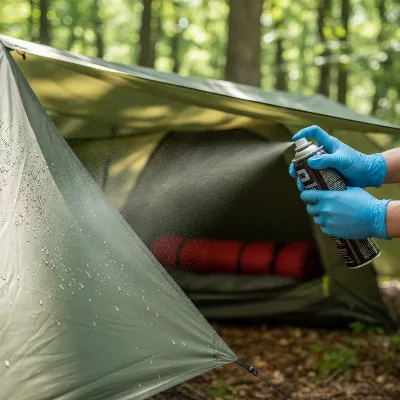 A person applying waterproofing spray to a tent fly in a forest setting, with a sleeping bag visible inside through the tent opening.
Protecting Your Sleeping Bag Inside the Tent
Even with a dry tent, direct contact with condensation or rogue splashes can compromise your sleeping bag. Implementing internal protection strategies is vital.
Elevate and Insulate
Keeping your sleeping bag off the cold, potentially damp ground, and away from tent walls, is a core principle.
- Sleeping Pads: An insulated sleeping pad is essential. Inflatable pads lift your body and sleeping bag off the ground, providing an insulating air barrier that significantly reduces heat loss and protects against ground moisture. Foam pads also offer a barrier but are less elevated.
- Cots or Raised Platforms: For car camping, using a camping cot or a raised platform inside your tent provides maximum elevation and separation from the ground. This is the ultimate defense against ground dampness.
Barrier Against Condensation
Internal condensation is almost unavoidable in certain conditions, but you can prevent it from reaching your sleeping bag.
- Avoid Tent Walls: Position your sleeping bag and body centrally within the tent, ensuring no part of your sleeping bag touches the tent walls. Condensation often forms on the inside of the tent fabric, and any contact will wick moisture directly into your bag.
- Use a Rain Jacket or Bivy (with caution): You can strategically place a waterproof item, like your rain jacket, over the foot end of your sleeping bag to create a buffer between the bag and the tent wall. While a dedicated bivy bag offers a more robust waterproof barrier around your sleeping bag, be aware that some non-breathable bivy materials or space blankets can trap moisture inside the bivy, leading to a damp sleeping bag if not properly ventilated. Choose a breathable bivy if possible.
Personal Moisture Management
Your actions inside and outside the tent contribute significantly to overall dryness.
- Shake Off Wet Gear: Before entering your tent, vigorously shake off any excess water from your clothes, backpack, and shoes.
- Designated Shoe Area: If your tent has a vestibule (a covered area outside the main tent), utilize it as a “mudroom” for wet shoes and outer layers. This keeps the main sleeping area clean and dry. If no vestibule, use a small tarp or plastic bag just inside the door.
- Dry Clothes Only: Change into dry sleeping clothes before getting into your sleeping bag. Even slightly damp clothes can transfer moisture to your bag and make you feel colder.
Materials and Types: How Your Sleeping Bag Choice Helps
While the focus is on DIY, the type of sleeping bag you choose can impact its performance in wet conditions. Understanding materials is key.
Down vs. Synthetic
The two primary types of insulation, down and synthetic, behave differently when exposed to moisture.
- Down (Lông Vũ): Pros: Exceptionally warm for its weight, highly compressible. Cons: Loses virtually all insulating properties when wet, takes a very long time to dry, and is more expensive. Care: Requires careful handling to keep dry, often needs specialized cleaning.
- Synthetic (Sợi Tổng Hợp): Pros: Retains some insulating ability even when wet, dries much faster, generally less expensive, and easier to care for. Cons: Heavier and bulkier than down for the same warmth, less compressible. Types: Common synthetic fills include polyester and Primaloft.
For wet environments or campers who anticipate encountering moisture, a synthetic sleeping bag often provides more peace of mind and resilience.
Bag Design Considerations
The shape and features of your sleeping bag also play a role in moisture protection.
- Mummy Bags: Designed to be snug around the body for maximum warmth retention and minimal dead air space. While efficient, their close fit means they might brush against tent walls more easily if space is tight.
- Waterproof Stuff Sacks: Regardless of bag type, always store your sleeping bag in a high-quality waterproof stuff sack when not in use. This provides a crucial barrier against external moisture during transport and inside the tent.
Essential Gear for a Dry Sleep
Beyond your tent and sleeping bag, a few simple items can make a big difference in maintaining dryness.
- Waterproof Stuff Sacks: As mentioned, these are non-negotiable for protecting your sleeping bag, extra clothes, and electronics.
- Sleeping Pads: An insulated pad is critical for both warmth and as a moisture barrier from the ground.
- Silica Gel Packets: Throwing a few packets of silica gel inside your tent or gear bags can help absorb ambient moisture and combat humidity.
- Small Towel or Sponge: A small, absorbent towel or a dedicated sponge is invaluable for wiping down condensation from tent walls in the morning.
- Clothesline/Cord: A length of paracord strung inside your tent can serve as an improvised clothesline for airing out damp items, keeping them off the floor and away from your sleeping bag.
Post-Trip Care: Keeping Your Gear Mold-Free
Your efforts to stay dry don’t end when the trip does. Proper post-trip care prevents mold and mildew, extending the life of your gear.
- Thorough Drying: As soon as you get home, unpack all your gear. Pitch your tent (if weather permits) or hang it loosely in a well-ventilated area to dry completely. Open all zippers and vents. Do the same for your sleeping bag, allowing it to air out fully. Never store damp gear.
- Breathable Storage: Once completely dry, store your sleeping bag loosely in a large mesh or cotton storage bag, not compressed in its stuff sack. This allows air circulation and prevents moisture from being trapped, which can lead to mildew. For tents, avoid sealing them in plastic totes unless you are absolutely certain they are bone dry, and even then, consider adding ventilation or desiccants.
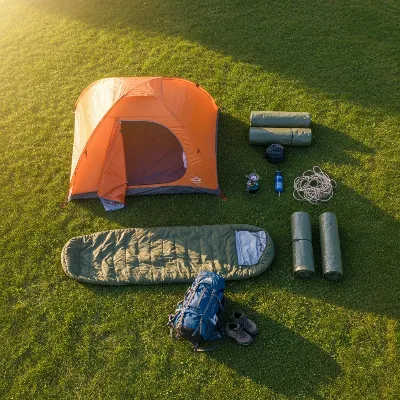 Various camping gear, including a tent and sleeping bag, drying outdoors in the sun after a wet trip.
> “A good sleeping bag is a worthy investment for memorable journeys. Keeping it dry is investing in your comfort and safety.” – Nguyễn Văn A, Outdoor Adventure Expert
Conclusion
Venturing into the great outdoors, especially when unpredictable weather looms, demands preparedness. While you can’t control the rain, you can certainly control how well you protect your essential gear. By employing these DIY strategies—from meticulous site selection and tent waterproofing to smart internal moisture management and vigilant post-trip care—you empower yourself to face wet conditions with confidence. A dry sleeping bag isn’t just about comfort; it’s about safety, warmth, and the simple joy of waking up refreshed in nature. So, next time the forecast looks damp, remember these tips and ensure your sleeping bag remains your cozy sanctuary, come rain or shine.
What’s your go-to DIY hack for keeping your sleeping bag dry on a rainy campout?
Frequently Asked Questions
How can I stop condensation from making my sleeping bag damp?
Condensation is often caused by your breath. Ensure good tent ventilation by opening vents or slightly unzipping doors. Avoid touching tent walls with your sleeping bag, and wipe down internal moisture with a small towel in the morning. Using a breathable sleeping bag liner can also help manage personal moisture.
Can I use a regular tarp as a tent footprint to keep my sleeping bag dry?
Yes, a regular tarp can serve as an effective tent footprint. The key is to ensure it is cut or folded to be slightly smaller than your tent floor. If the tarp extends beyond the tent, it can collect rainwater and channel it underneath your tent, defeating its purpose.
What is the best way to waterproof my old tent for a wet camping trip?
For an old tent, thoroughly clean it and let it dry completely. Then, apply a seam sealer to all stitched seams, both inside and out. Follow up with a spray-on or paint-on waterproofing treatment specifically designed for tent fabrics (e.g., silicone or polyurethane-based). Focus on the rain fly and the floor, allowing each application to dry fully.
Should I store my sleeping bag in a waterproof stuff sack permanently?
No, waterproof stuff sacks are excellent for protecting your sleeping bag during transport or inside a tent during a trip. However, for long-term storage, always remove your sleeping bag from its compressed stuff sack and store it loosely in a large mesh or cotton bag. This allows the insulation to loft naturally and prevents moisture from being trapped, which can lead to mildew and degradation of the fill.
Is it better to have a down or synthetic sleeping bag for wet conditions?
For wet or humid conditions, a synthetic sleeping bag is generally recommended. Unlike down, synthetic insulation retains most of its insulating properties even when damp and dries much faster. Down loses nearly all its warmth when wet, posing a significant risk in cold, wet environments. If you opt for down, extreme care and waterproof protection are essential.
