Embarking on an outdoor adventure, whether it’s a challenging thru-hike or a serene family camping trip, hinges on one critical piece of gear: the sleeping bag. A good sleeping bag is more than just a cozy sack; it’s your personal sanctuary, providing warmth, comfort, and restorative sleep amidst the wilderness. With myriad options available, from ultra-lightweight designs for mountaineers to spacious models for car campers, choosing the right one can feel daunting. This comprehensive guide will navigate you through the world of sleeping bags, exploring their types, materials, and essential features, helping you find the perfect companion for your adventures in 2026 and beyond.
Sleeping Bag: Overview and Evolution
Sleeping bags are fundamental to outdoor comfort, designed to insulate your body and protect you from the elements during overnight stays in nature. Their role has evolved significantly from simple blankets or animal skins used by early adventurers. Modern sleeping bags are a marvel of engineering, leveraging advanced materials and ergonomic designs to offer unprecedented warmth-to-weight ratios and packability. The evolution has been driven by the desire for lighter, more efficient gear, allowing outdoor enthusiasts to explore further and stay comfortable in increasingly extreme conditions.
Popular Types of Sleeping Bags
The market offers various sleeping bag shapes, each catering to different needs and preferences for warmth, comfort, and packability. Understanding these primary designs is the first step in selecting your ideal bag.
Mummy Sleeping Bags
Mummy sleeping bags are characterized by their contoured shape that tapers from the shoulders to the feet, closely mimicking the human body. This design minimizes internal air space, making them exceptionally efficient at trapping body heat.
- Advantages: Superior warmth-to-weight ratio, highly compact when packed, excellent thermal efficiency due to reduced dead air space, often feature a hood for head insulation.
- Disadvantages: Can feel restrictive due to the snug fit, limiting movement for side sleepers or those who prefer to toss and turn.
- Suitable for: Backpacking, mountaineering, trekking, and any cold-weather activity where minimizing weight and maximizing warmth are paramount.
|
Our Picks for the Best Sleeping Bag in 2026
As an Amazon Associate I earn from qualifying purchases.
|
||
| Num | Product | Action |
|---|---|---|
| 1 | MalloMe Sleeping Bags for Adults Cold Weather & Warm - Backpacking Camping Sleeping Bag for Kids 10-12, Girls, Boys - Lightweight Compact Camping Essentials Gear Accessories Hiking Sleep Must Haves |

|
| 2 | oaskys Camping Sleeping Bag - 3 Season Warm & Cool Weather - Summer Spring Fall Lightweight Waterproof for Adults Kids - Camping Gear Equipment, Traveling, and Outdoors |
|
| 3 | Coleman Brazos 20/30°F Adult Cool-Weather Sleeping Bag with No-Snag Zipper & Stuff Sack, Machine Washable, Great for Camping, Traveling, Guests, & More |
|
| 4 | Cold Weather Sleeping Bag 100% Cotton Flannel XXL for Adults Big and Tall,Free Compression Sack |
|
| 5 | Coleman Brazos 20/30°F Adult Cool-Weather Sleeping Bag with No-Snag Zipper & Stuff Sack, Machine Washable, Great for Camping, Traveling, Guests, & More |
|
| 6 | REDCAMP Cotton Flannel Sleeping Bag for Camping Backpacking, Adults Cold Weather Envelope Sleeping Bags with 2/3/4/6lbs Filling |
|
| 7 | Coleman Heritage Big & Tall 10°F Flannel Sleeping Bag, XL Sleeping Bag Fits Adults up to 6ft 7in Tall, Machine Washable, Great for Camping, Hunting, Guests, & More |
|
| 8 | MalloMe Sleeping Bags for Adults Cold Weather & Warm - Backpacking Camping Sleeping Bag for Kids 10-12, Girls, Boys - Lightweight Compact Camping Essentials Gear Accessories Hiking Sleep Must Haves |
|
| 9 | BubblePanda Rayon Made from Bamboo Sleep Sack 6-12 Months 1.0 Tog Soft Toddler Sleeping Sack for Babies 2-Way Zipper Baby Wearable Blanket |
|
| 10 | 0 Degree Winter Sleeping Bags for Adults Camping (450GSM) - Temp Range (5F–32F) Portable Waterproof Compression Sack- Camping Sleeping Bags for Big and Tall in Env Hoodie: Backpacking Hiking 4 Season |
|
Rectangular Sleeping Bags
Rectangular sleeping bags offer a more traditional, spacious design, providing ample room for sleepers to move around freely. They maintain a consistent width from top to bottom.
- Advantages: High level of comfort and roominess, can often be fully unzipped to serve as a blanket, more affordable options available.
- Disadvantages: Heavier and bulkier than mummy bags, less thermally efficient due to more internal air space that needs to be warmed.
- Suitable for: Car camping, casual outdoor trips, sleepovers, and warmer climates where space and comfort are prioritized over weight savings.
Double Sleeping Bags
Designed for two people, double sleeping bags allow couples or parents with a child to share warmth and space. They are essentially oversized rectangular bags.
- Advantages: Promotes shared warmth and comfort, ideal for couples, can save space compared to two individual bags.
- Disadvantages: Very heavy and bulky, not suitable for backpacking, requires coordination for entry and exit, often less warm than two separate, well-fitted bags for individual warmth zones.
- Suitable for: Car camping, RV travel, or any scenario where two people wish to sleep together and weight/packed size are not concerns.
Quilt Sleeping Bags
Sleeping quilts are a minimalist alternative to traditional sleeping bags, eliminating the bottom insulation that typically gets compressed under the body. They are designed to be used in conjunction with an insulated sleeping pad.
- Advantages: Extremely lightweight and highly packable, offer superior freedom of movement, versatile (can be opened completely like a blanket in warmer weather).
- Disadvantages: Requires a well-insulated sleeping pad for warmth, may have a learning curve to seal out drafts effectively, generally not as warm as a full mummy bag for colder conditions without proper technique.
- Suitable for: Ultralight backpackers, experienced thru-hikers, and those who prioritize minimal weight and maximum versatility in moderate to warm conditions.
Comparing Sleeping Bag Types
Choosing the right sleeping bag involves weighing various factors. Here’s a comparison to help highlight the differences between popular types:
| Feature | Mummy Bag | Rectangular Bag | Double Bag | Quilt |
|---|---|---|---|---|
| Weight | Ultralight to Lightweight | Moderate to Heavy | Heavy to Very Heavy | Ultralight |
| Warmth Retention | Excellent (body-hugging fit) | Good (more internal air) | Good (shared body heat) | Good (relies on sleep pad) |
| Packed Size | Very Compact | Bulky | Very Bulky | Extremely Compact |
| Comfort | Snug, less room to move | Spacious, freedom of movement | Very spacious for two | Open, great freedom of movement |
| Best Use | Backpacking, Mountaineering, Cold | Car Camping, Casual, Warm Weather | Couples Camping, RVing | Ultralight Backpacking, Thru-hiking |
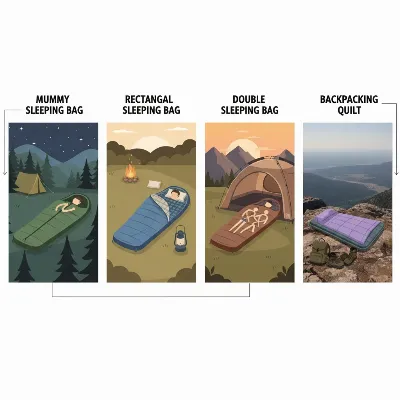 Comparison of different sleeping bag types including mummy, rectangular, double, and quilt in an outdoor setting
Common Materials in Sleeping Bags
The insulation material is the heart of any sleeping bag, determining its warmth, weight, and packability. The two primary types are down and synthetic.
Down Insulation
Down insulation comes from the soft, fluffy clusters found underneath the tougher outer feathers of ducks or geese. It’s renowned for its superior insulating properties.
- Advantages: Offers the best warmth-to-weight ratio, compresses incredibly well for small pack sizes, highly durable and long-lasting with proper care. Fill power (e.g., 800-fill, 950-fill) indicates the quality and loft of the down, with higher numbers meaning more warmth per ounce. Hydrophobic down, treated to resist moisture, provides an added layer of protection.
- Disadvantages: Significantly more expensive than synthetic, loses almost all insulating power when wet, takes a long time to dry, requires specific care.
- Care: Use specialized down soaps (like Nikwax Down Wash) and wash in a front-loading machine on a gentle cycle or by hand in a bathtub. Tumble dry on low heat with dryer balls (like tennis balls) to break up clumps and restore loft. Store unpacked in a large, breathable mesh bag to maintain loft.
Synthetic Insulation
Synthetic insulation is made from manufactured fibers, typically polyester. It’s designed to mimic the heat-trapping abilities of down.
- Advantages: More affordable, retains some insulating properties even when wet, dries much faster than down, easier to clean and maintain, often hypoallergenic.
- Disadvantages: Heavier and bulkier than down for the same warmth, less compressible, typically has a shorter lifespan as the fibers can break down over time, reducing loft.
- Common Types: Various proprietary blends exist (e.g., Polarguard, Primaloft, TechLoft), each with slightly different characteristics in terms of warmth, durability, and softness.
Buying Guide: Choosing Your Ideal Sleeping Bag
Selecting the perfect sleeping bag requires careful consideration of several factors to match your specific outdoor needs.
Determine Usage Purpose
Start by defining how and where you’ll use the sleeping bag. Are you a minimalist backpacker tackling high-altitude trails, a casual car camper enjoying warm summer nights, or an avid winter adventurer? Your activities and expected weather conditions will heavily influence the ideal bag type, temperature rating, and material. Backpackers prioritize low weight and small packed size, while car campers often opt for maximum comfort and spaciousness.
Select Appropriate Temperature Rating
The temperature rating indicates the lowest temperature at which a sleeping bag is designed to keep you warm. Look for bags rated according to the European Norm (EN) or ISO standards, as these provide a more consistent and reliable measure.
- Comfort Temperature: This is the temperature at which an average woman can expect to sleep comfortably. It’s often the most practical rating for most users.
- Limit Temperature: The lowest temperature at which an average man can sleep for eight hours in a curled position without waking due to cold. This rating implies some discomfort.
- Extreme Temperature: A survival rating indicating the minimum temperature at which a sleeping bag will prevent hypothermia for six hours, but not necessarily comfortably. Avoid relying on this for actual comfort.
For three-season use (spring, summer, fall), a bag with a comfort rating around 20-30°F (-7 to -1°C) is often versatile. For dedicated winter camping, look for a 0°F (-18°C) rating or lower.
Size and Shape
Matching the sleeping bag’s dimensions to your body is crucial for comfort and warmth.
- Length: Ensure the bag is long enough for your height without excess material, which creates dead air space your body needs to warm. Manufacturers typically offer short, regular, and long sizes.
- Mummy Shape: Offers maximum thermal efficiency but restricts movement.
- Rectangular Shape: Provides more room for tossing and turning but is less efficient at retaining heat.
- Women’s Specific Bags: Often designed with wider hips, narrower shoulders, and additional insulation in critical areas (like the footbox and torso) to accommodate women’s physiology, as women generally sleep colder than men.
Weight and Packability
These factors are especially critical for backpacking and thru-hiking where every ounce and cubic inch counts. Down bags generally excel in this area. A lighter, more compressible bag will reduce strain on your back and free up space in your pack, but it often comes at a higher cost. For car camping, weight and packed size are less of a concern, allowing you to prioritize comfort and budget.
Budget
Sleeping bags vary widely in price, from budget-friendly synthetic options to premium down models costing hundreds of dollars. While it’s tempting to opt for the cheapest, consider a quality sleeping bag a long-term investment, particularly if you plan frequent or challenging trips. A well-made bag will offer better performance, durability, and ultimately, more comfortable nights in the outdoors.
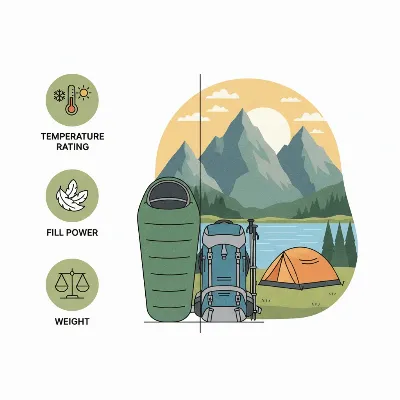 Detailed elements of a sleeping bag buying guide, showing temperature rating, fill power, and compressed size in an outdoor camping context.
Our Top 5 Mummy Sleeping Bags for 2026
For those seeking the best in warmth-to-weight and thermal efficiency for backpacking and cold-weather adventures, mummy sleeping bags are the go-to. Based on expert reviews and performance metrics for 2026, here are five standout options:
Zpacks 20F Mummy Sleeping Bag
The Zpacks 20F Mummy Sleeping Bag is a top contender for its ultralight design and remarkable versatility. It features a full-length zipper, allowing it to be completely unzipped and used as a quilt in warmer conditions, making it one of the most adaptable bags on the market. Filled with high-quality 900 fill power water-resistant goose down, and often overstuffed with 30% extra down, it offers excellent warmth. Despite its minimalist ethos, it provides sufficient room for comfortable movement for most users and comes with a durable, waterproof stuff sack. This bag is ideal for serious thru-hikers and ultralight backpackers who demand the lightest and most flexible gear.
Sea to Summit Spark 15F
The Sea to Summit Spark 15F is lauded for its exceptional warmth-to-weight ratio and compact packed size, making it a favorite among ultralight enthusiasts. Updated with vertical baffles in the torso to prevent down shifting, and a PFC-free DWR coating on its 10D outer shell, this bag ensures consistent warmth and protection. It utilizes 850+ fill power Hyperdry down and is EN/ISO rated for reliable performance. Its slightly more generous internal dimensions offer a comfortable fit for an ultralight bag. The Spark 15F is a premium option for those prioritizing packability and performance in three-season conditions.
Feathered Friends Swallow UL 20
The Feathered Friends Swallow UL 20 stands out for its uncompromising quality, exceptional warmth, and minimal weight. This bag is crafted with 16.8 ounces of 950+ fill power goose down, offering incredibly high loft and thermal efficiency. Its mummy shape and smart horizontal baffle construction effectively trap heat, while the high-fill-power down compresses down to a minimal size. While a significant investment, the Swallow UL 20 delivers long-term reliability and superior performance, justifying its cost for dedicated backpackers, mountaineers, and ultralight adventurers who refuse to compromise on quality.
Western Mountaineering UltraLite 20
Western Mountaineering is synonymous with high-quality sleeping bags, and the UltraLite 20 is a prime example. Known for its meticulous construction and premium materials, this mummy bag offers an impressive warmth-to-weight ratio. It features 850+ fill power goose down, ensuring excellent insulation and durability. The UltraLite provides enough room for most sleepers without being overly restrictive, a common concern with mummy bags. While on the pricier side, its longevity and reliable performance in cold conditions make it a worthwhile investment for serious outdoor enthusiasts seeking a durable, high-performing bag.
REI Magma 15
The REI Magma 15 offers an outstanding balance of performance and value, making it an excellent choice for backpackers on a budget who still want high-quality down. This bag features 850+ fill power goose down with a water-resistant treatment and a durable Pertex shell. It boasts a comfort rating of 21°F, making it suitable for a wide range of three-season conditions, including colder trips. The Magma 15 is praised for its inclusive sizing options, offering various lengths and widths to ensure a comfortable fit for diverse body shapes. It’s a slightly heavier option than some ultralight counterparts but delivers reliable warmth and packability for its price point.
Tips for Using and Storing Your Sleeping Bag
Proper care and storage significantly extend the life and performance of your sleeping bag.
- Packing and Unpacking: Instead of neatly rolling your sleeping bag, stuff it into its compression sack feet-first. This helps distribute the down more evenly and prevents repetitive stress on the same spots. When you arrive at camp, immediately take your bag out of its stuff sack and let it loft for at least 15-30 minutes to maximize its insulating power.
- Cleaning: For down bags, use a specialized down-specific soap and wash either by hand in a large tub or in a front-loading washing machine on a gentle cycle. Avoid top-loading machines with agitators. For synthetic bags, a mild detergent will suffice. Tumble dry on low heat with several clean tennis balls or dryer balls to help break up down clumps and restore loft. Ensure the bag is completely dry before storage to prevent mildew.
- Storage: The most crucial tip for longevity is to store your sleeping bag uncompressed when not in use. Use a large, breathable mesh storage sack, or simply hang it in a closet. This allows the insulation to retain its loft, which is vital for its warmth. Store in a dry, cool place away from direct sunlight and pests.
- Enhance Your Sleep System: Your sleeping bag is just one component. Always pair it with a high-quality, insulated sleeping pad that provides adequate R-value (a measure of thermal resistance) to prevent heat loss to the ground. Wearing clean, dry base layers inside your bag can also boost warmth and keep the bag cleaner. A sleeping bag liner can add warmth and protect the interior of your bag.
“A quality sleeping bag is not just gear; it’s a ticket to peace of mind and comfort in the wild, enabling unforgettable journeys.”
Conclusion
Choosing the right sleeping bag is a pivotal decision for any outdoor enthusiast. By understanding the distinct advantages of mummy, rectangular, double, and quilt designs, and appreciating the properties of down and synthetic insulation, you can confidently navigate the options available. Factors like temperature rating, size, weight, and budget all play a crucial role in finding a bag that perfectly suits your adventure style. Investing in a high-quality sleeping bag, coupled with proper use and care, ensures countless nights of comfortable and restorative sleep under the stars. So, take your time, weigh your options, and prepare to embark on your next great outdoor story.
What kind of adventure are you dreaming of for your next night out?
Frequently Asked Questions
What makes mummy sleeping bags ideal for cold weather?
Mummy sleeping bags are designed to closely fit the contours of your body, minimizing the amount of air space your body needs to heat. This tapered shape, often combined with an insulated hood, significantly enhances thermal efficiency and reduces heat loss, making them highly effective in colder conditions.
Can I share a mummy sleeping bag with a partner?
Typically, mummy sleeping bags are designed for single occupancy due to their snug, body-hugging shape. While some brands offer zip-together options for specific models, they are generally not as comfortable for two people as dedicated double sleeping bags, which provide ample shared space.
How do I choose the right temperature rating for my sleeping bag?
To choose the right temperature rating, consider the lowest temperatures you expect to encounter. Look for bags with an EN or ISO “Comfort” rating that matches or is slightly below your anticipated minimum temperature. Remember that personal factors like metabolism and the quality of your sleeping pad also influence perceived warmth.
Is down or synthetic insulation better for a sleeping bag?
Down insulation offers a superior warmth-to-weight ratio and better compressibility, making it ideal for backpacking where weight and packed size are critical. Synthetic insulation, while heavier and bulkier, is more affordable and retains warmth better when wet, making it a good choice for damp environments or budget-conscious users.
How often should I wash my sleeping bag?
The frequency of washing depends on how often you use it and how dirty it gets. For regular use (e.g., several trips a season), washing your sleeping bag once a year is usually sufficient. Over-washing can degrade the insulation, so only wash when necessary and always follow the manufacturer’s care instructions.
What is fill power, and why does it matter?
Fill power (FP) is a measure of the loft or fluffiness of down insulation. It indicates how many cubic inches one ounce of down occupies. Higher fill power (e.g., 800FP, 950FP) means the down is more insulating for its weight and is more compressible, providing superior warmth without adding bulk.
What should I do if my sleeping bag gets wet?
If a down sleeping bag gets wet, its insulation will clump and lose significant warmth. The immediate action is to try and dry it as quickly as possible. If it’s a synthetic bag, it will still offer some insulation when damp. In either case, prioritize getting it dry and warm, potentially by airing it out or using a low-heat dryer with dryer balls.
